
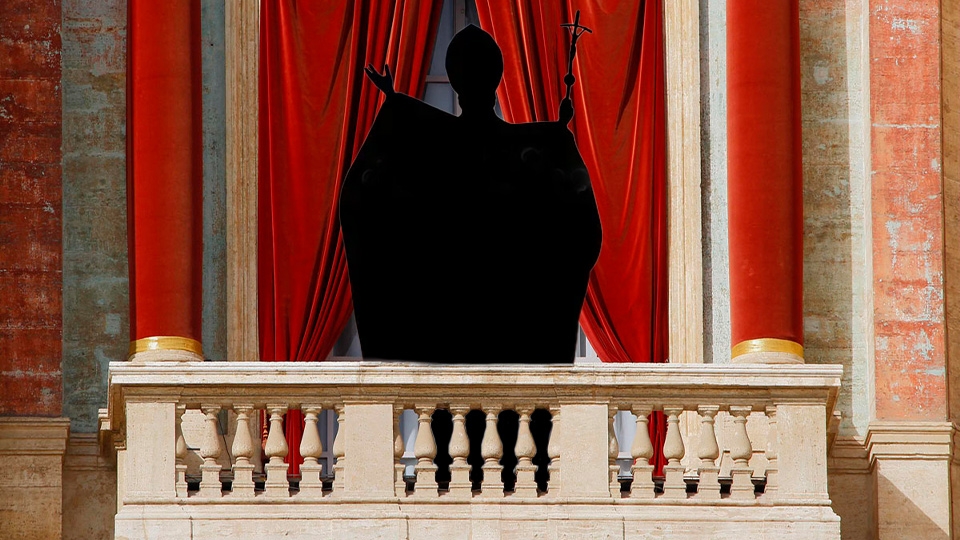

On May 7, as cardinals gather for the Papal Conclave to elect the next Pope, the world (both Catholics and unbelievers alike) watch with bated breath as to who will eventually emerge as the successor of the great Apostle St. Peter.
Already the media (both Catholic and secular) has tried to be ahead of the game by speculating who would be the next Pope from among the papabili cardinals – Sarah, Prevost, Parolin, Erdő…the list goes on.
Moreover, the past weeks have witnessed mainstream outlets touting the credentials and diverse backgrounds of various of the cardinals who could become the next Pope.
For example, Australian Broadcasting Corporation (ABC) pointed out that this year’s conclave is the most diverse one in the history of the Catholic Church, “with the 133 cardinal-electors representing 72 different countries.” The same ABC article singled out Cardinal Parolin for his diplomatic experience, Cardinal Tagle for his charisma, and Cardinal Aveline for possibly becoming “Francis 2.0” , given his “ideological proximity to Francis”.
Unsurprisingly many liberal media outlets like leftist site The Independent are most likely not to place their bets on conservative cardinal Robert Sarah as pope, for obvious reasons such as his uncompromising stance on Catholic doctrine and morality, as well as his profound liturgical devotion.
The recent Francis pontificate has seen the Catholic Church torn apart by leftist ideologues attempting to substitute traditional Catholic teachings on sexuality with their LGBT+ beliefs, Vatican bureaucrats who have been complicit in covering up sexual abuse and corruption, as well as cardinals who do not seem to believe in the exclusive role of the Catholic faith in God’s plan for the salvation of mankind.
On the other hand, many faithful Catholics worldwide have been praying earnestly to God for a holy Pope (i.e. with the possibility of Cardinal Sarah becoming the next pope) to undo the disastrous effects of the Francis pontificate.
As writer Thomas Colsy penned in LifeSiteNews, “while other papabile such as Cardinal Matteo Zuppi are noted for their soft approach on LGBT issues, Sarah views excessive and incautious appeals to such persons in a habit of sin as a danger for their souls and the teaching of the Church.”
Adding, Colsy wrote:
“Beloved by liturgical traditionalists and spiritually-minded Catholics alike, he is considered papabile owing to popularity among fellow cardinals because of his gentle and diplomatic demeanor, age, and unique status and perspective as an African prelate.”
Notably, a theme that has featured at the forefront of this year’s papal conclave has been that of “unity”. In context, the recent Francis pontificate (and before that) has seen the Catholic Church torn apart by leftist ideologues attempting to substitute traditional Catholic teachings on sexuality with their LGBT+ beliefs, Vatican bureaucrats who have been complicit in covering up sexual abuse and corruption, as well as cardinals who do not seem to believe in the exclusive role of the Catholic faith in God’s plan for the salvation of mankind. Little wonder that some commentators and punters have placed their hopes that “moderate” Cardinal Péter Erdő could “bridge the gap” between conservative and more liberal factions of the Church as a “compromise candidate” for Pope.
For instance, National Catholic Reporter (NCR) stated:
“Cardinal Péter Erdő , the archbishop of Esztergom-Budapest, is a leading candidate for those looking for a pontiff who can clamp down on what they view to be Francis’ haphazard approach to doctrinal questions.Those cardinals are annoyed by what they perceive to be the freewheeling nature of the late pope’s emphasis on synodality, and his unconventional methods of governing the church. They see Erdo as an antidote. But given the sheer numbers of those Francis has appointed — eight in 10 of the 133 cardinals who will enter the Sistine Chapel — it’s hard to imagine this minority bloc being able to gain enough momentum for Erdo to emerge from a conclave wearing white. Still, as a minority block, they may try to leverage this to push for a compromise candidate who is more moderate and sympathetic to their concerns.”
That Holy Mother Church finds herself at the crossroads on whether to elect a so-called “compromise” candidate as Pope reveals how far the crisis of faith and morals has divided her.
Writer Gaetano Masciullo rightfully stated in an article for The Remnant:
“The mark of the Church’s unity (Credo in unam Ecclesiam) has traditionally always been understood as unity in truth, unity in Faith. If Catholic doctrine weakens, unity weakens as well, and the Church becomes fragile.”
As Masciullo elaborated, it would do well for cardinal-electors and other faithful Catholics to bear in mind the words of Abbé Claude Barthe in his essay on “Restoring Unity to the Church” in their quest for “Church unity”.
The post Vatican II church, while failing to promote unity through the Catholic faith by explicitly condemning heresy and error, has self-sabotaged itself in terms of fostering diverse (and oftentimes conflicting) interpretations of various aspects of Catholic dogma and morals.
With regard to the problem of lack of unity within the Catholic Church, Abbé Barthe wrote:
“For, indeed, the underlying problem is of an entirely different order. It is magisterial, or to be more precise, it has to do with the non-exercise of the magisterium as such. The most visible aspect of this deficiency is the absence of condemnation of heresy, resulting in a latent schism, worse in a sense than an open schism, since Christ’s faithful no longer know where the boundary lies between faith and error. Today, de facto, the authority refrains from playing the role of instrument of unity, at least of unity in the classical sense, which is unity through faith, and instead presents itself as the manager of a certain consensus in diversity. Its role has become more to federate than to unite, the principles of ecumenism and religious freedom having been integrated within the ecclesial body itself.”
In other words, the post Vatican II church, while failing to promote unity through the Catholic faith by explicitly condemning heresy and error, has self-sabotaged itself in terms of fostering diverse (and oftentimes conflicting) interpretations of various aspects of Catholic dogma and morals.
As Abbé Barthe conceded:
“But today, diversity is not blown to bits: the faithful, priests, cardinals, and even a pope, can make divergent assertions on points of faith or morality once considered fundamental (for instance, the respect due only to the religion of Christ, or the indissolubility of marriage), all the while still being considered as Catholic. This is obviously disastrous for the Church’s mission, but also – and the one explains the other – disastrous for the very being of Catholics.”
Indeed, Abbé Barthe has hit the nail on the head that the post-Vatican II Catholic Church has failed to clearly demarcate the lines between truth and error, between orthodoxy and heresy.
The Catholic Church does not need a Pope who is merely media savvy and a good communicator.
Only by proclaiming truth and anathematizing error, can the Pope hope to unite the Catholic Church in the truth of Our Lord Jesus Christ.
Catholics don’t need a Pope who is only a bureaucrat fulfilling official Vatican functions and who only sees himself as such.
In like manner, Catholics don’t need a Pope who simply “comes from a diverse background”, such as from Asia or the Global South to reflect the changing demographics of the Church.
Rather than superficial qualities that a future Pope could have, Catholics need for a future Pontiff who would courageously step up to his God-given vocation and condemn the errors of our times, such as false ecumenism, moral relativism and the ideological scourge of communism.
Only by proclaiming truth and anathematizing error, can the Pope hope to unite the Catholic Church in the truth of Our Lord Jesus Christ.
Just as St. Peter did, we hope for a holy Pope to testify to the Divinity of Our Lord Jesus Christ and the truth of the Catholic religion, saying:
“Thou art Christ, the Son of the living God.”
May God in his infinite mercy, grant to the Catholic Church (and to the world) the holy Pope that we do not deserve.
Mary, Mother of the Church, pray for us.
St. Joseph, Protector of Holy Mother Church, pray for us.