
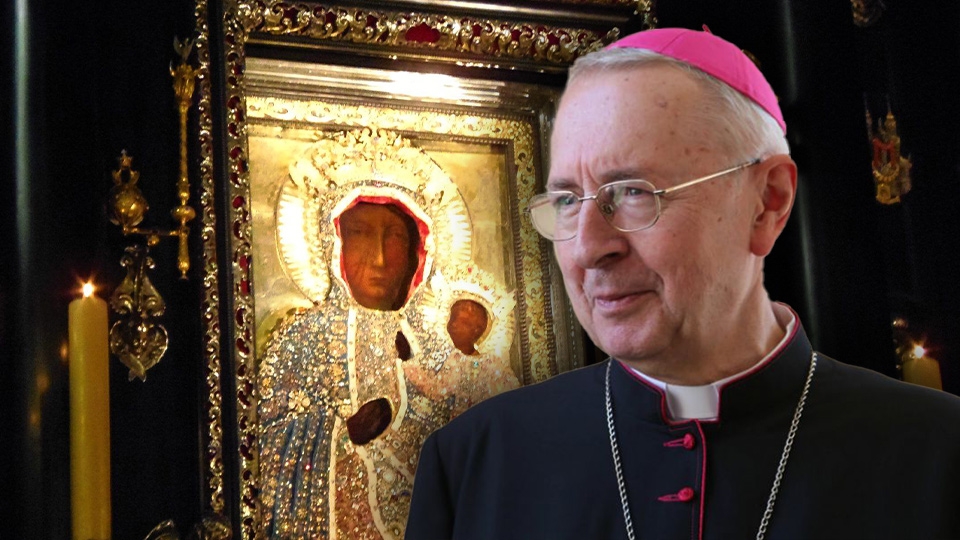

The Polish Parliament “looks set to debate a proposal to ban the Sacrament of Confession for those under 18 years of age”. Polish Archbishop Stanisław Gądecki fired back, likening the proposal to “Soviet-era repression”, stating that during Communist rule in Poland, “it was also said that children should not be baptised or go to church until they are 18 years old”.
During my short visit back to Warsaw last summer, I visited a few of my friends/acquaintances at the Ordo Iuris Institute for Legal Culture for a great catch-up.
Our conversations ranged from various topics in our personal life to the general political climate in Poland and the world.
After reminiscing my time spent in Poland, I told my friends how I missed seeing Catholicism in greater display in public life and on the streets (even the notion of mainstream television channels showcasing Catholic-related content like Radio Maryja is unheard of in my native country of Singapore, is generally frowned upon in secular Britain (where I spend a lot of time nowadays), and would have likely been “cancelled” in Joe Biden’s America). In response to my observations, one of them remarked:
“You come to Warsaw and say it’s a conservative paradise (compared to what you see in the West). On the other hand, we Catholic Poles think Warsaw is already Babylon in the making.”
My friend’s comments resonated deeply with me, long after our conversations ended.
Having lived in Poland for some time, I have to admit that my friend’s comments were spot-on.
Back then, I found it hard to find common ground with my left-leaning colleagues (mainly from Warsaw) in the private Polish pre-school where I was teaching English in Warsaw’s Mokotów area. My coworkers probably felt surprised that a foreigner like myself (non-white as well) would bother to attend Sunday Mass (what is more, attend the Traditional Latin Mass (by the Institute of the Good Shepherd) at a church in Warsaw’s Plac Teatralny or at the Society of St. Pius X in the Radość neighborhood).
Subsequently, once I moved to industrial Łódź, a city heavily influenced by industrialism and Poland’s Communist era, I could count the number of socially conservative friends I eventually made with just one hand.
The years since I moved out of Poland have not been kind to Polish Catholics and conservatives, particularly with the increasing clout of leftist ideologues imposing LGBT+ illusions and the killing of unborn babies in majority Catholic Poland. Worse still, the Left even tried blasphemously to link the Blessed Virgin Mary with LGBT+ ideologies.
Each time I left Warsaw and Łódź for a short getaway to Kraków, Lublin, or pilgrimage sites like Gietrzwałd and Częstochow, I found it edifying to see priests and religious donned in their cassocks and habits, as well as various public expressions of Polish Catholicism, such as charming wayside shrines.
Strikingly, I enjoyed saluting a priest, brother, or nun on the street with the phrase “Niech będzie pochwalony Jezus Chrystus” (“Praised be Jesus Christ”) instead of the secular Polish greeting “Dzień dobry”.
And, as was usually the case, my addressee would respond with the phrase:
“Na wieki wieków, amen.” (“For ever and ever, amen.”)
Sometimes, when someone greeted me while praising Our Lord Jesus Christ, I would respond with the phrase used by Poland’s Radio Maryja:
“I Maryja zawsze Dziewica.” (“And to Mary ever Virgin.”)
Additionally, I found myself pleasantly surprised time and time again when Polish writings (such as Adam Mickiewicz’s “Pan Tadeusz”, Henryk Sienkiewicz’s “The Deluge”, and Władysław Reymont’s “A Pilgrimage to Jasna Góra” mentioned Catholicism in their works. In fact, the very opening of Mickiewicz’s Pan Tadeusz mentions the Blessed Virgin Mary:
“Litwo! Ojczyzno moja!
ty jesteś jak zdrowie:
Ile cię trzeba cenić, ten tylko się dowie,
Kto cię stracił.
Dziś piękność twą w całej ozdobie
Widzę i opisuję, bo tęsknię po tobie.
Panno święta, co Jasnej bronisz Częstochowy
I w Ostrej świecisz Bramie!
Ty, co gród zamkowy
Nowogródzki ochraniasz z jego wiernym ludem!”
(English Translation:
Lithuania! My Homeland! You are like good health:
Only he learns how precious you are
Who has lost you. Today I am able to see — and describe in writing —
Your full beauty, precisely because I miss you.
O Holy Virgin — You who protect radiant Czestochowa,
And shine within the Gate of Dawn! You, who watch over the
Walled city of Nowogródek, with its faithful folk!”
However, the years since I moved out of Poland have not been kind to Polish Catholics and conservatives, particularly with the increasing clout of leftist ideologues imposing LGBT+ illusions and the killing of unborn babies in majority Catholic Poland. Worse still, the Left even tried blasphemously to link the Blessed Virgin Mary with LGBT+ ideologies.
Especially since anti-Catholic Europhile Donald Tusk came into power in 2023, Catholic Poland appears to be on the highway to hell – with the leftist Tusk regime embracing abortion, LGBT+ rights, and minimizing the role of Catholicism in Polish civil society.
Trzaskowski, who signed Poland’s first document officially acknowledging the status of LGBT+ peoples, unleashed his war plans against conservatives by stating that “if he wins May’s election, he would prioritise signing bills to allow prescription-free access to the morning-after pill” as per the pro-abortion news outlet Notes from Poland.
Like my Polish Catholic counterparts, I have been appalled at Tusk’s reprehensible efforts to undermine and persecute the Catholic Faith and Polish clerics in a country that was “baptized into being” in 966. Tusk, together with his cronies, including hard-left politician Barbara Nowacka, Poland’s present Minister of National Education, are trying to undermine Catholic teachings on morality and sexuality among Polish children and youth. (For example, Nowacka recently unveiled government plans to introduce liberal sex education in Polish schools as per World Health Organization (WHO) dictates, instead of Catholic teachings.)
Like many pro-lifers in Poland and beyond, I am alarmed at the increasing audacity of the death cult in a country that has been, under notable household names like Blessed Stefan Wyszyński and Blessed Jerzy Popiełuszko, struggling to free itself from Communist oppression, torture and killings.
Like any law-abiding citizen, I am outraged at Tusk’s blatant attempts at subverting or circumventing the rule of law in this beautiful country, particularly when the Polish politician is emboldened by a silent and conniving European Union (EU).
According to a January article by Catholic Herald, the Polish Parliament “looks set to debate a proposal to ban the Sacrament of Confession for those under 18 years of age” after “the submission of a petition to the Sejm, Poland’s lower House of Parliament, in October 2024”.
Unsurprisingly, the petition elicited a harsh response from Polish Archbishop Stanisław Gądecki of Poznań. The cleric likened the petition’s proposal to “Soviet-era repression”, stating that during Communist rule in Poland, “it was also said that children should not be baptised or go to church until they are 18 years old”.
In statements cited by Catholic Herald, the archbishop elaborated:
“Only then can they come and confess – those who can withstand the anticlerical pressure, of course. These are old communist moves, supported by dubious psychology.”
While I am not a fan of Tusk’s predecessor, Mateusz Morawiecki (who led the relatively more conservative Law and Justice (PiS) government but had ties to the globalist World Economic Forum (WEF) ), life under Morawiecki’s rule appears to be far more tolerable (I lived in Poland during PiS rule) for Catholics and social conservatives.
Hence, I was dismayed when the Tusk regime recently laid hands on him in their blatant purge of political opponents. (For the uninitiated, the Tusk regime has accused Morawiecki of overstepping his power when he oversaw mail-in ballots during elections amid draconian COVID-19 lockdowns in 2020.)
Morawiecki is not the first political target of the Tusk regime and probably won’t be the last either. The former Polish prime minister is merely joining the club of persecuted media and political dissidents like Marcin Romanowski, Filip Styczyński (former director of Poland’s TVP World), and Mariusz Kamiński, people whom the Tusk regime wishes to “cancel” out of Polish politics. Even PiS staffer Barbara Skrzypek (God rest her soul) was not spared Tusk government interrogation given her association with Tusk’s political rival, Jarosław Kaczyński that she died hours after being questioned.
As Our Lady never failed the Polish nation who cried to Her for help during the Battle of Grunwald (1410) the Battle of Jasna Góra (1655) and the “Miracle of Vistula”, so She will not abandon Her beloved Poland as it stands in dire need for Her maternal protection from heresies.
With Tusk’s Poland slide into authoritarianism, I am now watching Poland’s 2025 presidential race with bated breath.
If voted in as Polish president, Tusk-backed liberal Warsaw Mayor Rafał Trzaskowski would undoubtedly wreak havoc on whatever vestiges of Catholic moral principles are remaining in the country. Trzaskowski, who signed Poland’s first document officially acknowledging the status of LGBT+ peoples, unleashed his war plans against conservatives by stating that “if he wins May’s election, he would prioritise signing bills to allow prescription-free access to the morning-after pill” as per the pro-abortion news outlet Notes from Poland.
Likewise, Karol Nawrocki, the PiS-backed candidate and a historian, has been perceived by the more conservative elements of Polish society as merely another establishment figure who does not offer real solutions to Poland’s existing problems.
Notably, the third presidential candidate, Sławomir Mentzen from the nationalist Konfederacja is polling at around 20 per cent, a figure significant enough to raise eyebrows among hardcore Trzaskowski supporters (if he does manage to meet Nawrocki in the first round of voting). Mentzen’s rise in popularity would rankle leftists and globalists in Poland, given that he espouses the defense of traditional values, tighter border controls, increased domestic defense production, and economic freedom. Yet Mentzen’s victory on the ballot slip is not guaranteed despite polls depicting his popularity, as he himself conceded.
With Poland now at a crossroads, ordinary Polish Catholic voters and foreign Catholic observers (me included) can only turn to what we know best: prayer.
And we can only turn to the One whom we know and love best after God; the Blessed Virgin Mary, Queen of Poland (Najświętsza Maryja Panna Królowa Polski -Feast: May 3).
As Our Lady never failed the Polish nation who cried to Her for help during the Battle of Grunwald (1410) the Battle of Jasna Góra (1655) and the “Miracle of Vistula”, so She will not abandon Her beloved Poland as it stands in dire need for Her maternal protection from heresies.
After all, Mary is Poland’s Hetmanka (“commander-in-chief of the Polish armed forces”), “Bastion przed bestią” (“bastion against the beast”), and “Bogiem sławiena” (“by God glorified”).
The Blessed Virgin Mary (particularly under the title of Our Lady of Częstochowa) is bound to intercede for Poland, the country still widely deemed to be a bastion of Christianity in secularized Europe. I am confident that in the long haul, Poland will remain “zawsze wierni” (“always faithful”), under the mantle of Maryja Niepokalana (Mary Immaculate).
Polonia semper fidelis. May it be the case.