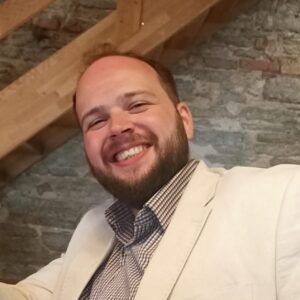

Dr. Joseph Shaw, Chairman of the Latin Mass Society of England and Wales, courted headlines recently when he described the Society of Saint Pius X’s impending episcopal consecrations as “a hand grenade” thrown into the TLM debate. While such language is incendiary (as grenades are wont to be), what is far more disturbing are his comments scattered throughout the article, which reveal his thoughts on the Traditional Latin Mass’ place in the Church.
His position can be summarised by the claims that these (non-SSPX) traditional Catholics simply want to be “left alone” as a “tiny part of the Church,” seeking “no kind of victory”. Such an attitude reveals a position that is not merely cautious or diplomatic but rather one which is fundamentally incoherent.
His central claim – that traditionalists should reassure authorities they are not a threat and are content to remain a “tiny part” of the Church – amounts to a surrender disguised as prudence.
As chairman of the Latin Mass Society, Dr. Shaw holds an office once held by Michael Davies, and a position historically tied to figures such as Eric de Saventhem, late President of Una Voce International. Despite this, the arguments which Dr. Shaw proposes would have been unrecognisable to such men. What they defended as a matter of higher principle, Dr. Shaw reduces to a matter of toleration, optics, preference and survival.
His central claim – that traditionalists should reassure authorities they are not a threat and are content to remain a “tiny part” of the Church – amounts to a surrender disguised as prudence. The statement is not one which is strategically clever. Rather, it is philosophically absurd. If the Traditional Mass is truly what its defenders historically claimed it to be – the most perfect expression of worship, the worthy continuation of the sacrifice of Calvary, organically developed, doctrinally precise, and uniquely fit to defend the doctrine of the Real Presence of Jesus Christ in the Eucharist – then it cannot honestly be presented as a harmless preference. Truth is always a threat to error and excellence to mediocrity. To deny that the Traditional Mass poses any challenge to the liturgical status quo is to deny that it possesses any objective superiority worth defending.
Shaw’s arguement promotes a whimsical freedom for the Traditional Mass, while rejecting the premise which historically justified that freedom, i.e. its intrinsic transcendental character and in turn its status as the universal sacramental worship of the Church.
Dr. Shaw’s position seems to seek a partial share in the conclusion of the traditional argument in defence of the Traditional Mass – a whimsical freedom for the Traditional Mass – while rejecting the premise which historically justified that freedom, i.e. its intrinsic transcendental character and in turn its status as the universal sacramental worship of the Church. If the traditional rite is merely one legitimate option among many (a liturgical smorgasbord, so to speak), then there is no principled reason why it must be preserved. Options can be regulated, restricted, or eliminated. Bureaucracies do this every day (the Church being a bureaucracy of Byzantine proportions). Once you concede that the Traditional Mass is a mere preference for a niche community, you have already conceded the argument. You have traded a claim of right for a request for indulgence.
Davies understood this point. His entire life’s work rested on the assertion that the Roman Rite, as received and transmitted through the centuries, was not a devotional preference, but was rather a doctrinal monument. In Davies’ analysis, the liturgical revolution introduced before, during and after Vatican II severed the structural and historical link to the universal and timeless worship of the Church and was the catalyst for the greatest apostasy in the history of the Church. He always insisted that Catholics have the right to access the Mass of all times, and that this bore a duty to criticise the liturgical revolution which sprang forth from the liturgical reform – in other words harsh criticism of the inherent deficiencies of the Novus Ordo Missae. That distinction gave the traditional movement an intellectual base by grounding resistance not in sentiment, but in principle.
If liturgy is just a utilitarian tool for meeting perceived needs, then ecclesiastical authorities may redesign or restrict it whenever they judge necessary. Dr. Shaw’s rhetoric implicitly accepts that premise, thereby undercutting the only solid foundation for a defence of the traditional liturgy.
Dr. Shaw’s approach dissolves that intellectual base by framing the debate primarily as a matter of public perception and political expedience. In so doing, he shifts the argument from theology to… aesthetic preference? According to his position, the Mass becomes a local issue according to the pastoral needs of a few, rather than a question about the very nature of sacrifice, worship, and doctrine (given concrete expression in symbolism of the liturgy). This is precisely the terrain on which the liturgical reformers always wanted the debate to occur, because once liturgy is treated as a pastoral instrument rather than a received inheritance bearing the substance of those things which the liturgy symbolises, it becomes infinitely malleable. If liturgy is just a utilitarian tool for meeting perceived needs, then ecclesiastical authorities may redesign or restrict it whenever they judge necessary. Dr. Shaw’s rhetoric implicitly accepts that premise, thereby undercutting the only solid foundation for a defence of the traditional liturgy.
The contrast with de Saventhem is especially stark. Under his leadership, Una Voce did not beg Rome for a niche to call their own. Rather, they spoke of the “restoration” of the liturgy according to its nature and tradition. In a letter to Pope John Paul II in October 1993, de Saventhem pleaded:
“Beatissime Pater, as chief guardian of the Church’s unity You have called on all Catholics to strengthen their fidelity to the Church’s Tradition. For this appeal to bear fruit, is it not indispensable that the lex orandi which has both fashioned and enshrined that tradition for over one thousand years regains its rightful place in the Church’s official life of prayer?” 1
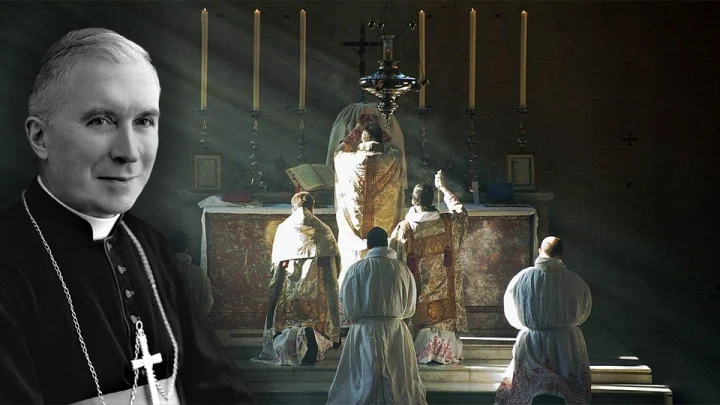
That language presupposes that liturgy has a nature and tradition of its own and that it is not raw material to be fashioned according to the whims of liturgical committees. Rather, the Traditional Mass is a living inheritance. De Saventhem could oppose the 1988 consecrations of Marcel Lefebvre while still praising him after his “excommunication” as a “Witness, prophet [and] martyr”. 2 In other words, he distinguished prudential disagreement with a decision of the Archbishop from the doctrinal premise which underpinned the Archbishop’s actions. Dr. Shaw, by contrast, appears eager to distance himself not only from seemingly controversial tactic of the episcopal consecrations, but from the underlying theological seriousness of the defence of the Traditional Mass championed by Archbishop Lefebvre and the Society of St. Pius X for the past fifty years. His presentation of traditional Catholicism attached to the Traditional Mass as a harmless subculture seeking to be left alone is not a defence. It is an abdication of substance. Davies and de Saventhem argued for restoration precisely because they believed the entire Mystical Body of the Church had a right to receive the fullness of its inheritance, whereas Dr. Shaw’s “tiny part” vision implies that it is acceptable for the majority of Catholics to be deprived of what we traditionalists regard as essential.
If one truly believes the Traditional Mass to more perfectly express its sacrificial nature, more clearly safeguard belief in the Real Presence, and more effectively form Catholic spirituality, then to fight only for access to it for a select few is an act of liturgical selfishness.
If one truly believes the Traditional Mass to more perfectly express its sacrificial nature, more clearly safeguard belief in the Real Presence, and more effectively form Catholic spirituality, then to fight only for access to it for a select few is an act of liturgical selfishness. It is the spiritual equivalent of hoarding medicine. The classical Catholic understanding of the common good demands that what is most perfect in any field should be desired for the whole Church. This is the position of the Society of St. Pius X, whose principled stand won for the universal Church Benedict XVI’s Summorum Pontificum (despite its deficiencies) which granted access to the Traditional Mass across the world, for no benefit to the Society itself. It was a principled stand for the rights of all Catholics whether attached to the Society or not.
Worse still, Dr. Shaw’s argument collapses into aestheticism. If the Traditional Latin Mass is not defended as objectively superior to the Novus Ordo in some real theological sense, then why prefer it at all? Personal taste? Cultural nostalgia? Linguistic preference? Those are the very grounds upon which ecclesiastical authorities can dismiss it. The Church’s hierarchy can reasonably respond that, if this is just about preference, then preference must yield to policy, the policy of the Vatican being the Novus Ordo. The only coherent argument for restoring or preserving the Traditional Mass is that it is not merely preferred, but objectively superior. It must be argued that the Traditional Mass is uniquely capable of simultaneously containing reverent worship, doctrinal clarity and the ability to signify that which it metaphysically contains. Such cannot be said of the Novus Ordo Missae. Remove the theological argument for the objective superiority of the Traditional Mass (on consequently the deficiency of the Novus Ordo), and the movement has no rational basis left. It will have become a niche special-interest group for liturgical nerds.
Dr. Shaw seems unaware of the logical trap which he has laid for himself. He wants to reassure Rome that traditionalists are not seeking “victory.” But if victory means the recognition of truth, then refusing to seek victory is refusing to seek the triumph of truth.
Dr. Shaw seems unaware of the logical trap which he has laid for himself. He wants to reassure Rome that traditionalists are not seeking “victory.” But if victory means the recognition of truth, then refusing to seek victory is refusing to seek the triumph of truth. The martyrs of old did not die for a tolerated minority status. The great defenders of orthodoxy did not plead to be left alone. They argued that the truth, beauty and goodness they held in the Catholic faith, and which was expressed most perfectly in the Mass, was not merely something the world ought to tolerate, but was something true and essential for the world – and therefore binding. By contrast, Dr. Shaw’s rhetoric invites Rome to treat traditionalists as an anomaly. Once you present yourself as permanently marginal, you train those who govern you to govern you marginally. If one begs to be merely tolerated, one will never be uplifted.
Some may argue that Dr. Shaw is simply being pragmatic. Yet pragmatism without principle is capitulation. Davies and de Saventhem were realistic about ecclesiastical politics, but they never allowed pragmatism to dilute principle. Yes, they sought permission, hat in hand, for local freedoms of the Traditional Mass and they strove to maintain positive relationships with local ordinaries, yet they always maintained that the crisis of the liturgy was primarily theological before it was canonical, and that the solution was not toleration, but insistence on restoring the faithful’s right to the Mass of all time in all places, albeit accomplished one place a time.
The deeper issue, therefore, is not tactical but philosophical. What is the Mass? If it is the supreme act of divine worship and the sacramental continuation of the sacrifice of Calvary, then its liturgical form cannot be treated as a matter of preference, aesthetics or convenience.
The irony is that Dr. Shaw’s strategy is self-defeating even on its own terms. If you insist you are no threat and deserve only a small corner, you give those in power no reason to defend you. Why expend institutional capital protecting a group that openly claims it seeks no influence and poses no challenge? The logic of bureaucracy is simple – what is marginal can be marginalised further, as has been seen so tragically under the pontificate of Pope Francis. By contrast, de Saventhem’s and Davies’ approach forced authorities to confront serious arguments about tradition, reverence, and doctrinal clarity. One may disagree with their conclusions, but one cannot dismiss them as trivial. Dr. Shaw’s approach, on the other hand, invites dismissal.
The deeper issue, therefore, is not tactical but philosophical. What is the Mass? If it is the supreme act of divine worship and the sacramental continuation of the sacrifice of Calvary, then its liturgical form cannot be treated as a matter of preference, aesthetics or convenience. It must be judged according to its conformity to tradition, its doctrinal clarity, and its concrete expression of the mystery it symbolises. This was the ground on which the earlier generation stood and it is the same ground Dr. Shaw abandons.
Dr. Shaw holds the office once held by Davies, but he seemingly does not hold Davies’ principles. Davies fought not for a tolerated enclave, but for the restoration of what he believed to be the Church’s rightful liturgical inheritance. Sadly, Dr. Shaw’s approach seems content with managed decline.
The final indictment is that this movement founded to defend the integrity of Catholic worship has, by Dr. Shaw’s rhetoric, become a lobby for liturgical coexistence – an expression of Vatican II’s religious liberty and ecumenism which so horrified Michael Davies. The only cogent defence of the Traditional Mass is to argue that it possesses the necessary and unique remedy to the banality and inherent deficiency of the Novus Ordo.