

Few issues in the life of the Catholic Church have ignited as many debates and much heartache in recent years as the topic of the Traditional Latin Mass (TLM). In the wake of the divisive motu proprio Traditionis Custodes (2021), which significantly restricted the celebration of theTLM in many dioceses worldwide, countless Catholics have found themselves struggling with confusion and consternation with regard to their bishops’ attitudes towards the TLM.
Since the implementation of Traditionis Custodes in many parts of the world, Church authorities’ approach to the TLM has become inconsistent and at times highly controversial. In some dioceses the TLM has been permitted to continue peacefully with episcopal approval while other dioceses have tried to limit or completely suppress the TLM. Families who had worshiped with deep devotion as per the 1962 Missal have seen their access to the TLM limited or eradicated for no rhyme or reason, while many faithful Catholic priests have faced the delicate balancing act between practising obedience to their bishops and exercising pastoral care for their flock by celebrating the TLM.
Families who had worshiped with deep devotion as per the 1962 Missal have seen their access to the TLM limited or eradicated for no rhyme or reason.
Besides, the recent announcement by the SSPX to consecrate new bishops on February 2 has sparked widespread discussion and tension in the Catholic world, including pitting some Catholics against others with regard to the SSPX allegedly committing the act of “schism”, questions about papal approval,as well as the “state of necessity” in the Catholic Church today.
Regardless of what one may think about the SSPX’s decision to consecrate new bishops, the reality is that the Catholic Church is in a current state of mess right now with mediocre catechesis, irreverent Masses (in many mainstream Novus Ordo churches), scandals among the clergy, and a general loss of Faith among many in the clergy and laity. Yet, rather than effectively try to stamp out these problems plaguing Holy Mother Church, some in the Vatican, despite their responsibilities as pastors of huge swathes of Catholics, such as Cardinal Arthur Roche, seem to be primarily focused on limiting the TLM and relegating it to the annals of history.
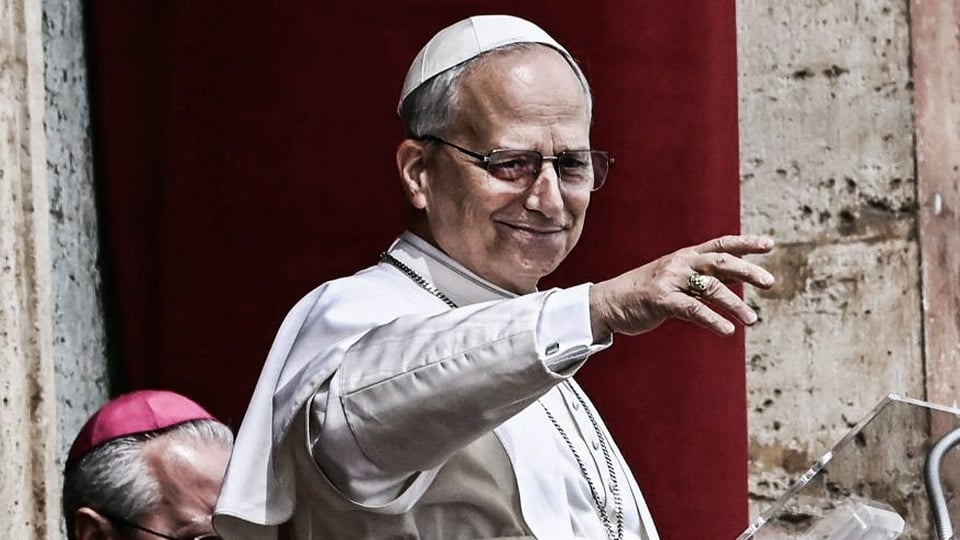
At this critical juncture, Pope Leo XIV has a providential opportunity to at least bring back some form of clarity, stability, and peace by taking a public stance in defense of the TLM.
At this critical juncture, Pope Leo XIV has a providential opportunity to at least bring back some form of clarity, stability, and peace by taking a public stance in defense of the TLM, such as publishing an apostolic constitution —a document of the highest papal authority—in defense of the TLM, as Bishop Athanasius Schneider himself suggested to the Roman Pontiff.
In a recent report by LifeSiteNews, Bishop Schneider indicated that he personally suggested to Pope Leo XIV that the pontiff issue an apostolic constitution to “establish a stable legal framework for the traditional Latin Mass, with the aim of overcoming restrictions on the TLM”.
“I would suggest and I’ve made the Holy Father the proposal, when I met him, to do a more solemn document than a motu proprio. Benedict XVI did a motu proprio and Francis did an anti-motu proprio. So, I think it would not be so fitting to do again an anti-motu proprio against Francis, but simply a more solemn document,” Schneider admitted.
Indeed, if he were to publish an apostolic constitution promoting the TLM, the Holy Father could lay down a long-term legal framework in favor of the TLM to honor the rich heritage of the Roman Church and bring about authentic pastoral unity and construct an unwavering foundation on which true Church unity (as promoted by Pope Leo XIV himself) can thrive.
Such a papal document could clarify that the TLM is a legitimate expression of the same Roman Rite; that its faithful have a rightful place within the Church’s life; and that pastors, guided by bishops, can serve these communities with both obedience and a true Christian zeal for souls.
He said he met young people who told him that their conversion to God was thanks to the traditional Latin mass.
Additionally, such legal reassurances and stability would be edifying to all in the Church; Priests would be assured that they can celebrate the TLM and teach genuine Catholic doctrine without fear of reprisal or facing accusations of disobedience. The laity, including parents, children, newly married couples, and the elderly alike—would be reassured that their desired form of worship (the TLM) is not one that would be considered divisive by the Vatican authorities but welcomed as part of the Church’s rich liturgical heritage. This kind of legal clarity, if guaranteed by the Holy Father, would reveal the pastoral heart of a true shepherd who desires the spiritual edification and ultimately salvation for his flock.
What is more, Catholics’ devotion to the TLM reflects more than aesthetic preference of the “smells and bells” of Catholicism. Rather, the TLM encompasses the Catholic Faith and connects contemporary worship to the worship of saints and martyrs of centuries past. Nonetheless, when the Vatican authorities try to restrict access to traditional Catholic worship in the form of the TLM, they are inadvertently indicating that the Church’s own past is expendable or does not deserve to be cherished, discouraging Catholics who increasingly crave authenticity and sacred beauty amid a chaotic secular culture.
Even Bishop Schneider stated that Pope Leo XIV allegedly told him that he has encountered young people who converted to the Catholic Faith due to the TLM.
“He said he met young people who told (h)im that their conversion to God was thanks to the traditional Latin mass,” Bishop Schneider admitted during an interview with Dr. Robert Moynihan, founder and editor of Inside the Vatican magazine. “I was surprised to hear this from the pope himself. So this was for me a sign that he had some sensibility for this topic.”
For centuries, the TLM has considerably influenced the faith, culture, and sanctity of generations of Catholics all around the world, with its rubrics, profound reverence and sacred silence. At the present moment, many young Catholics—usually converts or reverts—have discovered or rediscovered the Catholic Faith through the sense of transcendence, reverence and mystery of the TLM.Such attitudes are not merely nostalgic ones, but reflect a deep-rooted thirst for truth, beauty and order in an age of flux and distraction. Acknowledging and protecting this legitimate desire is not only pastoral prudence but spiritual charity on the part of the Holy Father.
If Pope Leo XIV reinforces the importance of the TLM, the very same Mass which has nourished countless of saints and holy people, by issuing an apostolic constitution or any form of authoritative document that safeguards the role of the TLM in Catholic life, he could reassure bishops of their authority while conceding that liturgical diversity, guided by true Christian charity, enriches instead of divides.
What the Church needs now is not more division and contentiousness, but a reaffirmation from the Papacy that Church unity does not necessitate complete uniformity. Although an apostolic constitution from the Pope would not automatically eliminate nor solve all the Church’s difficulties overnight, it could begin a fresh new chapter in which a genuine and sincere devotion to the TLM could prosper as a keystone of Catholic worship, thus fostering Christian piety and deepening a love of our holy Catholic Faith among TLM devotees and Catholics in general, and possibly ushering an era of Pax Liturgica Leonina, as stated by Bishop Schneider himself. To reclaim liturgical peace through magnanimity would be to remind Catholics and the rest of the world that the Catholic Church, when most respectful of Her rich liturgical heritage, can also be most truly Herself and truly united.
Maria, Mater Ecclesiae, ora pro nobis.
