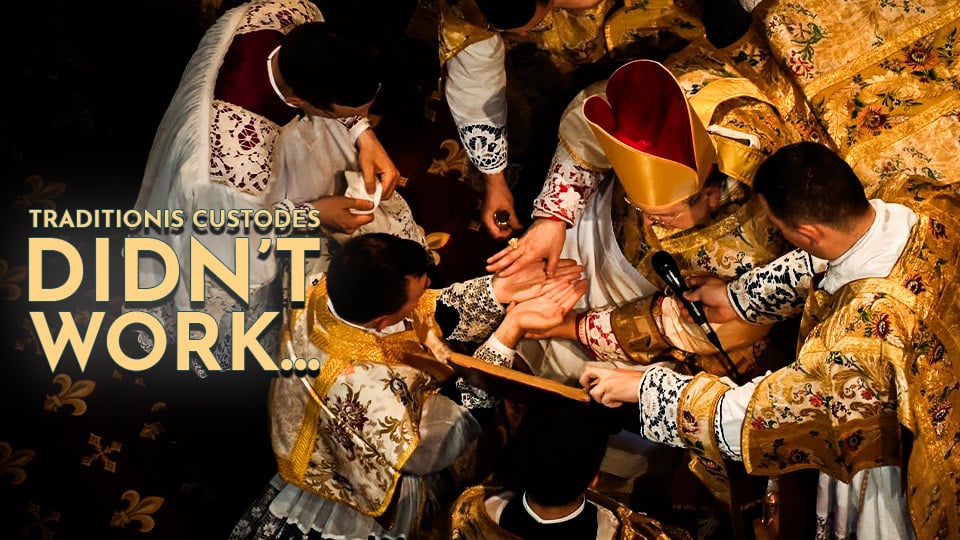

This past week, June 29 to July 3, 2026, was a week of grace and growth for the Institute of Christ the King and for the Universal Church. Cardinal Raymond Leo Burke ordained four new priests for the Universal Church and presided over the solemn Te Deum in Gricigliano, Italy, and the next day, the new ordinands offered their first Masses in the presence of their families.
Earlier in the week, Monsignor Gilles Wach, Prior General, bestowed the cassock on 16 seminarians and five oblates, and 63 seminarians and 11 oblates received clerical tonsure and minor orders from the hands of Alain Castet, bishop emeritus of Luçon in France. In addition, Salvatore Cordileone, Archbishop of San Francisco, ordained eight men to the subdianonate and also six men to the diaconate.
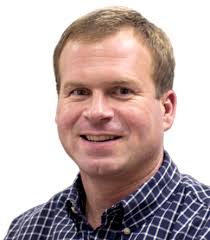
Following is an exclusive interview for The Remnant with Canon Matthew Talarico, Provincial Superior, Institute of Christ the King, Sovereign Priest. Twenty years ago, I published a story interviewing the Institute’s Monsignor Michael Schmitz and Father George Gabet, then District Superior of North America for the Priestly Fraternity of St. Peter. Not surprisingly, many of the same issues for Catholics we discussed 20 years ago are still relevant today.
Question: Since the unfortunate promulgation of Traditiones Custodes, many Catholics, including myself, were under the impression that orders like the Institute of Christ the King would no longer be able to grow into other dioceses and geographies. Some stories you related to me show that this is a misconception.
Please provide some samples of the ongoing work the Institute is doing for the readers. Also, would you please provide some background for readers who are not familiar with the Institute and its founding?
Canon Talarico: The founders, Monsignor Gilles Wach and Canon Philippe Mora, are both from France and studied in Italy for the priesthood under the late Giuseppe Cardinal Siri. They were ordained to the priesthood in 1979 in St. Peter’s Basilica.
While working for the Congregation for the Clergy and studying at the Angelicum, they were encouraged by several members of the Roman Curia, including Cardinal Oddi, Cardinal Palazzini and Monsignor Piolanti, among others, to found a community of priests formed according to the traditional Roman spirit, marked by constant fidelity and filial dedication to the Roman Pontiff and the Magisterium.
Priests of this Institute would celebrate daily the Roman liturgy according to the usus antiquior while exercising pastoral care of souls according to the spiritual method of St. Francis de Sales, the Doctor of Divine Charity.
The Institute has grown to serve apostolates across the country in 25 dioceses—including four new dioceses added in 2025.
Canonically established in 1990, the Institute of Christ the King Sovereign Priest received permanent status as a Society of Apostolic Life of Pontifical Right in 2008. This status was reaffirmed by the Holy See in 2016. Under the patronage of St. Francis de Sales, Doctor of Divine Charity, St. Thomas Aquinas, and St. Benedict, patron of Catholic culture and civilization, the Institute has developed over the years into a spiritual family of secular canons, clerical oblates, and religious sisters, currently present in 12 countries, including nine European nations and the island nation of Mauritius in the Indian Ocean.
The Institute originated in Gabon, central Africa, where Monsignor Wach once served as Vicar General of the Diocese of Mouila, and today maintains parishes, missions and schools there.
The Institute was first invited to establish a house in the United States in 1995 by then Bishop Raymond Burke of the Diocese of La Crosse, Wisconsin. The Institute has grown to serve apostolates across the country in 25 dioceses, including the four dioceses to which it was invited in 2025 (Brooklyn and Syracuse, New York; Reno, Nevada; and St. Petersburg, Florida).
Monsignor Michael Schmitz serves as vicar general for the Institute worldwide.
Inspired and sustained by the daily chanting of certain hours of the Divine Office throughout the day, the ministries of the Institute’s canons and oblates include teaching faith formation programs, hearing confessions daily, offering spiritual direction, preaching days of recollection in the spirit of our patron St. Francis de Sales, making pastoral visits to the sick, serving in hospital chaplaincies, leading works of charity and community outreach, and participating in activities for youth and young adults.
Our international seminary has remained consistently above one hundred seminarians.
Given this specific charism and mission, the Institute tends to attract the faithful from a broad geographical area, so that the vitality of neighboring parishes is not compromised. For this reason, bishops have frequently chosen the canonical status of a public oratory for Institute apostolates. Furthermore, in our apostolates, we are blessed with very good relations among the local diocesan clergy.
At a typical Oratory of the Institute of Christ the King, vibrant community life is encouraged. Our locations offer men’s groups, women’s groups, and altar societies. An Oratory will often host a homeschool association, and our Canons sometimes serve as chaplains to other Catholic schools. We sponsor the national Sursum Corda Young Adult Group, which holds regular events at many Oratories. We conduct parish retreats and days of recollection and support local food drives and pro-life activities. Many Oratories have Catholic scouting troops for boys and girls.
We also offer weekly catechism classes for the children of the parish, along with sacramental preparation. Some Oratories are involved in specialized interests, such as local Chesterton Societies, or host guest speakers for special events. All of this is in addition to the liturgical and prayer life of the community, which normally includes rosaries, chaplets, novenas, First Friday and First Saturday devotions, adoration of the Blessed Sacrament, processions and regularly scheduled confession times throughout the week.
The canons of the Institute (referred to by this title since our elevation to Pontifical Right in 2008) are secular priests and do not take vows. They go by this title because, unlike diocesan clergy, they are bound to a daily rule of life consisting in fixed hours of prayer, meals and communal life.
Our clerical oblates live a life similar to that of religious brothers in other established orders. Although they do not become priests, they are nevertheless dedicated to the service of the altar and the solemn celebration of the sacred liturgy. They aid the canons in the care of our churches and houses, teach catechism, train boys in the service at the altar, and instruct lay people in Gregorian chant. They also help direct our many youth activities.
Our female branch, the Sister Adorers of the Royal Heart of Jesus Christ Sovereign Priest are dedicated above all to daily Eucharistic adoration for the sanctification of priests. On November 1, 2019, with the blessing of the bishop of La Crosse, Wisconsin, the Sister Adorers opened their first convent in the United States. They also aid the local apostolate in teaching catechism and running the Catholic group for girls, as well as our national camps for girls in Burlington, Wisconsin.
The ministries of the Institute extend far beyond the liturgy—forming families, young adults, schools, retreats, and works of charity.
Question: Which dioceses and how many does the Institute serve in the United States? The Institute currently has houses in 23 dioceses across the United States, as well as Masses and confessions on Sundays and Holy Days in two additional dioceses. In the Archdiocese of Milwaukee, Holy Mass is offered on Sundays, Holy Days, and First Fridays in Sheboygan, as well as in Milwaukee. Our national retreat center in Burlington, Wisconsin, also offers daily Mass and confessions.
Canon Talarico: Today, the Institute numbers approximately 150 priests, nearly 30 oblate brothers, and more than 70 Sisters worldwide.
In recent years, the number of seminarians enrolled in our international program of priestly formation at St. Philip Neri Seminary in Gricigliano, near Florence, Italy, has remained consistently above 100, at least 40 percent of whom are natives of the United States and Canada.
In the United States, the oblate formation house in St. Louis welcomes new candidates each year, as do its counterpart houses in France and Germany.
Question: Chicago is listed as headquarters but I believe public Masses are no longer being held there. When and why did this occur? And where are you currently based?
Canon Talarico: Since the Institute was invited by the late Francis Cardinal George to establish a house in Chicago more than 20 years ago, the provincial headquarters have been located there at the Shrine of Christ the King. Following a massive fire in 2015, the Shrine of Christ the King continues to undergo a full-scale restoration in the classical Roman architectural style, a project that has made significant progress in recent years.
The central administration of the U.S. province continues to operate from this location today. The province’s vocations program is based in Detroit at St. Joseph Shrine, which is the place of my current canonical residence. Supporting our growing apostolates from coast to coast requires extensive travel. Thankfully, both Detroit and Chicago are centrally located and serve as major airline hubs.
Question: How can Catholic laity request assistance from the Institute for his/her or family’s spiritual needs? Obviously, the diocesan bishop or parish priest has to be involved, I presume?
Canon Talarico: The Institute maintains retreat houses in France, Germany, Switzerland, Ireland, and the United States, which provide the faithful opportunities to grow in the spirituality of St. Francis de Sales.
Sacred Heart Retreat Center in Burlington, Wisconsin, is conveniently located just 35 minutes from Milwaukee and approximately 70 minutes north of Chicago.
A landmark property situated on more than 100 acres, complete with gardens and wooded trails, Sacred Heart Retreat Center was formerly a Franciscan novitiate and was purchased by the Institute in 2023 with the blessing of the Archbishop of Milwaukee. The newly renovated north wing, which opened in late September 2025, offers 28 guest rooms with private baths, while the south wing, which is still awaiting renovation, contains a similar number of guest rooms.
The resident canons offer a full program of weekend and weeklong silent retreats throughout the year for both men and women. During July, several youth camps are held on the retreat center’s extensive grounds by the clergy and sisters of the Institute, with the assistance of many dedicated volunteers and families.
The Institute also offers weekend parish missions in the spirituality of St. Francis de Sales when invited by local diocesan clergy and with the permission of the local Ordinary. These missions, several of which take place each year in various locations across the country, include the celebration of Holy Mass, confessions, and spiritual conferences focused on Salesian spirituality, with particular emphasis on growth in virtue and the development of a faithful prayer life.
Question: It is interesting that the ICR, at least in the U.S., serves Catholics using Shrines or Oratories instead of personal parishes. Why? The FSSP appears to have personal parishes, and of course new personal parishes were banned by Traditionis Custodes. What advantages do Shrine or Oratory designations provide?
Canon Talarico: The canonical structure of the Institute’s apostolates depends upon local circumstances, as discerned by the diocesan bishop in collaboration with Institute leadership. The U.S. province includes several canonical models, including personal parishes, shrines and oratories, in accordance with the prescriptions of canon law.
More recently established apostolates have often been erected as shrines or oratories, canonical structures that help foster their identity as centers that welcome the faithful from throughout the diocese and the surrounding region. The faithful may choose to make a shrine or oratory their regular spiritual home or, if they remain attached to their territorial parish, they may visit an Institute apostolate on occasion for a particular liturgical feast, devotion, class, program, or to take advantage of the daily availability of the Sacrament of Confession.
Biography of Canon Matthew Talarico
“A native of Pittsburgh, Pennsylvania, I was ordained to the priesthood for the Institute of Christ the King Sovereign Priest by Cardinal Raymond Burke in June 2007. I studied at the Institute’s international seminary near Florence, Italy, from 2001 to 2007, following two years of pre-seminary formation at St. Mary’s in Rockford, Illinois, and in Bayerisch Gmain, Germany. I am grateful to be a proud graduate of St. Gregory’s Academy.”