
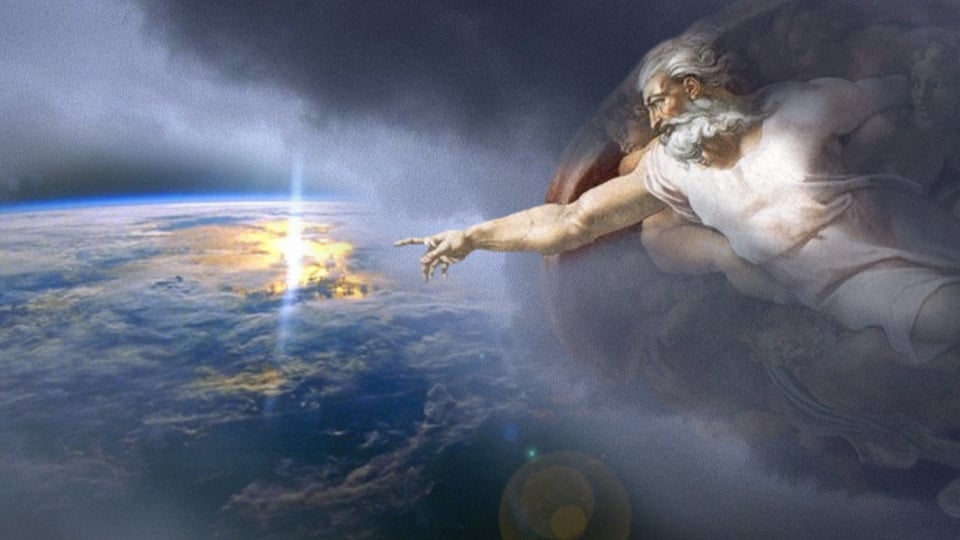

I have emphasized in many articles published in recent years the crucial importance of sacred symbols. In this regard, I can state that, in the context of liturgical and sacramental theology, there is no concept more important than that of the “symbol” (Gr. σύμβολον).
Some of you may recall the definition of the Holy Liturgy given by one of the last great theologians of the Christian Tradition, Dom Prosper Guéranger O.S.B. (1805–1875):
“The Liturgy, considered in general, is the ensemble of symbols, chants, and acts by means of which the Church expresses and manifests its religion towards God.”[i]
So, the Holy Liturgy is the sum of sacred symbols that make up the vast edifice—which I even call a “symbolic universe”—of the Christian ritual. It is clear, from Father Prosper Guéranger’s definition, just how important the concept is upon which a correct understanding of the Holy Liturgy depends.
To clarify things as best as I can, I will say that this symbolic liturgical universe actually reflects the entire cosmos as it was created by God before the fall of Adam and Eve. That cosmos—the sum of “all things visible and invisible”—was truly, as the definitions of the Greek word κόσμος tell us, not only the “universe,” the “world,” but also a “jewel” and an “adornment.”
Through a vivid image, we might say that the cosmos created by God in the beginning was like a Gothic cathedral: it was a “jewel.” And we all know the characteristics of a magnificent jewel: the precise and clear cuts of the precious stones that adorn it, the perfect setting, the harmony of the parts that make up the whole. This, analogically speaking, was the original creation of God—perfectly hierarchical and ordered, like a symphony whose creator is an absolute genius. This is exactly why, at the end of the first creation account in Genesis chapter one, the excellence of God’s work is emphasized:
“And God saw all the things that he had made, and they were very good” (Genesis 1: 31).
If we go deeper into the metaphor of the jewel, we must first highlight the most prized element in such a wonder of creativity: the diamond. Nothing in nature compares to precious stones. Our eyes gaze at them in awe whenever we have the chance to behold them. But among these marvelous crystals and gems diamonds are the most wonderful and sought after.
According to Saint Francis de Sales, if every thing or creature in nature has a symbolic dimension and at least one spiritual meaning, then diamonds offer us some extraordinary lessons.
First of all, they show us unmistakably that the main source of the greatest beauty in nature is light. The secret to their allure lies in the diamond’s ability to let light pass through it, producing never-before-seen hues and brilliance. Then, if we study the origin of diamonds, we find even more reason for amazement: they are formed under immense pressure and temperature, beneath the earth’s crust, at depths of up to 200 kilometers (around 100 miles).
A striking image is the mass of coal deposits where diamonds are found: imagine a dark mountain, gray or black, opaque—within whose massive bulk, rarely and in very few places, transparent tears of light are hidden. One highly significant aspect is the comparison between diamond and graphite. Chemists tell us that both diamond and graphite are allotropes of carbon, which means they are composed solely of carbon atoms. The number of atoms is identical. This seems incredible when we consider the hardness of these two substances: while diamond is the hardest material in all of nature—with a hardness rating of 10 on the Mohs scale—graphite has, on the same scale, only a hardness of 1 or 2. We all know how soft the tips of our pencils are: that material is graphite, the very one we’re discussing.
All these details offer food for meditation, which, as we see in the writings of Saint Francis de Sales, are true lessons about the state of man and the world after original sin. Here are a few suggestions for such active contemplation.
Before the Fall, the Paradise in which Adam and Eve lived was like a collection of diamonds through which the grace of God passed unimpeded. Cascades of light offered the world a perpetual beauty through their brilliance, a beauty we can’t even imagine. God’s glory poured down from above upon all of creation, which was itself transparent like a cosmic diamond.
In fact, going deeper into the diamond metaphor, we can say that Paradise was the sum of various kinds of precious stones that allowed grace to manifest in an absolutely fascinating spectacle. Beyond the limits of Paradise—that is, in the world that Adam and Eve were meant to fill and subdue (Genesis 1: 28)—everything that was created resembled diamonds that had not yet been properly positioned to let the light pass through.
What the first parents had to do was precisely this work of contemplation, through which the grace/the Logos/the divine light associated by God’s Wisdom with each creature in His perfect plan would become visible. Continuing the diamond metaphor, what Adam and Eve were supposed to do is similar to what we do when we rotate a diamond to find the perfect angle that allows light to refract. Thus, a new light—of divine origin—would shine in the pre-Fall world.
The connection between creatures (whether rational or not) existing things, and the divine “reasons” (i.e., “archetypes” or Saint Maximus “logoi” – Gr. λόγοι) that gave them meaning was easy to discern. Adam and Eve, enjoying the privilege of an intuitive knowledge with minds untroubled by concupiscence, could identify and make these divine “reasons” visible without significant effort.
The Fall brought about a change in the nature of all creation. From being transparent to divine grace, the world became opaque, subject to change, corruption, and death. Man lost all original privileges, becoming a slave to the passions of concupiscence and his body, which lost the gift of immortality. The mutation of nature caused by original sin immediately involved—using the terms of Saint Athanasius the Great (c.296–373)—the corruptibility (Greek: τὸ φθαρτός) of nature. Clearly, the corruption of human nature is what brought about the corruption of all creation. Why does God allow this? Because otherwise, man could not have lived in an incorruptible habitat while becoming himself corruptible. That would have been an impossible incompatibility. The signs of this corruptibility are easily perceived in the humors and secretions of our mortal bodies. Our dietary habits changed drastically. Just consider, for example, that before the Fall, Adam and Eve did not eat any animals. What they were given as food is clearly stated in the Genesis text:
“Behold I have given you every herb bearing seed upon the earth, and all trees that have in themselves seed of their own kind, to be your meat” (Genesis 1: 29).
Reading the lines above, I must immediately say that Adam and Eve were neither “vegetarians” nor “vegans.” A vegetarian (or a vegan) is someone who can eat animals but, through personal choice, decides to eat only vegetables and fruits. In the case of Adam and Eve, they could eat only what the sacred text explicitly states: “herb bearing seed,” and “all trees that have in themselves seed.”
If I were to say that they didn’t even have a digestive and excretory system like we do, I’d already be entering the mysterious territory of the nature of our pre-Fall bodies. So, did Adam and Eve eat grass? Yes—but only under the condition that the quality of the grass and trees was completely different from what it is now. This is clearly and mysteriously suggested in a passage from the Apocalypse of Saint John, which shows what the righteous will eat in the Kingdom of God after the end of the world:
“And he showed me a river of water of life, clear as crystal, proceeding from the throne of God and of the Lamb. In the middle of the street, and on either side of the river, was the tree of life, bearing twelve fruits, yielding its fruit every month” (Revelation 22: 1–2).
I assure you, no tree around our homes can give us even the slightest idea of what the Tree of Life in the heavenly Jerusalem will look like. In fact, everything that exists in Paradise is unimaginable to us as we are now. The Apostle Paul, who saw Paradise, said absolutely nothing about what he saw or how he experienced it (2 Corinthians 12: 1–5). Only invented texts and false revelations offer abundant details, like those seen in the drawings from certain neo-Protestant sect magazines. True mystics, however, always tell us that the realities of the eternal world cannot be described in terms we can understand. Why? Because there is absolutely no experience in our current life that compares to the ecstasy of eternal happiness or the beauty of God’s world.
Returning to the metaphor of the diamond and the coal deposits where such gems can be found—after the Fall, our world became like the coal.
As the Gospel of John tells us, everything was plunged into darkness and the shadow of death. The sun and the light of beautiful days can be truly deceptive: they make us admire this fallen world without giving us the slightest idea of the vast, practically inconceivable difference between the light and beauty of the eternal world and our world, which is destined to perish. If we understood things the way Ecclesiastes, the son of David, understood them, we would only be able to repeat his words:
“Vanity of vanities, said Ecclesiastes, vanity of vanities, all is vanity” (“Vanitas vanitatum, dixit Ecclesiastes; vanitas vanitatum, et omnia vanitas” – Ecclesiastes 1: 2).
The world we live in now is not the world as God created and intended it. This world, permitted by Him for the purpose of our salvation, is a world not only where good is mixed with evil, but one in which evil often seems to dominate and even triumph. The reason for this degradation lies in the abandonment of the Logos—the one who should have been and remained the Uncreated Light guiding and protecting everything that exists. But original sin destroyed the incorruptible quality of the world. Metaphorically speaking, its “transparency”—similar to that of a diamond—was replaced with the opacity of coal.
Let’s think for a moment just about the animal species. In Paradise, they were meant to eternally bring joy to humans through their presence and variety. Some animals that seem closest to what would have existed in Paradise are the cat and the dog. We don’t eat these species. We often simply look at them, or play with them. Rarely can we imagine something more gratuitous—purely aesthetic, I might say—than cats. Sure, their usefulness as hunters of mice and rats is undeniable. But still, they remain among man’s best friends—along with dogs.
Other animals, however, have become food for us. That would not have been the case in Paradise. The revelation of Holy Scripture has, however, truly transformed the status of animals. Many species have become sacred symbols: the dove, the lion, the sheep and lamb, the donkey, the horse, the wolf, the dragon, the leviathan, and so on. Obviously, some are positive, luminous symbols of spiritual beings—God, grace-filled humans or angels—while others symbolize beings of darkness, demons. Practically, Scripture has removed some species from the minor category of food—such as sheep, rams, and lambs—and presented them to us as true symbols. What does this mean?
As with any sacred symbol, God has taken small “fragments” from the dominant mass of coal and turned them into diamonds. They only need to be properly placed so that divine grace may shine through them and illuminate our darkened minds. For example, meditating on sheep and lambs, we can learn many things. Or on the donkey—the animal upon which Christ our Savior entered Jerusalem (Matthew 21: 7). We can also meditate on the majestic horse—the animal on which the Savior will return a second time, for the final judgment (Revelation 19: 11).
Profanely, these animals are used for food or traction. In Paradise, that would never be necessary. They are useful in this way only here and now, in this passing world. Yet God, through the way He has introduced them in sacred texts, has given them value beyond the material—beyond food or transportation. What God did was to consecrate these animals, turning them—as I said—into symbols: “diamonds” that can refract the light of divine grace.
One more example. Stone is the most commonly used material for construction. Castles, cathedrals, houses, bridges, etc., all need plenty of stone. But all these things are needed only in this world. In Paradise, we will not need homes, nor temples (churches). There, as Saint John says in the Apocalypse, God Himself will be our temple (Revelation 21: 22). Likewise, the perfect, complete climate conditions and the qualities of the immortal bodies of the righteous will eliminate the need for houses or castles. So we use stone only now, in this world, in accordance with temporary needs.
However, God took stone and transformed it into the material of one of the most important liturgical symbols: the Holy Altar, which symbolizes our Lord Jesus Christ Himself. Traditionally, based on the revelation received by Moses, the holy altar had to be made “of unhewn stones which iron had not touched” (Exodus 20: 25; Deuteronomy 27: 5–6; Joshua 8: 31). So, God took something we use in a profane way—stone—and consecrated it by assigning symbolic meaning to it, linked to its quality as one of the most enduring materials in our world. Nothing is more fitting to symbolize the steadfastness of God and His eternal Law than stone, is it? That’s why, later, our Lord Jesus Christ was called “the stone which the builders rejected (…) the head of the corner” (Matthew 21: 42), and this quality is shared by Saint Peter the Apostle, and all his successors, the Supreme Pontiffs of the Church, standing firm through their testimony of faith.
Thus, we see how a profane object, becoming sacred through divine revelation, is transformed into a symbol that establishes unbreakable links between our world and the eternal world. In Paradise, symbols are not needed—because everything is soaked in holiness and bathed in the glory of God’s light. But in our fallen world, which is opaque to the supernatural, symbols are necessary—like the breadcrumbs that guided Brothers Grimm’s Hansel and Gretel through the forest back home. In fact, that metaphor is better than it seems at first glance: breadcrumbs not only guide the way home, but they can also be eaten if needed.
Sacred symbols are exactly that: food for our minds, which thirst for Truth. But such food is only accessible to those prepared—through a mature faith—to consume it. Otherwise, as Saint Paul says in his first epistle to the Corinthians (3: 1–2), they must be fed with milk until they are able, like children growing into adults, to eat the solid food of allegorical and mystical interpretations.
[i] Dom Prosper Guéranger, Institutions liturgiques, Paris, 1878, Volume I, p.1: “La Liturgie, considérée en général, est l’ensemble des symboles, des chants et des actes au moyen desquels l’Église exprime et manifeste sa religion envers Dieu.”
