
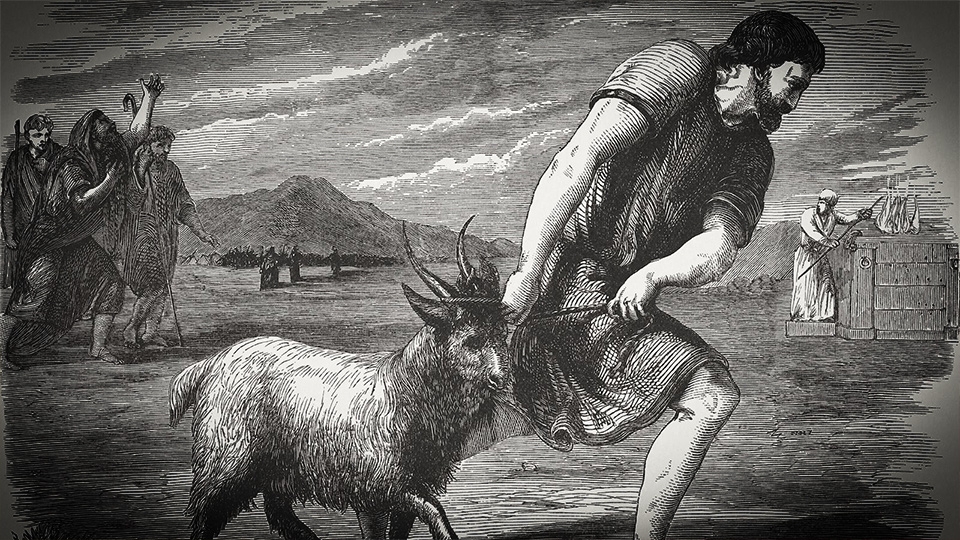

In the depths of Sacred Scripture, the unfolding drama of salvation reveals itself with profound wisdom. Long before the fullness of grace was made manifest in the Incarnation of Our Lord Jesus Christ, the Old Testament stood as a living tapestry, rich with types and shadows that prefigured the sacraments He would institute. These seven sacred mysteries—Baptism, Confirmation, the Eucharist, Penance, Anointing of the Sick, Holy Orders, and Matrimony—are not mere human inventions or isolated rites, but rather the fulfillment of a divine pedagogy that guided the chosen people of Israel. The Old Testament, sacred and inspired, contains within it a foreshadowing of these sacraments, which, when understood in the light of Christ, reveal God’s unchanging plan of sanctification and covenantal love.
The story of God’s relationship with His people begins with creation, but the sacramental life emerges more explicitly in the story of Israel, a chosen nation called to be a “kingdom of priests and a holy nation” (Exodus 19:6). The sacraments are the means by which the New Israel, the Church, participates in this priestly vocation, sanctified by grace and formed into the Body of Christ. Before the fulfillment in Christ, the ancient Jews lived under a system of signs and rites—visible, tangible realities—that mediated God’s blessing and presence. These prefigurations provided both instruction and preparation for the coming of the Messiah and the establishment of the new covenant.
The sacrament of Baptism, the gateway to all other sacraments, finds its roots in the Old Testament’s frequent use of water as a symbol of purification and new life. The great Flood, through which Noah and his family were saved, signifies the cleansing power of water that washes away corruption and prepares for a new beginning (Genesis 6–9). The crossing of the Red Sea marks a more explicit type of baptism: Israel passing from slavery to freedom, from death to life, through water (Exodus 14:21–31). This event is not merely historical but sacramental, as it mirrors the Christian’s passage from the bondage of sin to the freedom of grace. The water that envelops and destroys the enemy becomes the element through which life is reborn.
The Paschal Lamb, whose blood saved the Israelites, points to the Lamb of God whose sacrifice is made present in every Mass. The Eucharist is the center of the Church’s life, just as the Tabernacle and Temple sacrifices were the heart of Israel’s worship.
In the fullness of time, the command of Christ confirms baptism’s necessity for salvation: “Going therefore, teach ye all nations; baptizing them in the name of the Father, and of the Son, and of the Holy Ghost” (Matthew 28:19). The apostles obey, and at Pentecost, Saint Peter proclaims, “Do penance, and be baptized every one of you… for the remission of your sins” (Acts 2:38). Baptism is not merely symbolic but a real participation in the death and resurrection of Christ. “He saved us, by the laver of regeneration, and renovation of the Holy Ghost” (Titus 3:5). The ancient waters were signs; the baptismal font is the substance, where the old man dies and the new man rises.
Jesus Himself elaborates the doctrine of Baptism in His nighttime conversation with Nicodemus, a ruler of the Jews who approached cautiously, “by night” (John 3:2), a detail loaded with symbolic meaning, for Nicodemus stood in the shadow of the Law yet outside the light of full revelation. Jesus declares unequivocally: “Amen, amen I say to thee, unless a man be born again, he cannot see the kingdom of God” (John 3:3). The word used here, anōthen, carries a double meaning in the original Greek: it can signify both “again” and “from above.” Nicodemus, bound by literal interpretation, questions how one can re-enter his mother’s womb. But Jesus clarifies: “Unless a man be born again of water and the Holy Ghost, he cannot enter into the kingdom of God” (John 3:5). Water and Spirit—these are not metaphors but essential elements of rebirth. Christ’s rebuke, “Art thou a master in Israel, and knowest not these things?” (John 3:10), reveals the tragedy of those who cling to the signs but miss the substance they foreshadow. Yet we presume Nicodemus left enlightened, for later he appears again, defending Jesus before the Pharisees (John 7:50), and finally bringing myrrh and aloes for His burial (John 19:39). The one who came by night would become a witness in the light.
The sacrament of Confirmation, by which the baptized are strengthened with the gift of the Holy Ghost, also finds its anticipation in the Old Testament. The anointing of kings and priests with oil symbolized the bestowal of the Spirit’s power and presence (1 Samuel 10:1; 16:13; Leviticus 8:12). The Spirit of the Lord came upon these men to equip them for their sacred roles, just as the Holy Ghost comes upon the confirmed Christian to fortify him in faith and service. But the perfection of this image arrives at Pentecost, when the cowardly apostles are transformed into bold witnesses. “And they were all filled with the Holy Ghost, and they began to speak with diverse tongues, according as the Holy Ghost gave them to speak” (Acts 2:4). What had been foreshadowed in kings and prophets is now fulfilled in the Church.
The fire and wind that descended upon the apostles was not merely spectacle; it was divine commissioning. Those anointed with chrism in Confirmation receive this same Spirit, not to rule a kingdom of this world, but to build up the Kingdom of God. The sacrament impresses an indelible character upon the soul, marking the confirmed as soldiers of Christ. The Spirit who hovered over the waters at creation, who inspired the prophets, who descended at Pentecost, now seals the Christian for battle and witness.
Penance, the sacrament of reconciliation and forgiveness, also has deep Old Testament foundations. The sacrificial system provided means for atonement and forgiveness of sins, especially through the offering of sin and guilt offerings (Leviticus 4; 5). The Day of Atonement, Yom Kippur, was the supreme ritual in which the high priest entered the Holy of Holies to make expiation for the sins of Israel (Leviticus 16).
The Eucharist, the sacrament of Christ’s real presence under the appearances of bread and wine, is foreshadowed throughout the Old Testament, particularly in the manna of the desert and the sacrifices of the Temple. The manna given to the Israelites in the wilderness sustained their physical life and was called the “bread from heaven” (Exodus 16:4–36). Yet this manna was only a shadow of the true Bread of Life that would come from heaven in Christ, who declares, “Except you eat the flesh of the Son of man, and drink his blood, you shall not have life in you” (John 6:54). His audience, scandalized, understood Him literally—and so must we.
In the Upper Room, on the night before He suffered, Jesus fulfilled these words: “This is My body, which shall be delivered for you… This is the chalice, the new testament in My blood” (1 Corinthians 11:24–25). The Paschal Lamb, whose blood saved the Israelites, points to the Lamb of God whose sacrifice is made present in every Mass. The Eucharist is the center of the Church’s life, just as the Tabernacle and Temple sacrifices were the heart of Israel’s worship. Even the miracle at Cana, where Christ transformed water into the best wine (John 2:1–11), reveals a Eucharistic dimension. Christ, as the true Bridegroom, saves the best for last. The abundance of wine at a wedding prefigures the superabundance of grace in the Eucharistic banquet.
Penance, the sacrament of reconciliation and forgiveness, also has deep Old Testament foundations. The sacrificial system provided means for atonement and forgiveness of sins, especially through the offering of sin and guilt offerings (Leviticus 4; 5). The Day of Atonement, Yom Kippur, was the supreme ritual in which the high priest entered the Holy of Holies to make expiation for the sins of Israel (Leviticus 16). This solemn day of purification and reconciliation prefigures the grace given in the sacrament of Penance, where the sinner confesses, is absolved, and restored to grace.
Its New Testament foundation is most clearly seen after the Resurrection, when Jesus appears to the apostles: “He breathed on them, and He said to them: Receive ye the Holy Ghost. Whose sins you shall forgive, they are forgiven them; and whose sins you shall retain, they are retained” (John 20:22–23). This gift is not mere symbolism. If sins can be retained or forgiven, then a judgment must be made—and for that, a confession must be heard. Just as the priest in Israel declared the leper clean or unclean, so now the priest, by Christ’s authority, declares the sinner absolved. The penitent approaches the confessional not for human consolation but for divine absolution.
The sacrament of Anointing of the Sick is likewise anticipated in the compassion shown to the sick in the Old Covenant. The priest laid hands on lepers, made offerings for their healing, and invoked God’s mercy. Elijah’s healing of the widow’s son and Elisha’s raising of the dead are but glimpses of the power God would fully entrust to His Church (1 Kings 17:17–24; 2 Kings 4:32–37).
The sacrament of Anointing of the Sick is likewise anticipated in the compassion shown to the sick in the Old Covenant. The priest laid hands on lepers, made offerings for their healing, and invoked God’s mercy. Elijah’s healing of the widow’s son and Elisha’s raising of the dead are but glimpses of the power God would fully entrust to His Church (1 Kings 17:17–24; 2 Kings 4:32–37). Yet the sacrament itself is explicitly grounded in the New Testament: “Is any man sick among you? Let him bring in the priests of the church, and let them pray over him, anointing him with oil in the name of the Lord” (James 5:14). Oil, which once consecrated kings and healed wounds, now becomes a vehicle of sanctifying grace and preparation for eternal life. In Anointing of the Sick, the suffering body is cleansed and prepared, not for death alone, but for its consummation in glory.
Holy Orders, the sacrament that ordains men to the priesthood, is foreshadowed in the Old Testament priesthood itself. The Levites were set apart for service in the Temple, consecrated by the anointing oil and the laying on of hands (Numbers 8:10–22; Leviticus 8). Their role was to mediate God’s presence, offer sacrifices, and teach the Law. The priesthood was not only a function but a sacred vocation that pointed forward to the eternal priesthood of Christ, the High Priest who offers Himself once and for all (Hebrews 7).
At the Last Supper, Christ institutes the New Covenant in His Blood, and simultaneously ordains the apostles to offer the same sacrifice. “Do this for a commemoration of Me” (Luke 22:19). In that moment, the new priesthood is born. The apostles, and their successors, are charged with feeding the flock, offering sacrifice, forgiving sins, and anointing the sick. Their priesthood is not merely functional but sacramental—an imprint of Christ the Eternal Priest, perpetuated through apostolic succession.
Thus, the seven sacraments form not seven isolated rites but a symphony, harmonizing heaven and earth. Each flows from Christ and draws the soul deeper into the mystery of divine life. Their Old Testament roots testify to God’s eternal plan; their New Testament institution reveals His Incarnate Love.
Even the washing of feet on Holy Thursday (John 13:5–10) bears hidden meaning here. Christ, the High Priest, stoops to wash the feet of His apostles. But this act is not only humility—it echoes the episode when David tells Uriah the Hittite, “go down to thy house, and wash thy feet” (2 Kings 11:8). In ancient Jewish culture, this was a euphemism for intimacy, a return to marital rights. But Uriah refuses, and the sin of David deepens. In contrast, Jesus’ foot-washing is pure: it points to spiritual fruitfulness, priestly fertility, a preparation of those whose mission will bring life to others.
Finally, Matrimony, the sacrament of union and procreation, is rooted in the very foundation of creation. God’s institution of marriage in Genesis establishes it as a sacred covenant between man and woman, “one flesh” and a reflection of Christ’s union with His Bride, the Church (Genesis 2:24). The Old Testament repeatedly stresses the importance of marriage, fidelity, and fruitfulness (Proverbs 18:22; Malachi 2:14–16). Yet even here, the ultimate fulfillment awaits.
At the wedding feast of Cana, Jesus does not merely attend; He acts. When the wine runs out, He supplies more—and not just more, but the best (John 2:10). He is the true Bridegroom, and His miracle inaugurates His public ministry. The superabundant wine points to the Eucharist, and to the joy of the New Covenant, which is not stingy but overflowing. Saint Paul reveals the fullness of this mystery: “This is a great sacrament; but I speak in Christ and in the church” (Ephesians 5:32). Christian marriage becomes a living icon of Christ’s faithful, fruitful, and sacrificial love.
Thus, the seven sacraments form not seven isolated rites but a symphony, harmonizing heaven and earth. Each flows from Christ and draws the soul deeper into the mystery of divine life. Their Old Testament roots testify to God’s eternal plan; their New Testament institution reveals His Incarnate Love. To live according to the sacraments is to walk with Christ through time toward eternity, conformed to His Passion, nourished by His grace, and destined for His glory.
