

This is a sneak peek of The Remnant Newspaper’s “Ask Father” column. Send your questions for Father here and subscribe to The Remnant to read Father’s response!
Dear Father: Occasionally when driving or just passing time, I tune in via radio to an Evangelical preacher. I find the way he explains Scripture in such a detailed, verse-by-verse way interesting, although of course I always remember that he is not a Catholic and brings his particular slant to the subject matter. Most recently he went on and on about “The Rapture.” I have heard this referred to before and have even seen “Christian” novels about it. I have never heard it taught in a Catholic context. Can you shed some light on this?
Dear Reader: The phrase “The Rapture” refers to the End Times, and a particular theory help by many American evangelical Christians. You are quite right in being cautious about Protestant sources. Listening to a clergyman copiously quoting from the Bible can make one think that one is getting in touch with the Early Church teaching– yet the teaching on “The Rapture” seems to have been invented in the 1830’s among American Evangelical Christians (the conviction of Evangelical and Fundamentalist Christians that they hold to the original Christian faith of the Early Christians, and that Catholicism is a patchwork of ‘man-made traditions,’ is an illusion). The Rapture theory is based on a passage in Saint Paul, 1 Thessalonians 4:13-18, which is often read in our Funeral Masses. But the Fathers and Doctors of the Church understood it quite differently from contemporary Evangelicals.
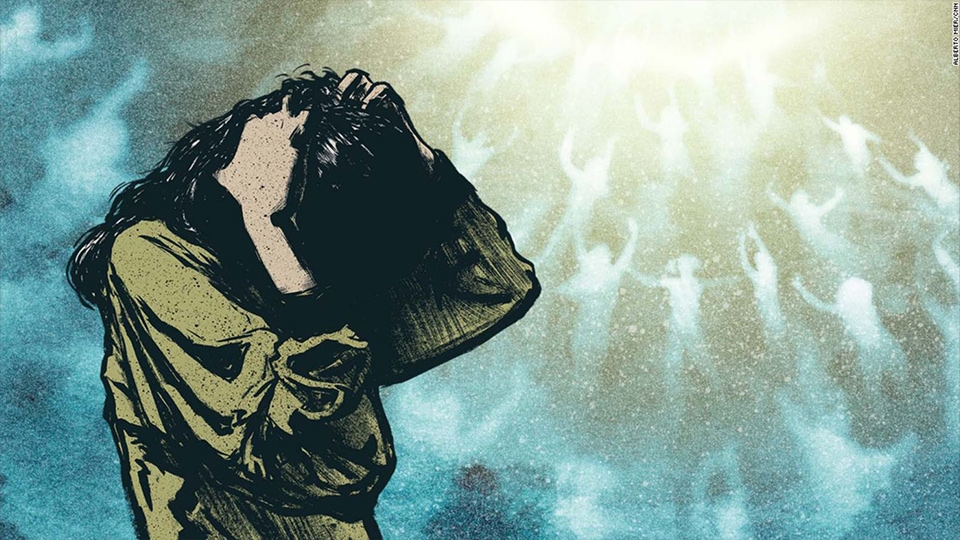
Those who believe in “The Rapture” believe that Christ will snatch up the righteous, who will disappear from the earth to be caught up in the Kingdom of God; while the unrighteous will be left here on earth to undergo seven years of tribulation.
Saint Paul says, “For the Lord Himself will descend from heaven with a cry of command, with the archangel’s call , and with the sound of the trumpet of God. And the dead in Christ will rise first; then we who are alive, who are left, shall be caught up together with them in the clouds; and so we shall always be with the Lord (1Thess 4:16-17).” Those who believe in “The Rapture” hold this to mean that Christ will snatch up the righteous, who will disappear from the earth to be caught up in the Kingdom of God; the unrighteous will be left here on earth to undergo seven years of tribulation, followed by Christ’s return and a thousand-year reign of Christ on earth. There are different variations of this held by different groups.
The reality is much simpler. All Scripture must be understood in context. Saint Paul writes to the Thessalonians to address one of the first crises of the Early Church: they had begun to die. Two thousand years later, this might sound strange to us—we have lots of experience of Requiem Masses! —but the early Christians understood Christ to have ascended to heaven, but to have promised to return, and they expected that this would happen soon—very soon. He would come, they would be “caught up” with Him to heaven. They expected that they would never experience death—after all, they were baptized!
When the first of them started to die, it occasioned a crisis. What about Aunt Gert, who died last Thursday? She won’t be here to greet the Lord when He comes! Will she miss out on salvation? St. Paul is writing to assure them that we are all in Christ’s hands. He will not let one of His own be lost. At His second coming, those who died in Christ will be raised; then they AND those who are alive will be caught up with the Lord to the Kingdom.
Theories like “The Rapture” are occasioned by misunderstanding of Scripture, which is why we as Catholics read Scripture ‘in the Church,’ which means within the Tradition.
Theories like “The Rapture” are occasioned by misunderstanding of Scripture, which is why we as Catholics read Scripture ‘in the Church,’ which means within the Tradition. Years back there was a brilliant fundamentalist Presbyterian pastor, Scott Hahn. He was devoted to Scripture as the sole Rule of Faith (sola scriptura), and explaining the Bible to his parishioners, and he loathed the Catholic Church.
Dr. Hahn decided on a project. He wanted to interpret the last book of Scripture, the Book of Revelation, definitively, so that everyone would agree on his interpretation of the many fantastic symbols of that book (people were finding Stalin, Hitler, the Pope, World Wars I and II, even Ronald Reagan in its verses). So he decided to go back in history to the early Church Fathers, reasoning that they were closest in time to the authors of Scripture and so would understand them best.
What he found, with increasing dismay, was… Catholicism. The Fathers who preached on the Book of Revelation did not read it as predicting future events. They interpreted it as referring to the Liturgy — the eternal Liturgy of heaven, which is made present to us here on earth in the Liturgy of the Mass. Biblical prophecy is not primarily about foretelling the future, as the proponents of “The Rapture” theory assume.
He discovered for the first time that the Bible cannot possibly be held to be the only source of doctrine—sola scriptura—because nowhere in the Bible does the Bible teach this!
It is about proclaiming God’s Word to His People here and now. What the Fathers proclaimed to the scattered, marginalized, persecuted Christians of the Roman Empire was that every time they gathered for their Eucharist with their Bishop and Elders and Deacons they were participating in the eternal Liturgy of Heaven and Christ’s final victory over sin, sickness and death. Dr Hahn continued his research, broadening it to contemporary Catholic sources (and discovering for the first time that the Bible cannot possibly be held to be the only source of doctrine—sola scriptura—because nowhere in the Bible does the Bible teach this!).
Dr Hahn became a Catholic, along with his wife Kimberly, and is professor of Sacred Scripture at Franciscan University in Steubenville. Their conversion story is recounted in their book Rome Sweet Home, available through Ignatius Press (ignatius.com). Most usefully, we now have a wonderful resource in the Ignatius Catholic Study Bible, with copious notes by Dr Hahn and others, enabling us to be sure that we are reading Scripture within the Tradition of the Catholic Church.
The strongest argument against “The Rapture” is the strongest argument against Protestantism: can it possibly be that Christ, Who promised to be with His Church until the end of time, allowed her to fall into serious error on essential matters and teach error for a millennium and a half or longer?
