
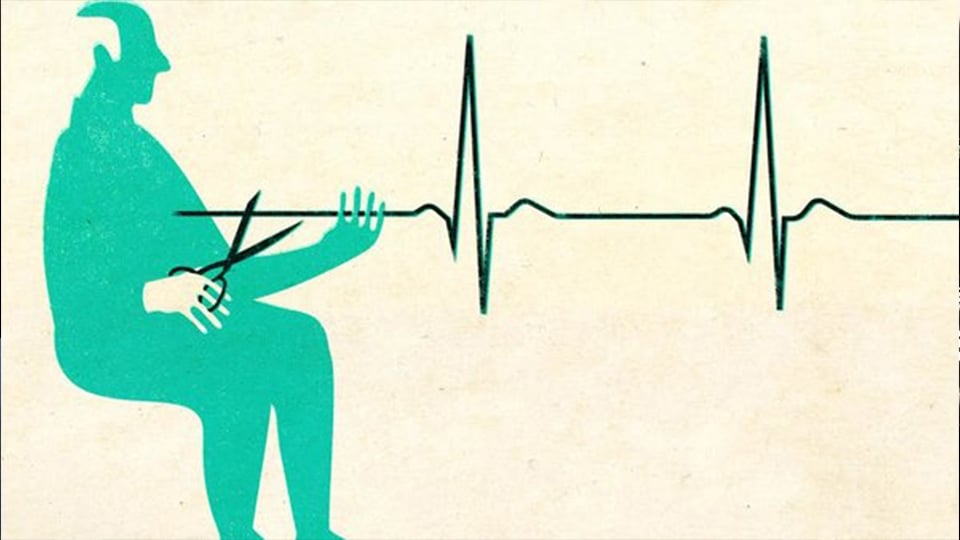

On June 20, the majority of British lawmakers in the House of Commons voted 314 to 291 in favor of the contentious anti-life “Terminally Ill Adults (End of Life) Bill” to legalize assisted suicide for “terminally ill” adults. The bill will now go to the unelected House of Lords for further evaluation. In essence, this anti-life bill permits mentally competent adults, diagnosed with a terminal illness and speculated to live less than six months (though such diagnoses are never fully fool-proof), to request lethal medication to end their lives through the National Health Service (NHS).
This process that necessitates the approval of only two doctors and an evaluation by a panel of specialists would put the UK on a path already trodden by left-liberal countries such as Canada (under Justin Trudeau and Mark Carney).
State media outlet BBC (a.k.a the “British Brainwashing Corporation”) had this to say regarding the disastrous passing of the notorious bill:
“It is likely, although not guaranteed, that the House of Lords will approve the bill later this year.If that happens, ministers would have a maximum of four years to implement the measures, meaning it could be 2029 before assisted dying becomes available.”
Unsurprisingly, Labour Prime Minister and showman-in-chief Keir Starmer supported the anti-life bill, while Conservative leader Kemi Badenoch and Health Secretary Wes Streeting opposed it.
Before the bill was passed, Archbishop of Westminster and president of the Bishops’ Conference of England and Wales Cardinal Vincent Nichols, together with Archbishop Sherrington, warned that many Catholic residential homes for the elderly and hospices would be forced to “withdraw from care” if assisted suicide bill were to pass.
Sad to say, the vote in favor of the assisted dying bill marks a grave (pun intended) moment in a dying Britain.
On that very day, the Remnant had the opportunity to join various members of Christian legal group “Christian Concern” outside the British Parliament, where emotions and voices were running high.
Pro-life advocates held banners calling on lawmakers not to make the state-run National Health Service (NHS) the “National Suicide Service” and not to make “doctors killers”.
(See photos taken by The Remnant below.)
(Photo taken by The Remnant.)
(Long Live Christ the King! Photo taken by The Remnant.)
(Indeed, there is hope in Our Lord Jesus Christ! Photo taken by The Remnant.)
(Pro-lifer clasping a Rosary in her hands. Photo taken by The Remnant)
(Photo taken by The Remnant.)
(Three of the ladies from Christian Concern, Helen from Wales (left), Chief Executive Andrea Minichiello Williams in the middle, and Hannah (right). Photo taken by The Remnant.)
Notably, today’s tragic vote has been touted by The Press Democrat as “potentially the biggest change to social policy since abortion was partially legalized in 1967.”
When asked by The Remnant to comment on the tragic vote, Williams stated the grim reality Britain would have to face, but still adopted a hopeful tone:
“It is a very sad day; it is a very dark day. But when a nation goes this dark, when a nation chooses death, when the Parliament legislates death, then the remnant will rise. The remnant rises to shine bright, and we will provide safe places for our citizens in this country. We won’t give up.”
Likewise, Helen from The Wilberforce Collective adopted a voice of hope in God’s love in her comments to The Remnant:
“I just know that God is good, and no matter what the laws of the land are, no law of a land can change the laws that are written in people’s hearts. We can legislate society, but we can’t legislate hearts. A heart change is only something that God can do, and that’s our confidence as Christians. Our faith is that God is love, that He is compassion, that He is full of love, that He doesn’t want anyone to die, and eventually He wants us to have eternal life in heaven with Him. But this bill is very tragic for the nation. It’s not over yet though, so we still have time. But I think even if the laws of the land turn against the things that are good, right, and honorable, still there is a remnant, and that remnant is going to grow and rise and shine brightly for all that we believe that is good, true, right, and lovely. And that is what we are focusing on, that God is a God of love and life. So just like in the beginning when God said, ‘Let there be light,’ we say, ‘Let there be life in this nation’. May people realize that God is love, not because the laws of the land change.”
Similarly, Hannah from The Wilberforce Collective told me that prior to the bill’s passing, she wrote to her Member of Parliament (MP) to protest the bill.
It is a very sad day; it is a very dark day. But when a nation goes this dark, when a nation chooses death, when the Parliament legislates death, then the remnant will rise. The remnant rises to shine bright, and we will provide safe places for our citizens in this country.
In statements quoted by The Catholic Herald, Archbishop John Sherrington of Liverpool, the lead bishop on life issues, said the bishops were “shocked and disappointed” that lawmakers voted to back the bill.
He said: “This bill is flawed in principle with several provisions that give us great cause for concern. The Catholic Church believes in promoting a culture of life and compassionate care. Allowing the medical profession to help patients end their lives will change the culture of healthcare and cause legitimate fears amongst those with disabilities or who are especially vulnerable in other ways. We are also concerned about the future of palliative care, not least because experience suggests that, unless there are explicit protections, hospices may be required to co-operate with assisted suicide.If this were to happen, the future of many Catholic institutions could be under threat.”
Yet the archbishop added:
“This is not the end of the parliamentary process, and we should not lose hope. Genuine compassion involves accompanying those who need care, especially during sickness, disability and old age. The vocation to care is at the heart of the lives of so many people who look after their loved ones and is the sign of a truly compassionate society … it is essential that we nurture and renew the innate call that many people have to compassionately care for others. The bishops of England and Wales believe that improving the quality and availability of palliative care offers the best pathway to reducing suffering at the end of life. We will continue to advocate for this.”
Echoing Archbishop Sherrington’s views, Bishop Philip Egan of Portsmouth proclaimed:
“This is an appalling development with massive consequences especially for the sick, the elderly and the vulnerable. British society has taken yet another step away from its Christian patrimony.”
Bishop Mark Davies of Shrewsbury also declared:
“It is a sad moment for us all and especially for those most vulnerable that the House of Commons has opened the door to euthanasia in the guise of assisted dying. We may be incredulous that such a seismic change to society was effected by what is widely acknowledged to be a deeply flawed Bill passed after a few hours of debate, albeit with a small majority. We can hope that in the House of Lords there may be a reassessment of this legislation with all its dangers. We can also take heart in the public witness awakened n opposition to euthanasia and for the value of every human life; concern for safeguarding the sick and the aged in their vulnerability and truly assisting the dying in the provision of palliative care. This must surely remain our priority.”
Before the bill was passed, Archbishop of Westminster and president of the Bishops’ Conference of England and Wales Cardinal Vincent Nichols, together with Archbishop Sherrington, warned that many Catholic residential homes for the elderly and hospices would be forced to “withdraw from care” if assisted suicide bill were to pass.
“We call attention to the fact that the future of many care homes and hospices will be put in grave doubt if the Terminally Ill Adults (End of Life) Bill becomes law,” both prelates said in their statement.
“Our Parliament has now rejected amendments that would have allowed such institutions not to be involved in assisted suicide.”
Mary, Our Lady of Guadalupe, Mother of Life, pray for your Dowry.