
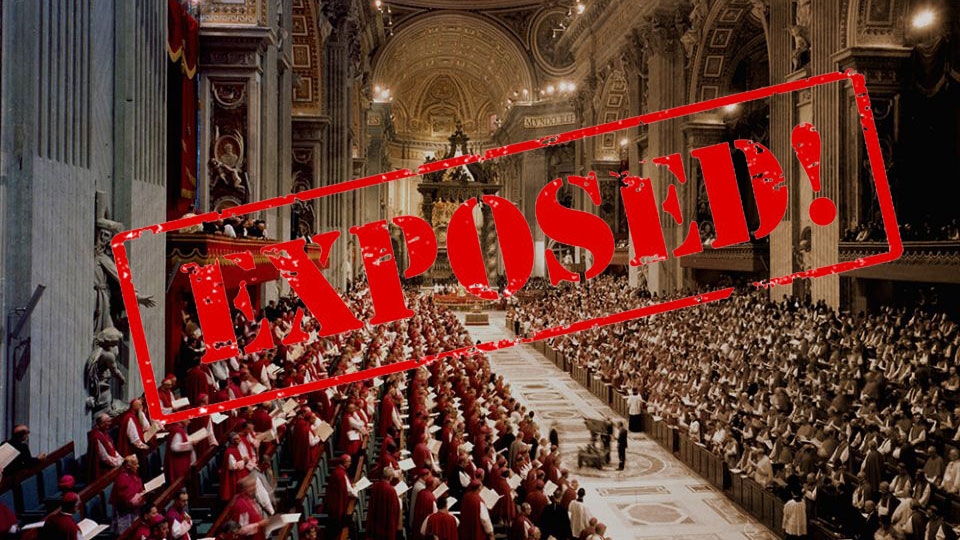

“You see, you’re too young to know the Catholic atmosphere before the Second Vatican Council. It was an austere atmosphere—like entering a particular order, a special discipline. Catholicism brought liturgical stability, epistemological and rational certainties. Well, the relaxations promoted by the Second Vatican Council were, for a large mass of Catholics, a welcome opening—but, curiously, they made Catholicism as a whole less appealing to outsiders. It became more similar to other branches of Christianity.” – Professor Virgil Nemoianu
On June 6 of this year, at the age of 85, one of the most important Romanian-American intellectuals of recent decades passed away: Professor Virgil Nemoianu [see image on left]. For English-speaking audiences, Professor Nemoianu—a distinguished specialist in comparative literature—is known through his studies dedicated to imagination, aesthetics, and Romanticism, published by prestigious academic publishers such as Harvard University Press (The Taming of Romanticism: European Literature and the Age of Biedermeier, 1984), Johns Hopkins University Press (A Theory of the Secondary: Literature, Progress, and Reaction, 1989), The Catholic University of America Press (Postmodernism and Cultural Identities: Conflicts and Coexistence, 2009), University of South Carolina Press (The Triumph of Imperfection: The Silver Age of Sociocultural Moderation in Europe, 1815–1848, 2006), and State University of New York Press (Play, Literature, Religion: Essays in Cultural Intertextuality, 1992). After teaching at universities in Cambridge, London, California (Berkeley), and Cincinnati, he remained at The Catholic University of America, where he served as Director of the Comparative Literature Program (1979–1994) and Associate Academic Vice-President for Graduate Studies (1989–1991). So, not only did he publish hundreds of articles, but his teaching career also offered generations of students at CUA the opportunity to attend the courses of one of the most important scholars in the field of literature.
For the generation of Romanians born after 1970—to which I myself belong—Professor Nemoianu was, along with Mircea Eliade and Ioan Petru Culianu (both from the University of Chicago), an important intellectual reference point. What is particularly special about him, however, is the place that Christian (i.e., Catholic) theology held in his writings. Formed in the post-World War II period, under communist occupation, Nemoianu discovered the perennial values of the Christian Tradition and integrated them into his theoretical vision. That is why, among Romanian intellectuals, he became one of the rare voices who did not shy away from speaking about authors such as Saint John Chrysostom, Bonaventure, Thomas Aquinas, or great Catholic writers like Gilbert Keith Chesterton, George Bernanos, and Paul Claudel. For the culture of a country that spent half a century under communist rule, this was of overwhelming importance.
The abandonment—and even systematic undermining—of these values through the chaos of post-conciliar “reforms” and the thousands of liturgical innovations that followed led to an atmosphere that, as the distinguished professor rightly said, no longer attracted intellectuals (and, I would add, nor other social groups).
After my own conversion—during my philosophy studies (1991–1996)—Nemoianu became one of my favorite authors. I found in his writings not only an extraordinarily vast culture but also a certain harmony with the Christian faith, expressed in a discreet yet firm tone. In 1997, the Romanian Cultural Institute published a collection of his texts titled Jocurile divinității. Gândire, libertate și religie la sfârșit de mileniu (The Games of Divinity. Thought, Freedom, and Religion at the End of the Millennium). This work had a significant impact on me. As a young philosophy graduate, I discovered in it all the details of a theological thought I did not expect from a secular author of literary history and criticism. But this book gave me something even more: the discovery of authors beloved by Catholics faithful to Tradition, such as Saint John Henry Newman and G.K. Chesterton. In the years following its publication, Divine Providence arranged something very important for my humility and intellectual growing: collaboration with this distinguished intellectual.
Specifically, after I published several articles dedicated to his books, Professor Virgil Nemoianu responded to a message in which I brought them to his attention. From then on, numerous discussions and bibliographic recommendations followed, as well as two volumes on which I had the honor to collaborate with the esteemed scholar. One of these was a collection of studies dedicated to the most celebrated professor of the 20th century, John Ronald Reuel Tolkien. Titled J.R.R. Tolkien: Crdință și Imaginație (J.R.R. Tolkien: Faith and Imagination) and published in 2005, the volume featured contributions from some of the most important interpreters of the father of fantasy literature: Bradley Birzer, Joseph Pearce, Stratford Caldecott, Andrew Nimmo, Michael Waldstein, Christopher Garbowski. Before that academic collaboration, however, I had conducted a long interview with Professor Nemoianu in 2002—published in a volume titled Înțelepciunea calmă. Dialoguri în cyberspace (Calm Wisdom. Dialogues in Cyberspace).
Professor Virgil Nemoianu was—like brilliant non-convert thinkers such as Novalis, Simone Weil, or Nicolae Steinhardt—profoundly influenced by the Catholic religion. He was the one who, for entire generations of Romanian intellectuals, introduced major Catholic authors such as Romano Guardini, Joseph Pieper, Charles Péguy, Paul Claudel, Georges Bernanos, Henri Bremond, Gilbert Keith Chesterton, Miguel de Unamuno, Flannery O’Connor and Evelyn Waugh.
This volume gave me the opportunity to have a wide-ranging discussion with an extraordinary scholar. Literature, classical music, poetry, famous writers and poets, theology, philosophy—in short, everything that matters—I was able to discuss with Professor Nemoianu. The greatest shock for me, however, came from his spontaneous and unexpected testimony about his desire to convert to Catholicism. Of course, he already knew about my own conversion to Catholicism, which had taken place in the Jubilee Year of 2000. Perhaps inspired by this detail from my biography, he told me at one point that he had considered converting from Eastern Christianity (i.e., “Orthodoxy”), which he belonged to by birth, to Catholicism. After an initial moment of surprise and a few pages of questions and answers, sensing his openness to discussing such personal topics, I dared to ask for more details about this aspect of his life. You can now read, translated for the first time into English, both my question and his response:
“Robert Lazu: Let’s return to the world of faith. You haven’t shied away from admitting that you were intensely visited by the thought of converting to Catholicism. At the same time, you state—disconcertingly—that the famous Second Vatican Council was what blocked this intention, as if it were telling you: ‘Look, son, we don’t really need you.’ I must admit, I don’t quite understand.
Virgil Nemoianu: You see, you’re too young to know the Catholic atmosphere before the Second Vatican Council. It was an austere atmosphere—like entering a particular order, a special discipline. Catholicism brought liturgical stability, epistemological and rational certainties. That was both its unpleasant distancing and its attractive charm for some—especially for some intellectuals. (…) Well, the relaxations promoted by the Second Vatican Council were, for a large mass of Catholics, a welcome opening—but, curiously, they made Catholicism as a whole less appealing to outsiders. It became more similar to other branches of Christianity. It seemed to me (and to others) that the difference between being Catholic and being Orthodox—or even Protestant—was significantly diminished. So why bother? Why strive and make great spiritual and practical efforts? We’re all the same. I’d better stay in my place. The very tolerance codified by the Second Vatican Council told me (at that time) that it was more fitting for me to remain Orthodox—because the difference didn’t really matter.”
When I first read the above lines, I almost didn’t understand. I knew absolutely nothing about Catholicism before Vatican II. I had read something similar only once—about pre-conciliar Catholic Tradition—in the writings of another Romanian author similar to Virgil Nemoianu: Nicolae Steinhardt (1912–1989). In some of his memoirs, Steinhardt described the atmosphere in Catholic churches he had visited in Bucharest before the council. His testimonies left me confused. What I knew from the period after 1998, when I began attending the Novus Ordo liturgy, did not resemble what I was reading in Steinhardt and Nemoianu.
I am one of those who can testify to his beneficial influence, simply through the contact he offered me not only with the works of such theologians, philosophers, or writers, but also through the openness to Catholic Tradition. I can only be grateful to him, praying with trust in God’s mercy for the repose of his soul.
First of all, Professor Nemoianu emphasizes the—let’s call it—“Thomistic” character of the pre-conciliar Church. Doctrine was firm, clear, well-defined. As he says, a believer had “epistemological certainties” free from the ambiguity and equivocation that became common after the Council. And we, those living after the pontificate of Pope Francis, know that these have now reached apocalyptic proportions, in a context where discussions about the validity or invalidity of a pontificate seem fully justified. What is most important, however, is that Virgil Nemoianu highlights—first of all—liturgical stability. And I assure you, he does this fully aware of the values of the Liturgy of the Ages, which he had experienced in Bucharest during the 1950s–60s. The abandonment—and even systematic undermining—of these values through the chaos of post-conciliar “reforms” and the thousands of liturgical innovations that followed led to an atmosphere that, as the distinguished professor rightly said, no longer attracted intellectuals (and, I would add, nor other social groups).
However, the greatest catastrophe—one I have written about in all my critical articles on ecumenism—was, without a doubt, the generalization of religious indifferentism. We remember that pre-conciliar popes, led by Pius XI, condemned—starting with the famous Syllabus of Errors of Pope Pius IX—the indifferentism promoted and provoked by all forms, explicit or implicit, of ecumenism. Professor Nemoianu’s decision not to take the decisive step of conversion was, by his own account, precisely due to this indifferentism. What’s the point of becoming Catholic if even the leaders of the Catholic Church seem to say—if not explicitly, then subtly—that all Christian denominations are equal and that none can categorically and absolutely claim to hold the Truth of Christian revelation? I said the Catholic leaders seem to say such things because their “diplomatic” formulations are often ambiguous enough to prevent clear and unequivocal discernment. Either way, we see that these statements have often had catastrophic effects. One such effect was the postponement—or even blocking—of the conversion of souls who genuinely seek the Truth.
Despite his decision, Professor Virgil Nemoianu was—like brilliant non-convert thinkers such as Novalis, Simone Weil, or Nicolae Steinhardt—profoundly influenced by the Catholic religion. He was the one who, for entire generations of Romanian intellectuals, introduced major Catholic authors such as Romano Guardini, Joseph Pieper, Charles Péguy, Paul Claudel, Georges Bernanos, Henri Bremond, Gilbert Keith Chesterton, Miguel de Unamuno, Flannery O’Connor and Evelyn Waugh. I am one of those who can testify to his beneficial influence, simply through the contact he offered me not only with the works of such theologians, philosophers, or writers, but also through the openness to Catholic Tradition. I can only be grateful to him, praying with trust in God’s mercy for the repose of his soul.
