
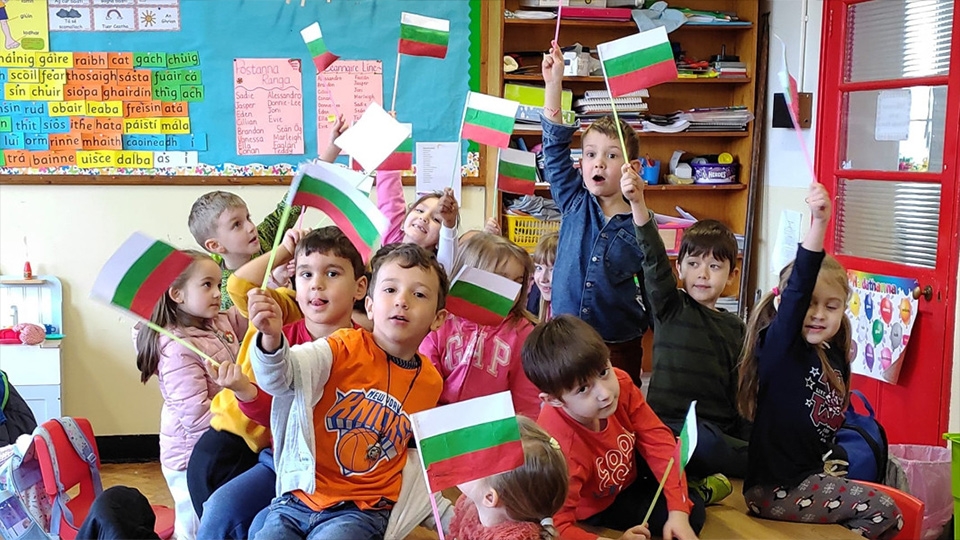

On August 7, Bulgaria’s parliament authorized an amendment to the country’s “Pre-School and School Education Act” by a large majority (159 for, 22 against and 12 abstaining) , forbidding its education system from touting LGBTQ+ ideologies in schools.
After around four hours of parliamentary debate, lawmakers eventually concluded, stating: “Non-traditional sexual orientation is different from the generally accepted and embedded in the Bulgarian legal tradition concept of emotional, romantic, sexual or sensual attraction between persons of opposite sexes.”
Thus, the recent amendment bans the “propaganda, popularization and incitement” of all ideas linked to “non-traditional sexual orientation or determination of gender identity other than biological,” local media reports divulged, as cited by Russia Today (RT).
Following the amendment, Bulgarian law now prohibits the “propaganda, promotion or incitement in any way, directly or indirectly, in the education system of ideas and views related to non-traditional sexual orientation and/or gender identity other than the biological one”, as per a report by The European Conservative.
Kostadin Kostadinov maintained that LGBTQ+ ideologies were “not humane” and that it was “anti-human” to “promote” non-traditional relationships in schools. Moreover, Petar Nikolov of the GERB party said he objected to LGBTQ+ propaganda that exposes children to alternative sexual orientations, singling out Bulgaria’s “Christian essence”.
As champions of the amendment, Bulgaria’s right-wing “Revival” (Vazrazhdane) led by Kostadin Kostadinov, contended that leftist ideologies normalizing homosexual relations went against the Bulgarian constitution’s provision for marriage as a relationship between a man and a woman.
Notably, Kostadinov maintained that LGBTQ+ ideologies were “not humane” and that it was “anti-human” to “promote” non-traditional relationships in schools, based on a report by RT.
Moreover, Petar Nikolov of the GERB party said he objected to LGBTQ+ propaganda that exposes children to alternative sexual orientations, singling out Bulgaria’s “Christian essence”, according to The European Conservative.
Unsurprisingly, the recent parliamentary decision has incurred the wrath of pro LGBTQ+ voices in Bulgaria and in the European Union (EU).
For instance, the pro-LGBTQ+ Bulgarian Helsinki Committee alleged that the parliamentary changes “breach basic human rights”, as per an article by CIA mouthpiece Radio Free Europe (RFE). The Bulgarian Helsinki Committee’s claim was made despite the fact homosexual relations run contrary to divine and natural laws.
Similarly, the European Commission penned a letter to Bulgarian Education and Science Minister Galin Tsokov “to request further information on the legislation,” adding:
“The Commission remains steadfast in its commitment to tackling discrimination, inequalities and challenges faced by LGBTIQ[-identified] individuals – including in education, as outlined in our LGBTIQ Equality Strategy of November 2020.”
On the same note, Liz Throssell from the anti-life United Nations (UN) called on Bulgarian authorities to “reconsider the law in light of the country’s international human rights obligations.” Strikingly, Throssell claimed that “addressing stigma and misinformation is vital for fostering acceptance, tolerance, and the creation of inclusive societies.”
The same RFE article also quoted LevFem, a left-wing feminist group, as slamming the amendment, claiming that these legal changes would render it “impossible” to deal with purported harassment of young lesbian, gay, bisexual, and transgender people in schools.
Yet members of the LGBTQ+ cult in and beyond Bulgaria are attempting to lecture the Bulgarian government about “democracy” and other leftist platitudes at best, perhaps even resorting to punitive measures soon, to pressure Sofia into succumbing to its “woke” and “anti-life” agenda.
Likewise, the pro-LGBTQ+ group Forbidden Colors stated that “it is deeply troubling to see Bulgaria adopting tactics from Russia’s anti-human rights playbook”, alluding to a similar law in Russia. Going a step further, Forbidden Colors even exhorted Brussels to “take decisive action” against Bulgaria for simply maintaining traditional family values.
Besides, leftist group Feminist Mobilisations remarked before the parliamentary vote that “we need to be heard and understood, not rejected and attacked”. (How about people who espouse common sense and support the traditional definitions of family and marriage, are they to be “heard and understood” as well by the LGBTQ+ cult?)
Predictably, leftist ideologues, including media outlets like Balkan Insight, French left-wing site Le Monde, and leftist MP Yavor Bozhankov of the Europhile PP-DB Party (a pro-LGBTQ+ politician who lambasted the amendment as “ugly homophobia”, tried to portray the Bulgarian lawmakers who supported the anti-LGBTQ+ bill and therefore going against “woke” leftist ideologies as “pro-Russian”, as if merely supporting heterosexual relationships equated to support for the Kremlin (such an argument signifies an illogical leap in reasoning, but as many conservatives have found out, leftist radicals cannot reasoned with in many cases because they choose not to, anyway).
For one, Rémy Bonny, executive director of the LGBT activist group “Forbidden Colors,” alleged in statements cited by Politico’s Brussels Playbook, that “this law is not just a Bulgarian issue — this is a Russian law that has found its way into the heart of Europe,”
Instead, the aforementioned anti-LGBTQ+ bill was largely supported across the Bulgarian Parliament, even by lawmakers from Europhile parties, so such a move cannot be falsely labeled as “pro-Russian” or “pro-Kremlin”.
What is more, Bulgaria does not seem like a stooge for Russia, for it even denied airspace to a plane transporting a high-profile Russian delegation to an Organization for Security and Cooperation in Europe (OSCE) summit in North Macedonia last year, RT reported.
The realities surrounding the passage of this recent amendment, including its widespread popularity among lawmakers (who voted in favor), as well as the generally conservative nature of Bulgarian society (as of the time of writing), are evident. Yet members of the LGBTQ+ cult in and beyond Bulgaria are attempting to lecture the Bulgarian government about “democracy” and other leftist platitudes at best, perhaps even resorting to punitive measures soon, to pressure Sofia into succumbing to its “woke” and “anti-life” agenda.