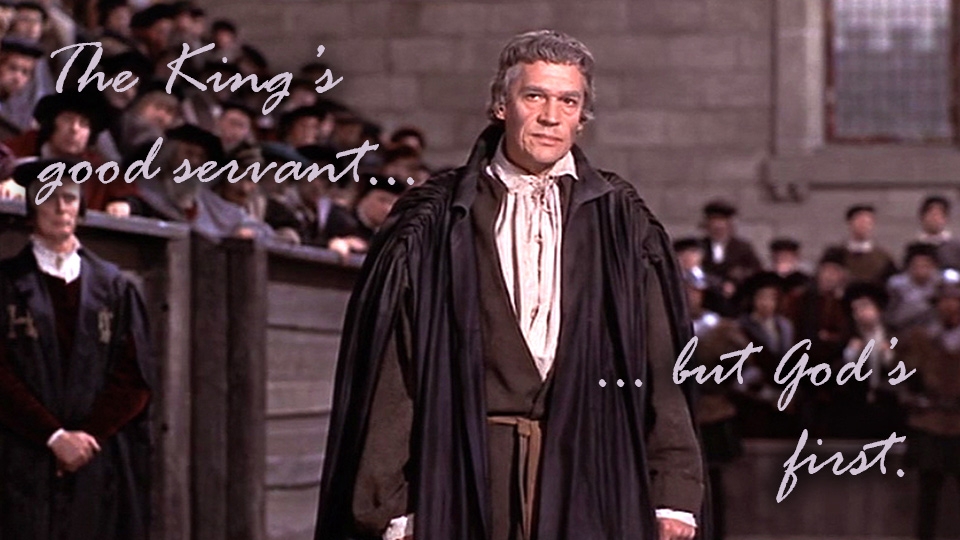
One of the major challenges that any art creator faces relates to the difficulty of “imitating,” of representing sanctity. Usually, as we see in the famous sculpture The Ecstasy of Saint Teresa by Gian Lorenzo Bernini (1598–1680), [i] the artist depicts in a very corporeal and external manner the indescribable realities of mystical life. Typically, he does not personally know how an ecstasy is or what it concretely means to be a saint. Bernini had no experience comparable to the “transverberation” of Saint Teresa of Ávila (1515–1582). For a similar reason, actors and actresses who portray saints find themselves in a difficult situation. How can they imitate individuals in communion with God, which is hard for us ordinary people to understand? The success of a film about the life of a saint depends entirely on the answer to this question. And those cinematic creations that have convincingly portrayed the lights and shadows of sanctity are rare. One such creation, a truly gem, is A Man for All Seasons (1966) by Fred Zinnemann. Although each of us can imagine Saint Thomas More (1478–1535) based on preserved sources, Paul Scofield’s brilliant performance offers us a plausible portrait of the author of Utopia.