
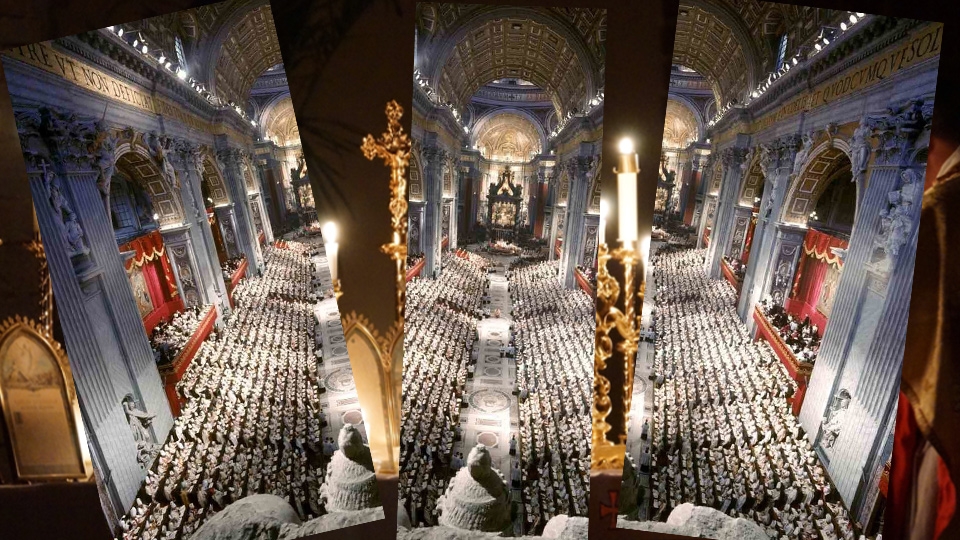

It should be noted that this article does not undertake a direct critique of the liturgical reform as outlined in Sacrosanctum Concilium, the Second Vatican Council’s Constitution on the Sacred Liturgy. This is due in part to the reality that there exist several ecclesial communities, such as the Priestly Fraternity of Saint Peter (FSSP), the Institute of Christ the King Sovereign Priest, and numerous dioceses where bishops—despite external pressures—have demonstrated pastoral courage in allowing the Traditional Latin Mass to flourish. Now, with the election of Pope Leo XIV, there is a renewed sense of hope among the faithful that the Holy See will once again open itself more generously to those who are spiritually nourished by the usus antiquior.
We can now calmly and carefully examine what the Council actually said—avoiding ad hominem attacks and facing honestly those instances where ambiguity was allowed to enter, ambiguity that has since been exploited by the enemies of the Church who seek her undoing.
Few areas have caused more division among the faithful than its declarations on ecumenism and religious liberty. Many traditional Catholics, out of love for the perennial Magisterium, feel a dissonance between the clarity of previous teaching and the tone of some conciliar expressions. Yet fidelity also requires that we engage not with hearsay or secondhand reactions but with the documents themselves—honestly, carefully, and within the hermeneutic of continuity as articulated by Pope Benedict XVI.
It should be noted that this article does not undertake a direct critique of the liturgical reform as outlined in Sacrosanctum Concilium, the Second Vatican Council’s Constitution on the Sacred Liturgy. This is due in part to the reality that there exist several ecclesial communities, such as the Priestly Fraternity of Saint Peter (FSSP), the Institute of Christ the King Sovereign Priest, and numerous dioceses where bishops—despite external pressures—have demonstrated pastoral courage in allowing the Traditional Latin Mass to flourish. Now, with the election of Pope Leo XIV, there is a renewed sense of hope among the faithful that the Holy See will once again open itself more generously to those who are spiritually nourished by the usus antiquior.
This hope is not based on just the changing of the guard at the top of the Vatican, with Pope Leo XIV, but to concrete words expressed by the 267th occupant of the chair of Saint Peter during the Jubilee of the Eastern Churches, celebrated on May 14, 2025, where he stated quoting his namesake predecessor, Leo XIII:
“legitimate variety of Eastern liturgy and discipline… may redound to the great honor and benefit of the Church” (Orientalium Dignitas). His desire remains ever timely. In our own day too, many of our Eastern brothers and sisters, including some of you, have been forced to flee their homelands because of war and persecution, instability and poverty, and risk losing not only their native lands, but also, when they reach the West, their religious identity. As a result, with the passing of generations, the priceless heritage of the Eastern Churches is being lost.”
Not satisfied with expressing praise for the “priceless heritage of the Eastern Churches” in their liturgy, he went on saying:
“The Church needs you. The contribution that the Christian East can offer us today is immense! We have great need to recover the sense of mystery that remains alive in your liturgies, liturgies that engage the human person in his or her entirety, that sing of the beauty of salvation and evoke a sense of wonder at how God’s majesty embraces our human frailty! It is likewise important to rediscover, especially in the Christian West, a sense of the primacy of God, the importance of mystagogy and the values so typical of Eastern spirituality: constant intercession, penance, fasting, and weeping for one’s own sins and for those of all humanity (penthos)! It is vital, then, that you preserve your traditions without attenuating them, for the sake perhaps of practicality or convenience, lest they be corrupted by the mentality of consumerism and utilitarianism.
Your traditions of spirituality, ancient yet ever new, are medicinal. In them, the drama of human misery is combined with wonder at God’s mercy, so that our sinfulness does not lead to despair, but opens us to accepting the gracious gift of becoming creatures who are healed, divinized and raised to the heights of heaven.”
If our hearts are not elated hearing words like “the sense of mystery that remains alive in your liturgies, liturgies that engage the human person in his or her entirety, that sing of the beauty of salvation and evoke a sense of wonder at how God’s majesty embraces our human frailty! It is likewise important to rediscover, especially in the Christian West, a sense of the primacy of God” or “Your traditions of spirituality, ancient yet ever new, are medicinal”, then we are not listening as we should. He could be using the same words when speaking of the Traditional Latin Mass. So, for the time being let us leave this Holy Father do his work as we watch the Holy Spirit do His.
It is possible to take Vatican II seriously without falling into rupture or indifferentism. In fact, we must, if we are to remain faithful to the Church Christ founded. The question before us is this: as Traditionalists, are we willing to do so?
Ecumenism
Ecumenism in the Christian west became a necessity due to the emergence of sects that did not fade into obscurity, such as Albigensianism. This persistence was facilitated by the advent of the printing press and the convergence of various historical currents, including monarchs who laid claim to the Papal temporal lands and power, thereby protecting heretics and granting them immunity from correction. Instead of preserving the integrity of the Catholic Church—the sole Christian Church at the time—these developments led to fragmentation. Over the ensuing centuries, these heretical sects recognized the Christian mandate for unity and, desiring such union, initiated efforts in the early 19th century to achieve it. This progression is meticulously documented in the 1953 dissertation by Rev. Edward Francis Hanahoe, S.A., S.T.L., titled Catholic Ecumenism: The Reunion of Christendom in Contemporary Papal Pronouncements, wherein he delineates the movement into three distinct phases.
In 1910, the World Missionary Conference convened in Edinburgh, bringing together non-Catholic missionaries from various regions to address shared challenges. Predominantly composed of Evangelical theologians from Anglo-Saxon countries, the conference grappled with the scandal of Christian divisions in mission fields, which hindered evangelization efforts among non-Christians. To mitigate this, discussions centered on coordinating missionary activities, leading to the establishment of the International Missionary Council. Subsequent meetings occurred in Jerusalem (1928), Madras (1938), and Whitby (1947), marking the initial phase of the Ecumenical Movement.
The second phase emerged in 1919 during a meeting of the World Alliance for International Friendship through the Churches in Oud Wassenaer, Holland. Nathan Söderblom, Archbishop of Uppsala, proposed forming a “Universal Christian Council of Life and Work.” After a preliminary gathering in Geneva (1920), significant conferences were held in Stockholm (1925) and Oxford (1937). This movement, characterized by liberal theological perspectives, focused more on sociological issues than doctrinal ones.
The third phase was initiated by Charles H. Brent, an Episcopalian bishop, who, during the 1910 missionary conference, advocated for a forum to address doctrinal matters. This led to the 1910 General Episcopal Convention’s resolution to invite all bodies acknowledging Jesus Christ as God and Savior to a “World Conference on Faith and Order.” Major meetings occurred in Lausanne (1927) and Edinburgh (1937), encompassing a broad theological spectrum from liberals to fundamentalists, with discussions centered on doctrines and church polity.
In 1937, simultaneous meetings in Edinburgh and Oxford prompted delegates to convene at Westfield College, London, aiming to merge the two movements. This culminated in the 1938 provisional constitution of the World Council of Churches in Utrecht, Holland. Due to World War II, the inaugural assembly was delayed until August 1948 in Amsterdam, attracting representatives from 150 denomination groups across 47 countries, collectively representing over 100 million Christians.
The Catholic Church, possessing divinely instituted unity, views these ecumenical endeavors with both sympathy and caution. While acknowledging the genuine desire for unity among separated brethren, the Church remains vigilant against principles within the movement that may diverge from Christ’s will. Two primary concerns are doctrinal indifference and the rejection of the Church’s divinely established constitution. Doctrinal indifference undermines the imperative for perfect unity of faith by tolerating significant divergences in belief. As Pope Pius XI stated in Mortalium Animos, “Such efforts can meet with no kind of approval among Catholics, because they support the erroneous opinion that all religions are more or less good and praiseworthy.”
The second concern involves denying the primacy of the Holy See, asserting that ecumenical unity should not necessitate acceptance of the Roman Pontiff’s authority. Pius XI warned that supporting such views “would give authority to a false religion completely foreign to the one Church of Christ.”
While some Catholics, in their zeal for Christian reunion, have occasionally overstepped prudence, leading to misunderstandings detrimental to true unity, the Church emphasizes the importance of adhering to sound principles. The Holy Office has noted that certain initiatives, though well-intentioned, may not always rest upon correct foundations and can pose particular dangers. Consulting official documents of the Holy See provides clarity and guidance, ensuring that efforts toward unity align with the Church’s enduring teachings.
In light of this history, it is understandable that well-formed Catholics might approach the term ecumenism with a certain apprehension, and sometimes disdain, given its historical associations with movements that consistently strayed from authentic doctrine. Nevertheless, the Church recognizes the necessity of engaging in sincere dialogue with separated Christian communities, using language and methods that they can comprehend and receive. As St. Thomas Aquinas writes in the Prologue to his Summa Theologiae: “Because the teacher of Catholic truth ought not only to instruct the advanced, but also to teach beginners, we intend in this work to treat of whatever pertains to the Christian religion in a way suited to the instruction of beginners.” In this spirit, the Church seeks to communicate the fullness of the faith without compromise, but with clarity and pastoral sensitivity, making use of terminology that may resonate with those outside her visible bounds. Such an approach, however, may at times stir concern among Catholics trained to expect theological precision and the careful safeguarding of language. Yet the use of simplified terms, when rightly ordered, is not a concession to error but a means of inviting others more deeply into the truth.
After the harsh but necessary response issued by the Catholic Church in the canons and decrees of the Council of Trent (1545–1563), which firmly condemned Protestant errors and reaffirmed Catholic doctrine in the face of a rapidly spreading heresy, the Church remained steadfast in her defense of the true faith. Yet as the centuries passed and the Protestant divisions did not vanish but instead multiplied, and as new ecumenical efforts emerged—often animated by a sincere desire for unity among Christians—the Church began to discern how best to engage without compromising her identity. Recognizing both the enduring danger of doctrinal relativism and the authentic longing for reconciliation expressed in various movements, the Catholic Church—while never relinquishing her claim as the one true Church founded by Christ—began cautiously to consider how to respond with both clarity and charity. This shift was not abrupt nor reactionary, but prepared by decades of magisterial reflection. Under Pope Pius XII, preliminary steps were already taken, notably through the establishment of the Secretariat for Promoting Christian Unity in 1960 by Pope John XXIII. Yet it was the Second Vatican Council that marked the definitive moment when the Church formally entered into structured ecumenical dialogue. In the conciliar decree Unitatis Redintegratio, promulgated by Pope Paul VI on November 21, 1964, the Church for the first time in conciliar language directly addressed the divided state of Christianity, affirming a duty to seek the restoration of unity among all who bear the name of Christ—not through compromise, but through fidelity to truth and an authentic charity animated by the Holy Spirit.
The Council’s decree Unitatis Redintegratio (UR) opens not with compromise, but with a firm confession of the Catholic Church as the one true Church:
“Christ the Lord founded one Church and one Church only. However, many Christian communions present themselves to men as the true inheritors of Jesus Christ; all indeed profess to be followers of the Lord but differ in mind and go their different ways, as if Christ Himself were divided. Such division openly contradicts the will of Christ, scandalizes the world, and damages the holy cause of preaching the Gospel to every creature.” (UR §1)
This affirmation forms the foundation of all legitimate ecumenical work: the Catholic Church is not one among many; she is the Church of Christ. The goal of ecumenism is not mutual recognition among equals, but restoration of full communion with the Church Christ established.
This truth is expressed again with clarity in §3:
“For it is only through Christ’s Catholic Church, which is “the all-embracing means of salvation,” that they can benefit fully from the means of salvation. We believe that Our Lord entrusted all the blessings of the New Covenant to the apostolic college alone, of which Peter is the head, in order to establish the one Body of Christ on earth to which all should be fully incorporated who belong in any way to the people of God.” (UR §3)
The Church’s ecumenical mission is not based on relativism, but on the objective truth of Catholic ecclesiology. Any reading of Unitatis Redintegratio that implies doctrinal equivalency between denominations is not only false but in direct contradiction with the Council’s own words.
The Council also explicitly rejects syncretism and theological compromise for the sake of unity:
“Nothing is so foreign to the spirit of ecumenism as a false irenicism, in which the purity of Catholic doctrine suffers loss and its genuine and certain meaning is clouded.” (UR §11)
This paragraph continues with a firm insistence that the fullness of doctrine per the previous Councils and Popes must be preserved in dialogue:
“… this Sacred Council solemnly repeats the declaration of previous Councils and Roman Pontiffs, that for the restoration or the maintenance of unity and communion it is necessary “to impose no burden beyond what is essential”. It is the Council’s urgent desire that, in the various organizations and living activities of the Church, every effort should be made toward the gradual realization of this unity, especially by prayer, and by fraternal dialogue on points of doctrine and the more pressing pastoral problems of our time. (UR §18)
Here, the Council not only safeguards doctrinal integrity but mandates it as a requirement for ecumenical engagement.
As for practical cooperation with non-Catholics, the Council urges it only in a way that respects doctrinal clarity and proper ecclesial authority:
“This Sacred Council exhorts the faithful to refrain from superficiality and imprudent zeal, which can hinder real progress toward unity. Their ecumenical action must be fully and sincerely Catholic, that is to say, faithful to the truth which we have received from the apostles and Fathers of the Church, in harmony with the faith which the Catholic Church has always professed, and at the same time directed toward that fullness to which Our Lord wills His Body to grow in the course of time. (UR §24)
This is not a free license for lay experimentation or doctrinal innovation, but a call to measured, supervised engagement under the Church’s magisterial direction.
On the question of proselytism, it is often claimed that Vatican II forbade it. In fact, Ad Gentes, the Decree on the Missionary Activity of the Church, strongly reaffirms the necessity of proclaiming the Gospel and calling all to conversion:
“Divinely sent to the nations of the world to be unto them “a universal sacrament of salvation,” the Church, driven by the inner necessity of her own catholicity, and obeying the mandate of her Founder (cf. Mark 16:16), strives ever to proclaim the Gospel to all men.” (AG §1)
Further, it affirms:
“The pilgrim Church is missionary by her very nature, since it is from the mission of the Son and the mission of the Holy Spirit that she draws her origin, in accordance with the decree of God the Father.” (AG §2)
And on the necessity of conversion to Christ and the Church:
“Therefore, all must be converted to Him, made known by the Church’s preaching, and all must be incorporated into Him by baptism and into the Church which is His body. For Christ Himself “by stressing in express language the necessity of faith and baptism (cf. Mark 16:16; John 3:5), at the same time confirmed the necessity of the Church, into which men enter by baptism, as by a door. Therefore, those men cannot be saved, who though aware that God, through Jesus Christ founded the Church as something necessary, still do not wish to enter into it, or to persevere in it. (AG §7)
What the Council avoids is coercive or manipulative proselytism. What it commands is authentic missionary proclamation rooted in truth and love. This was seen in the case of the misunderstood statement by Pope Francis, when he referred to proselytism as the promotion of a religion by using means, and motives, contrary to the spirit of the Gospel; that is, which do not safeguard the freedom and dignity of the human person. He was referring to using inappropriate tactics to get someone to convert, rather than allowing them to make a free choice for Christ by learning and loving the truth of the Gospel. Let us close this section with the words of Pope Leo XIII also echoed by Rev. Edward Francis Hanahoe in his Dissertation:
“Suffer that We should invite you to the unity which has ever existed in the Catholic Church and can never fail; suffer that We should lovingly hold out Our hand to you. The Church, as the common Mother of all, has long been calling you back to her; the Catholics of the world await you with brotherly love, that you may render holy worship to God together with us, united in per3fect charity by the profession of one Gospel, one faith and one hope.”
Religious Liberty
The second major area of controversy is the Council’s Declaration Dignitatis Humanae (DH), which addresses the right of the human person to religious freedom. Many traditional Catholics fear this represents a rupture with previous teaching, especially with the condemnations found in Quanta Cura and the Syllabus of Errors of Pius IX. But here, too, clarity must be sought in the actual wording.
The key passage is found at the very beginning:
“This Vatican Council declares that the human person has a right to religious freedom. This freedom means that all men are to be immune from coercion on the part of individuals or of social groups and of any human power, in such wise that no one is to be forced to act in a manner contrary to his own beliefs, whether privately or publicly, whether alone or in association with others, within due limits.” (DH §2)
The core concept here is immunity from coercion—not the right to religious error. The Declaration is careful to distinguish the moral duty to seek and adhere to the true religion from the civil right not to be forced by the state in matters of conscience.
Most importantly, the Council insists that its teaching “leaves untouched traditional Catholic doctrine”:
“Religious freedom, in turn, which men demand as necessary to fulfill their duty to worship God, has to do with immunity from coercion in civil society. Therefore, it leaves untouched traditional Catholic doctrine on the moral duty of men and societies toward the true religion and toward the one Church of Christ.” (DH §1)
Thus, the Council does not teach that the State has no obligation toward the true religion. Rather, it teaches that in modern circumstances, where religious pluralism is a sociological fact and coercion harms faith, the Church supports civil tolerance—not doctrinal indifference.
Nor is religious liberty absolute. In §7, the Council says:
“In the exercise of their rights, individual men and social groups are bound by the moral law to have respect both for the rights of others and for their own duties toward others and for the common welfare of all. Men are to deal with their fellows in justice and civility. Furthermore, society has the right to defend itself against possible abuses committed on the pretext of freedom of religion. It is the special duty of government to provide this protection. However, government is not to act in an arbitrary fashion or in an unfair spirit of partisanship. Its action is to be controlled by juridical norms which are in conformity with the objective moral order. (DH §7)
This caveat affirms the Catholic principle that rights are not autonomous from the moral order. No man has a right to error before God, but in civil society, coercion is not always the proper remedy.
In short, Dignitatis Humanae articulates a prudential development of doctrine in light of modern conditions, without overturning the teaching of the social kingship of Christ or the duty of civil authorities to recognize the true religion. It is not a rupture, but a re-expression.
Pope Benedict XVI clarified this in his 2005 address to the Roman Curia, stating:
“The Second Vatican Council, with its new definition of the relationship between the faith of the Church and certain essential elements of modern thought, has reviewed or even corrected certain historical decisions, but in this apparent discontinuity it has actually preserved and deepened her inmost nature and true identity.
The Church, both before and after the Council, was and is the same Church, one, holy, catholic and apostolic, journeying on through time; she continues “her pilgrimage amid the persecutions of the world and the consolations of God”, proclaiming the death of the Lord until he comes.”
Many may wonder which “certain historical decisions” the Church has reviewed or even corrected, so here we shall explore a few in light of Pope Benedict XVI’s insight. It is essential from the outset to recall that the Church cannot revise dogma, nor can she repudiate truths once infallibly declared. But she can, and at times must, revisit certain disciplinary judgments, prudential policies, or historical responses to political and social circumstances—especially when these decisions, though valid in their own context, no longer serve the Gospel’s mission in a changed world.
This is precisely what Pope Benedict XVI alluded to when he spoke of an “apparent discontinuity” that, upon closer inspection, reveals a deeper continuity—one that “preserved and deepened her inmost nature and true identity.” The Church’s relationship with modernity, particularly in the realms of religious liberty, ecumenism, and engagement with political structures, was ripe for renewed articulation—not because the truth had changed, but because the language and posture of earlier times had been shaped by conflict, persecution, or the threat of doctrinal erosion.
Thus, Pope Benedict’s reference to the Council’s revisiting of “historical decisions” points not to a betrayal of tradition, but to the Church’s effort to rearticulate her constant teachings in a manner more pastorally effective in the modern world. What may appear at first glance as rupture or discontinuity is revealed, upon deeper reflection, to be an expression of fidelity—fidelity to the Church’s identity, to her mission, and to the organic development of doctrine guided by the Holy Spirit.
This is the essence of the hermeneutic of continuity. The Church, ever ancient and ever new, remains semper eadem—always the same—while allowing her expressions, disciplines, and approaches to unfold more clearly in accordance with the divine deposit of faith entrusted to her by Christ.
In the wake of Pope Leo XIV’s election, the Society of Saint Pius X (SSPX) in the United States expressed a heartfelt response that underscores both the gravity of the Church’s current challenges and a desire of unity, a theme Leo XIV has reiterated in his homilies and allocutions. In light of that circumstance, the SSPX U.S. District Superior’s letter, dated May 21, 2025, acknowledges the enduring crisis within the Church, stating, “The state of the world appears dire, and the Church remains beset by a crisis that has lasted for nearly six decades.” Yet, it also conveys a deep commitment to the Church’s mission, urging all faithful associated with the Society to “pour out our prayers for the Pope with all the fervor we can muster.” This call to prayer reflects a recognition of the Pope’s pivotal role and a desire for unity within the Church. Furthermore, the letter reaffirms the SSPX’s dedication to its founding mission, inspired by St. Pius X, to “restore all things in Christ,” emphasizing the importance of preserving sacred traditions and forming holy priests to serve the faithful through the traditional Roman Rite. Such sentiments highlight a shared commitment to the Church’s spiritual renewal and open avenues for continued dialogue leading, we hope, to a formal reconciliation.
The Society of Saint Pius X (SSPX), among other traditionalist groups, has raised their concerns regarding the Council’s teachings on religious liberty, ecumenism, and ecclesiology. These objections often center on perceived contradictions between conciliar documents and prior magisterial teachings. By examining these critiques alongside the Council’s texts and subsequent clarifications, we aim to address misunderstandings and highlight the continuity within the Church’s magisterium.
One primary objection pertains to the Declaration on Religious Freedom, Dignitatis Humanae. The SSPX argues that this document contradicts earlier condemnations of religious liberty, notably those in Pope Pius IX’s Syllabus of Errors. They cite Proposition 15 of the Syllabus, which rejects the idea that “every man is free to embrace and profess that religion which, guided by the light of reason, he shall consider true.” In contrast, Dignitatis Humanae §2 states: “This Vatican Council declares that the human person has a right to religious freedom. This freedom means that all men are to be immune from coercion… in matters religious.” However, Dignitatis Humanae clarifies in §1 that it “leaves untouched traditional Catholic doctrine on the moral duty of men and societies toward the true religion and toward the one Church of Christ.” The Council distinguishes between the moral obligation to seek the truth and the civil right to religious freedom, emphasizing that individuals should not be coerced by the state in religious matters. This development addresses the context of modern pluralistic societies while maintaining the Church’s commitment to the truth.
Another significant concern involves the Decree on Ecumenism, Unitatis Redintegratio. The SSPX contends that the document’s approach to ecumenical dialogue undermines the necessity of conversion to the Catholic faith. They reference §3, which acknowledges that “many elements of sanctification and of truth are found outside of her [the Catholic Church’s] visible structure.” This acknowledgment, they argue, suggests a relativistic view of salvation. In response, it’s important to note that Unitatis Redintegratio maintains that “the Catholic Church has been endowed with all divinely revealed truth and with all means of grace” (§3). The document encourages dialogue aimed at achieving full communion, recognizing that elements of truth and sanctification in other communities can serve as a foundation for unity. This approach does not equate all religions but seeks to engage the separated brethren with respect and charity, fostering a path toward reconciliation.
The Dogmatic Constitution on the Church, Lumen Gentium, introduces the term “subsists in” to describe the relationship between the Church of Christ and the Catholic Church. The SSPX criticizes this terminology, asserting that it implies the Church of Christ exists beyond the Catholic Church, thereby diluting the Church’s identity. They argue that previous teachings identified the Church of Christ strictly with the Catholic Church. The use of “subsists in” in Lumen Gentium §8 was intended to express that the Church of Christ continues to exist fully in the Catholic Church, preserving the Church’s identity while acknowledging that elements of sanctification and truth can be found outside her visible structure. This phrasing does not imply that the Church of Christ is a broader entity than the Catholic Church but rather affirms that the fullness of the Church established by Christ is found in the Catholic Church. The Congregation for the Doctrine of the Faith clarified this interpretation in the 2000 declaration Dominus Iesus, stating that “the Church of Christ, despite the divisions which exist among Christians, continues to exist fully only in the Catholic Church.”
In conclusion, while the SSPX raises concerns about the Second Vatican Council’s documents, a careful examination reveals that the Council sought to articulate the Church’s teachings in a manner responsive to contemporary challenges while remaining faithful to tradition. By addressing these objections with clarity and charity, we hope to foster understanding and pave the way toward reconciliation and unity within the Church.
There is no ambiguity here. The Council reaffirms that salvation comes through Christ and that incorporation into His Mystical Body, the Catholic Church, is essential. This runs counter to any modernist suggestion that other religions constitute alternate paths to salvation. The missionary mandate is not optional, nor is it altered by dialogue. Christ remains the sole Mediator, the Church the necessary Ark. This sentence could have been written by Pope Pius XII or St. Pius X. The Church’s teaching has not changed; what has changed is the failure of many post-conciliar leaders to proclaim it with conviction.
By engaging directly with the original texts and not their interpretations or distortions, one sees a Council that, while at times pastorally novel in tone, did not dismantle the doctrinal foundations of the Church. The language may have been less juridical, and the expressions more attuned to a pluralistic world, but the substance often reaffirms the perennial truths. Where ambiguity exists, it must be read through the authoritative Magisterium that precedes it, not by the theological fashions of its aftermath.
The tragedy, therefore, is not so much in the documents themselves as in the exploitation of their ambiguities by those within the Church who have promoted a rupture with tradition under the guise of reform. This article does not deny that there were ambiguities, nor does it pretend that the post-conciliar era has not suffered from widespread doctrinal confusion and abuse. But it insists, with Pope Benedict XVI, that a hermeneutic of continuity is possible and necessary. The Church must patiently distinguish between what the Council truly taught and what others have falsely claimed in its name.
To this end, we invite those who remain hesitant, wounded, or estranged—not least our brethren in the Society of Saint Pius X—to revisit the conciliar documents not with suspicion alone, but with fidelity and charity. Charity demands that we give the Church the benefit of the doubt; fidelity requires that we reject both rupture and innovation that would betray the deposit of faith. If these principles are sincerely embraced, then the very texts once seen as obstacles might instead become instruments of reconciliation—fostering not only juridical unity but also doctrinal and spiritual communion, firmly rooted in the eternal truth of Christ, the Head of the Church. Obstinacy, however sincere, is not a badge of honor but a wound that must be healed—for it harms not only the Body of Christ but also those who, while invoking the name of Tradition, remain in a state of irregularity by refusing full communion with the Barque of Peter.
Thus, in good faith, the faithful Traditionalist may read the Council not as a rupture and sometimes imprecise in form, but still ultimately anchored—when read correctly—in the depositum fidei entrusted once and for all to the Apostles and preserved in the one Church of Christ. The challenge is not the Council itself, but the dishonest hands that have sought to weaponize its silence or twist its words. The remedy is not rejection, but fidelity—the kind that examines, discerns, and receives what is good while rejecting all novelty alien to the voice of the Shepherd.
What the Council said, it said within the continuity of the Church’s Tradition. Misuses of ecumenism or religious liberty—whether by bishops, theologians, or even popes—must be resisted. But the texts themselves, read faithfully, can be embraced by Traditional Catholics without compromise.
This is not squaring a circle. It is affirming that the Church, even in the storm, does not betray her Bridegroom. Shall we then have the courage to accept the Council not as a rupture but as a valid, expression of the same truth taught from Peter to Pius, from Trent to Leo XIV? If so, then we do not merely defend the Church—we heal her, in truth and love.
Latest form RTV — CHARLOTTE SHOWDOWN: Why does Bishop Martin Hate Latin Mass Catholics?
