
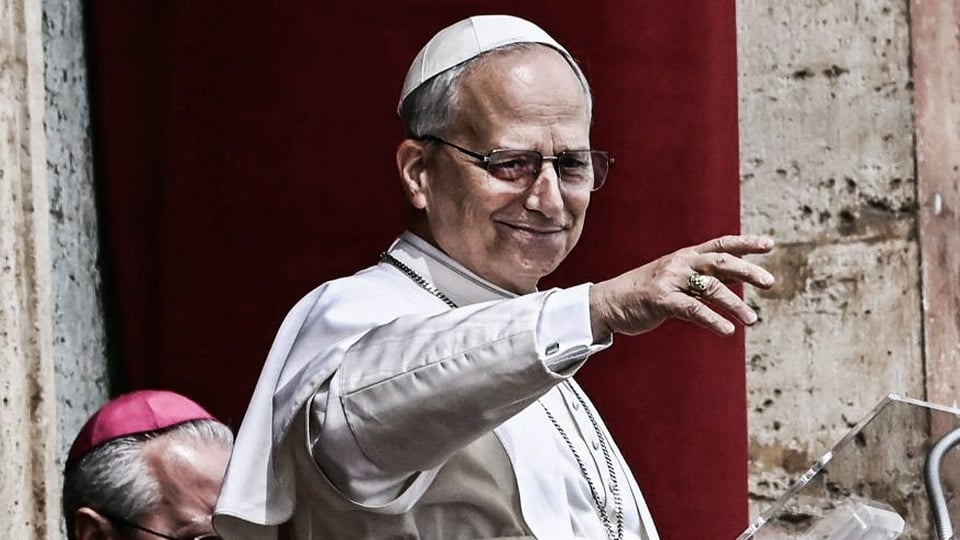

On November 23, 2025, Leo XIV released his apostolic letter on the 1700th anniversary of the Council of Nicea, In unitate fidei. In it, he praised various aspects of the Council of Nicea, including what he described as its ecumenical significance:
“Finally, the Council of Nicaea is relevant today because of its great ecumenical value. Indeed, the achievement of unity among all Christians was one of the main objectives of the last Council, the Second Vatican Council. Exactly thirty years ago, Saint John Paul II further promoted this conciliar message in his Encyclical Ut Unum Sint (25 May 1995). In this way, together with the great anniversary of the First Council of Nicaea, we also celebrate the anniversary of the first ecumenical Encyclical. It can be considered a manifesto that brought up to date the same ecumenical foundations laid down by the Council of Nicaea.”
What were the “ecumenical foundations” of the Council of Nicea which were “brought up to date” by John Paul II’s Ut Unum Sint? Leo XIV did not specifically identify those foundations in his letter, but we know that the Council of Nicea condemned heresy, required Catholics to profess the true Faith, and clearly distinguished between those who are in the Church and those who are separated through heresy or schism.
These and every other achievement of the ecumenical movement have signaled to Catholics and non-Catholics alike that there is no real need to be Catholic.
As a prelude to considering the way in which Vatican II and John Paul II “brought up to date the same ecumenical foundations laid down by the Council of Nicaea,” we can consider how Leo XIV continued his new letter:
“Thanks to God, the ecumenical movement has achieved much in the last sixty years. It is true that full visible unity with the Orthodox and Oriental Orthodox Churches and with the ecclesial communities born of the Reformation has not yet been reached. Nevertheless, ecumenical dialogue, founded on one baptism and the Nicene-Constantinopolitan Creed, has led us to recognize the members of other Churches and ecclesial communities as our brothers and sisters in Jesus Christ, and to rediscover the one universal community of Christ’s disciples throughout the world. We share the same faith in the one and only God, the Father of all people; we confess together the one Lord and true Son of God, Jesus Christ, and the one Holy Spirit, who inspires us and impels us towards full unity and the common witness to the Gospel. Truly, what unites us is much greater than what divides us! In a world that is divided and torn apart by many conflicts, the one universal Christian community can be a sign of peace and an instrument of reconciliation, playing a decisive role in the global commitment to peace. Saint John Paul II reminded us, in particular, of the witness of the many Christian martyrs from all Churches and ecclesial communities: their memory unites us and spurs us on to be witnesses and peacemakers in the world.”
According to Leo XIV, “the ecumenical movement has achieved much in the last sixty years,” and he was of course perfectly correct in refraining from describing those achievements as positive or negative. Here are the key achievements he listed in his paragraph:
- Recognizing members of heretical and schismatic churches as brothers and sisters in Jesus Christ
- Rediscovering “the one universal community of Christ’s disciples throughout the world”
- Reaching the conclusion that “what unites us is much greater than what divides us!”
- Determining that those non-Catholics who die defending their heretical religions can be martyrs
The common theme in all of these achievements is not too difficult to discern: these and every other achievement of the ecumenical movement have signaled to Catholics and non-Catholics alike that there is no real need to be Catholic.
It is not surprising that every so-called achievement of the ecumenical movement has called into the question the need for souls to practice the Catholic Faith. Gregory XVI’s 1832 encyclical on liberalism and religious indifferentism, Mirari Vos, essentially warned against what we now know as the ecumenical moment. Gregory XVI not only reaffirmed the Council of Nicea’s fundamental position that all Christians must practice the Catholic Faith but also described the error opposed to this truth, indifferentism:
“Now We consider another abundant source of the evils with which the Church is afflicted at present: indifferentism. This perverse opinion is spread on all sides by the fraud of the wicked who claim that it is possible to obtain the eternal salvation of the soul by the profession of any kind of religion, as long as morality is maintained. Surely, in so clear a matter, you will drive this deadly error far from the people committed to your care. With the admonition of the apostle that ‘there is one God, one faith, one baptism’ may those fear who contrive the notion that the safe harbor of salvation is open to persons of any religion whatever. They should consider the testimony of Christ Himself that ‘those who are not with Christ are against Him,’ and that they disperse unhappily who do not gather with Him. Therefore ‘without a doubt, they will perish forever, unless they hold the Catholic faith whole and inviolate.’ Let them hear Jerome who, while the Church was torn into three parts by schism, tells us that whenever someone tried to persuade him to join his group he always exclaimed: ‘He who is for the See of Peter is for me.’ A schismatic flatters himself falsely if he asserts that he, too, has been washed in the waters of regeneration. Indeed Augustine would reply to such a man: ‘The branch has the same form when it has been cut off from the vine; but of what profit for it is the form, if it does not live from the root?’”
What Gregory XVI described as the perverse opinion of “indifferentism” is basically a synopsis of the achievements of the ecumenical movement praised by Leo XIV and his predecessors.
The translation: because the Holy Spirit is the bond of unity for all Christians, we must leave behind the theological controversies that separate Catholics and non-Catholics.
As Leo XIV observed in his new letter, the Council of Nicea’s anti-indifferentism approach to ecumenical matters was “brought up to date” by John Paul II’s Ut Unum Sint, which began as follows:
“Ut unum sint! The call for Christian unity made by the Second Vatican Ecumenical Council with such impassioned commitment is finding an ever greater echo in the hearts of believers, especially as the Year 2000 approaches, a year which Christians will celebrate as a sacred Jubilee, the commemoration of the Incarnation of the Son of God, who became man in order to save humanity. The courageous witness of so many martyrs of our century, including members of Churches and Ecclesial Communities not in full communion with the Catholic Church, gives new vigour to the Council’s call and reminds us of our duty to listen to and put into practice its exhortation. These brothers and sisters of ours, united in the selfless offering of their lives for the Kingdom of God, are the most powerful proof that every factor of division can be transcended and overcome in the total gift of self for the sake of the Gospel.”
In these introductory words, John Paul II asserted the following:
- Vatican II initiated a new push for Christian unity
- There are non-Catholic martyrs
- Non-Catholics are in partial communion with the Catholic Church
- We have a duty to listen to these non-Catholics
- These non-Catholics overcame divisions between Catholics and non-Catholics in their “total gift of self for the sake of the Gospel”
Already in these introductory words we can see signs of the indifferentism that Gregory XVI condemned in Mirari Vos. John Paul II’s Ut Unum Sint further developed the foundations of ecumenism as follows:
- Non-Catholic Religions Are Means of Salvation: “Many elements of great value (eximia), which in the Catholic Church are part of the fullness of the means of salvation and of the gifts of grace which make up the Church, are also found in the other Christian Communities.”
- Non-Catholic Religions Produce Saints: “While for all Christian communities the martyrs are the proof of the power of grace, they are not the only ones to bear witness to that power. Albeit in an invisible way, the communion between our Communities, even if still incomplete, is truly and solidly grounded in the full communion of the Saints—those who, at the end of a life faithful to grace, are in communion with Christ in glory. These Saints come from all the Churches and Ecclesial Communities which gave them entrance into the communion of salvation.”
- Non-Catholic Sects Are Linked to the Church in Union with the Holy Spirit: “Indeed, the elements of sanctification and truth present in the other Christian Communities, in a degree which varies from one to the other, constitute the objective basis of the communion, albeit imperfect, which exists between them and the Catholic Church. To the extent that these elements are found in other Christian Communities, the one Church of Christ is effectively present in them. For this reason the Second Vatican Council speaks of a certain, though imperfect communion. The Dogmatic Constitution Lumen Gentium stresses that the Catholic Church ‘recognizes that in many ways she is linked’ with these Communities by a true union in the Holy Spirit.”
- The Union Between the Church and Non-Catholic Sects Is Not Broken: “Speaking of the lack of unity among Christians, the Decree on Ecumenism does not ignore the fact that ‘people of both sides were to blame,’ and acknowledges that responsibility cannot be attributed only to the ‘other side.’ By God’s grace, however, neither what belongs to the structure of the Church of Christ nor that communion which still exists with the other Churches and Ecclesial Communities has been destroyed.”
- Non-Catholics Are “Others Who Have Received Baptism,” Not “Separated Brethren”: “It happens for example that, in the spirit of the Sermon on the Mount, Christians of one confession no longer consider other Christians as enemies or strangers but see them as brothers and sisters. Again, the very expression separated brethren tends to be replaced today by expressions which more readily evoke the deep communion — linked to the baptismal character — which the Spirit fosters in spite of historical and canonical divisions. Today we speak of ‘other Christians,’ ‘others who have received Baptism,’ and ‘Christians of other Communities.’
These ideas are presumably among those that Leo XIV had in mind when he wrote that Ut Unum Sint “can be considered a manifesto that brought up to date the same ecumenical foundations laid down by the Council of Nicaea.” That is a curious way to express the reality that John Paul II’s Ut Unum Sint rejected the ecumenical foundations of the Council of Nicea.
Beyond praising John Paul II’s work in updating the Council of Nicea’s ecumenical foundations, Leo XIV added his own touch:
“The Holy Spirit is the bond of unity whom we worship together with the Father and the Son. We must therefore leave behind theological controversies that have lost their raison d’être in order to develop a common understanding and even more, a common prayer to the Holy Spirit, so that he may gather us all together in one faith and one love.”
The translation: because the Holy Spirit is the bond of unity for all Christians, we must leave behind the theological controversies that separate Catholics and non-Catholics. Apparently indifference is no longer optional. This is arguably the highest achievement to date of the ecumenical movement launched by Vatican II and nearly perfected by John Paul II.
If we are truly interested in addressing the crisis in the Church, affirming these truths is essential. If we are unwilling to affirm these truths then we will undoubtedly witness even more atrocious “achievements” from the ecumenical movement until God intervenes.
There are few things more unpopular to do in the company of many serious Catholics than to call into question John Paul II’s legacy, so discussions about ecumenism can be challenging. On the one hand, it is perfectly clear that the ecumenical movement praised by Leo XIV has been an unmitigated disaster that has offended God, led souls to hell, and emptied Catholic pews. On the other hand, John Paul II was its most important advocate, so many who should combat this cancer plaguing the Church are instead determined to denounce anyone who suggests that perhaps John Paul II got this one wrong.
Is there a solution? Given that so many serious Catholics cannot bring themselves to call into question Vatican II, let alone John Paul II, it is worth considering a next-best path. Surely those serious Catholics who oppose Leo XIV (but revere Vatican II and John Paul II) would be comfortable quoting Leo XIII’s 1896 encyclical on the unity of the Church, Satis Cognitum. Assuming this to be the case, one of the best responses to Leo XIV would be to remind him of the words of St. Augustine (whom he professes to revere), quoted by his namesake:
“But he who dissents even in one point from divinely revealed truth absolutely rejects all faith, since he thereby refuses to honour God as the supreme truth and the formal motive of faith. ‘In many things they are with me, in a few things not with me; but in those few things in which they are not with me the many things in which they are will not profit them’ (S. Augustinus in Psal. liv., n. 19). And this indeed most deservedly; for they, who take from Christian doctrine what they please, lean on their own judgments, not on faith; and not ‘bringing into captivity every understanding unto the obedience of Christ’ (2 Cor. x., 5), they more truly obey themselves than God. ‘You, who believe what you like, believe yourselves rather than the gospel’ (S. Augustinus, lib. xvii., Contra Faustum Manichaeum, cap. 3).”
These words from Satis Cognitum are sufficient to undermine many of the most pernicious aspects of the ecumenical movement praised by Leo XIV. If we are truly interested in addressing the crisis in the Church, affirming these truths is essential. If we are unwilling to affirm these truths then we will undoubtedly witness even more atrocious “achievements” from the ecumenical movement until God intervenes. Immaculate Heart of Mary, pray for us!
