

Most of the time, the criticisms brought by Protestants and Neoprotestants against Catholic teachings are based on an incorrect description of them. In other words, they are presented in such a way that no educated person, with a minimum level of intellectual discernment, could accept them without falling into irrationality. It is understandable that after such presentations, which distort the teachings of the Catholic Religion, the rejection of “dogmas”—such as the one concerning infallibility—can only be a natural consequence.
As an example, I will recount an incident of which I myself was both witness and subject. The only particularity is that my interlocutor was not a Protestant, but a member of an Eastern national “Orthodox” Church. With great zeal, knowing of my conversion to Catholicism, he attacked the teaching about the Immaculate Conception of the Blessed Virgin Mary. (Here, I emphasize that all Catholic dogmas promulgated after the Great Schism are attacked and rejected by the Eastern “Orthodox” Churches.) In the situation I am now recounting, my friend rejected the Catholic teaching which states that, by a special privilege, the Queen of the Universe was conceived without being affected by original sin.
Here is how the official definition of this dogma sounds, from the Apostolic Constitution Ineffabilis Deus promulgated by Pope Pius IX on December 8, 1854:
“We declare, pronounce, and define that the doctrine which holds that the most Blessed Virgin Mary, in the first instance of her conception, by a singular grace and privilege granted by Almighty God, in view of the merits of Jesus Christ, the Savior of the human race, was preserved free from all stain of original sin, is a doctrine revealed by God and therefore to be believed firmly and constantly by all the faithful.
[Declaramus, pronuntiamus et definimus doctrinam quae tenet beatissimam Virginem Mariam in primo instanti suae conceptionis fuisse singulari Omnipotentis Dei gratia et privilegio, intuitu meritorum Christi Jesu Salvatoris humani generis, ab omni originalis culpae labe praeservatam immunem, esse a Deo revelatam, atque idcirco ab omnibus fidelibus firmiter constanterque credendam.]”[i]
But what was my interlocutor’s argument in attacking this dogma? His reasoning was that, in his opinion, the Catholic Church teaches that the Blessed Virgin Mary was conceived in a manner similar to that of our Lord Jesus Christ—without an intimate act between her parents, Saints Joachim and Anne. Obviously, I did my best to convince him that our Church has never taught such an absurd thing, but only that, by a special grace and privilege, she “was preserved free from all stain of original sin.”
When it comes to polemics, we ourselves can be affected by such an attitude, one that wants to see nothing but caricatures in its opponents—distorting their positions just to prove how bad, dishonest, and misguided they are. This is a mistake that ought to be carefully avoided.
Honestly, even now I’m not sure he accepted that this is the true teaching of the Catholic Church. He seemed to sincerely want us and our Church to teach absurdities, regardless of the Truth. This spirit of denial does not seek to know the Truth, but only to prove—by force, if necessary—that those who are “papists” are wrong in everything they say. It is a radically negative depiction, in the darkest tones imaginable, of those (i.e, Catholics) considered lost and incapable of ever knowing the Truth.
When it comes to polemics, we ourselves can be affected by such an attitude, one that wants to see nothing but caricatures in its opponents—distorting their positions just to prove how bad, dishonest, and misguided they are. This is a mistake that ought to be carefully avoided. That is why we, as Catholics, must always depict our adversaries’ teachings correctly, without any exaggeration or caricaturing of their positions.
Protestantism is a champion when it comes to distorting Catholic teachings. This results from an absolute postulate which underlies the attacks of Lutheranism and Calvinism against Catholicism: namely, the idea that there was a deviation from the Evangelical Truth—supposedly gravely altered by “inventions” introduced into the Church immediately after the age of the Holy Apostles. One of the teachings most consistently distorted by Protestants is, of course, that of the authority of the Holy Father.
Apart from the actual writings of the Reformers, we can also see this in the remarkable work of Hugo Klapproth, Letters to a Protestant Friend (The Remnant Press, 2022). There, Michael Matt’s great-grandfather responds in Chapter 3, “On the Worship of the Virgin Mary,” to such accusations regarding papal authority.
In precise and expressive terms, he first rejects the erroneous description of the teaching on infallibility (a misrepresentation inspired by the infamous Otto von Bismarck (1815–1898), rather than by the Apostolic Constitution Ineffabilis Deus). Then, in a natural progression, he also rejects the accusations that Catholics consider the Holy Father not only infallible, but also impeccable.
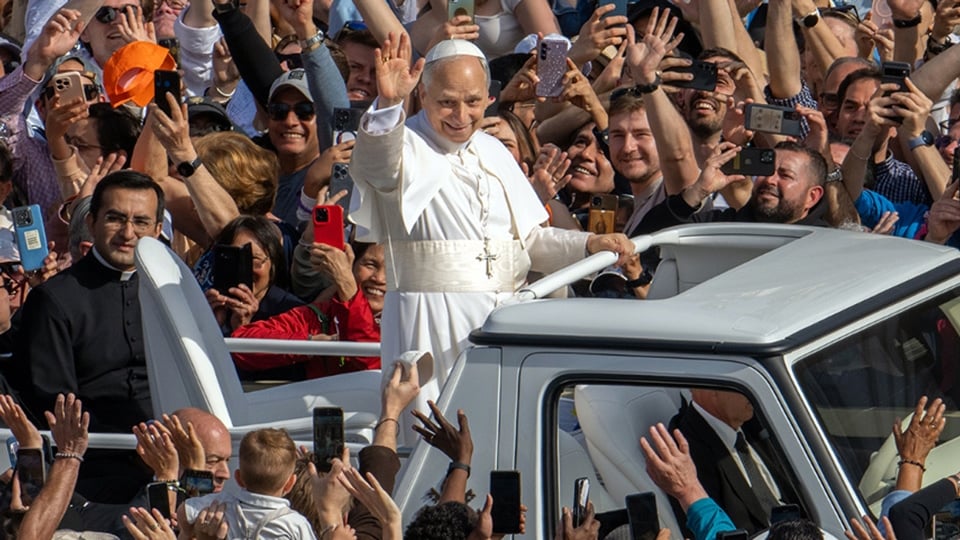
What is particularly interesting is that the position of Klapproth’s interlocutor is similar to that of certain “conservative” Catholics who understand this authority in an exaggerated manner, bordering on “papolatry.” The most fitting term to describe such a distorted and distorting understanding of the Pope’s authority is “hyperpapalism,” as definitively established by Dr. Peter Kwasniewski in his substantial two-volume work The Road from Hyperpapalism to Catholicism Set (Arouca Press, 2022).
In an article published by Catholic Family News, Dr. Kwasniewski shows that “hyperpapalism” is:
“A ‘hypertrophic’ ultramontanism, a sort of excessive adherence to the person and policies of the pope, by which one simplistically takes everything he says as a definitive judgment and everything he does as a praiseworthy example, wrapping the mantle of infallibility around all his teaching and the garment of impeccability around all his behavior.”[ii]
Immediately following this explanation, the distinguished scholar and musician points out the problems with such a position:
“Those who operate in this manner are suffering from a double handicap: first, a mighty ignorance of the annals of Church history, which often display the papacy in (shall we say) a less-than-favorable light; and second, a mighty ignorance of the precise understanding of papal infallibility officially taught by the Church.”
More than 135 years before Dr. Kwasniewski offered these relevant clarifications, Hugo Klapproth had already responded to Protestant hyperpapalism on exactly these two fronts—though with a special emphasis on the properly understood limits of papal authority. In precise and expressive terms, he first rejects the erroneous description of the teaching on infallibility (a misrepresentation inspired by the infamous Otto von Bismarck (1815–1898), rather than by the Apostolic Constitution Ineffabilis Deus). Then, in a natural progression, he also rejects the accusations that Catholics consider the Holy Father not only infallible, but also impeccable. Here is the key passage:
“Your conception of infallibility—which is based upon Bismarck, as clearly emerges through the conclusions you derive from it—is just as erroneous. The Catholic does not believe that the pope is infallible in everything that he prescribes or decides. The dogma of Infallibility relates only to theological decisions of the Pope, and, indeed, even these are very far from all of them being infallible. It is only when the pope speaks, ex cathedra, i.e., as the highest Church authority to whom the whole Church turns in order for those truths which are contained in the Deposit of Revelation to be enunciated, that he is validly presumed by us to be infallible. He can err in earthly sciences, and, yes, even in theology when he treats of this as a private scholar. And it is similar with respect to his moral life. It crosses no Catholic’s mind to consider the pope to be sinless.”[iii]
In short, Hugo Klapproth clearly shows that the Pope is not a sort of divine oracle, permanently and uninterruptedly inspired by the Holy Spirit in everything he says or does. In essence, he presents the same teachings as Dr. Peter Kwasniewski or any other well-formed contemporary Catholic. Only that he didn’t have to offer such explanations to Catholics who, under the pretext of the Pope’s absolute and unconditional authority, ask us to accept the teachings from Amoris Laetitia regarding divorced and remarried individuals (By the way, when will we finally hear the official position of the ecclesiastical hierarchy on such a document? I’m still waiting for an answer).
In Klapproth’s time, over 130 years ago, those who exaggerated papal authority in order to more easily reject it were Protestants. Today, however, it seems to me that their spirit has penetrated the bastion of Catholic orthodoxy, and we now find ourselves having to make the same arguments as Klapproth—not against those outside the Church, but against those whom we would hope to call brothers in the same faith.
Strange times we live in, don’t we?
[i] The full text of the constitution Ineffabilis Deus can be read online here: https://www.newadvent.org/library/docs_pi09id.htm [Accessed: 08 June 2025].
[ii] Dr. Peter Kwasniewski, “My Journey from Ultramontanism to Catholicism:” https://catholicfamilynews.com/blog/2021/02/04/my-journey-from-ultramontanism-to-catholicism/ [Accessed: 08 June 2025].
[iii] Hugo Klapproth, Letters to a Protestant Friend, Foreword by Michael J. Matt, The Remnant Press, 2022, pp. 7-8.
