
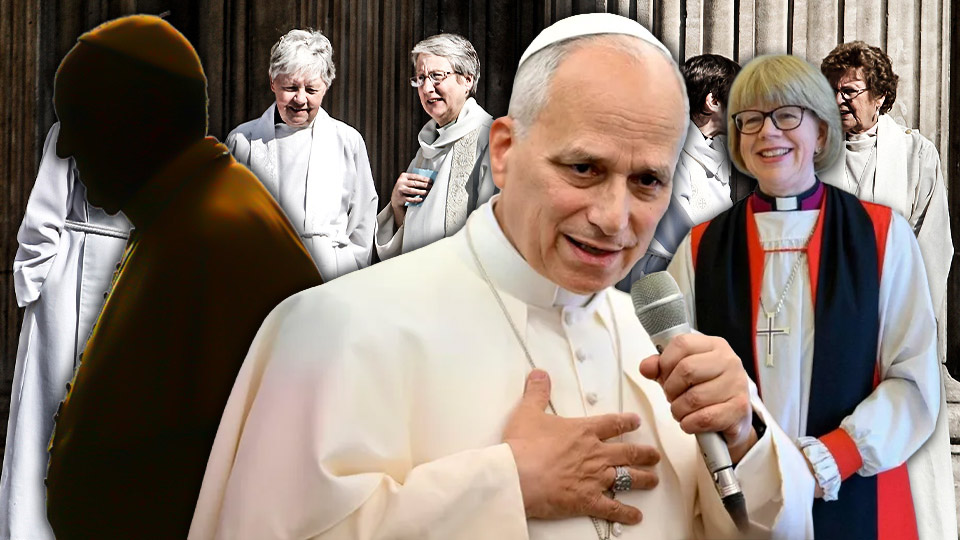

The motu proprio signed by Pope Leo XIV on November 19 modifies Article 8 of the Fundamental Law of the Vatican City State, allowing the Presidency of the Pontifical Commission to be entrusted to members appointed by the Pope who are not necessarily cardinals, thereby remedying a legal irregularity that emerged during the Pontificate of Francis.
On November 21, 2025, L’Osservatore Romano published the Apostolic Letter in the form of a motu proprio that abrogates and replaces Article 8 § 1 of the Fundamental Law of May 13, 2023, establishing that “the Pontifical Commission for the Vatican City State is composed of Cardinals and other members, including the President, appointed by the Supreme Pontiff for a five-year term.”
The Pontifical Commission represents the legislative body of the Vatican State, given that the Pope remains—as of today—absolute sovereign from the standpoint of temporal power and therefore not bound by any civil law, even those he himself issues. The Governorate, on the other hand, is the executive and administrative body of the same State.
Until now, Church governance was understood as a prerogative of high prelates, or at least of men sacramentally ordained. Now it is being conceived almost as a board of directors, a place of shared responsibility among the baptized.
According to the Fundamental Law of the Vatican—the equivalent of a Constitution—the President of the Governorate and the President of the Commission are one and the same (cf. art. 15 § 1).
As readers will recall, on January 19 of this year, Pope Francis announced, during the promotion of his autobiography Hope live on a widely followed Italian talk show, Che tempo che fa, the appointment of Sister Raffaella Petrini as President of the Governorate.
As several analysts observed at the time (even The Remnant Newspaper dealt with the matter; see here), the appointment was not without problems. Pope Francis had in fact reformed the Fundamental Law of the Vatican State in 2023, establishing that “the Pontifical Commission is composed of Cardinals, among whom is the President, and other members.” Therefore, the Governatorate could, by law, be headed only by a cardinal, until Francis intervened shortly before his death.
Although the Pope is not bound by his own laws and is not even bound by the obligation of a written law, Bergoglio’s decision to place a layperson—albeit a religious sister—at the head of the Governorate, evidently to satisfy worldly rhetoric, regardless of Sister Petrini’s actual governance ability, created significant legal conflicts. So much so that some commentators and analysts feared Francis intended to open the door to a “female lay cardinalate,” or even to revolutionize the Conclave by introducing laypeople into the elective assembly of the Supreme Pontiff.
The first conflict concerned the validity of Sister Petrini’s acts. It should be noted that this is not a theological or sacramental issue, but one of juridical-institutional conformity. Since the Fundamental Law is primary with respect to any appointment, the acts of a non-cardinal placed at the head of the Governorate risked being considered ultra vires, “beyond one’s powers,” and therefore invalid or voidable. The repercussions on contracts, budgets, and other acts of public order could have been very serious.
The second conflict concerned administrative continuity. Not only could the various departments of the Governorate (Museums, Gendarmerie, Economic Services, etc.) have doubted the validity of the orders received, but external contractual parties (banks, suppliers, States with which agreements are signed) could have sought clarification or even refused to recognize the validity of documents signed by an authority perceived as “not in conformity with the law.”
Indeed, both Francis and Leo place great emphasis on the concept of communio, “shared gift,” which would extend from magisterial teaching and sacramental life to the governance of the Church, both in diocesan administration and in the administration of the Vatican State.
As several analysts around the world have noted, this intervention by Pope Leo was necessary to clarify the legitimacy of the appointment to the Governorate made by Francis and to restore internal normative coherence to the Vatican City State. From now on, any person—regardless of his or her state of life in the Church—may assume the role of President of the Governorate and of the Pontifical Commission.
Practically speaking, this modification introduced by Francis and completed by Leo certainly does not alter the temporal governance of the Church in itself, but it does affect the perception one may have of the Church. In fact, it is an attempt to secularize the Vatican.
Until now, Church governance was understood as a prerogative of high prelates, or at least of men sacramentally ordained. Now it is being conceived almost as a board of directors, a place of shared responsibility among the baptized. Indeed, both Francis and Leo place great emphasis on the concept of communio, “shared gift,” which would extend from magisterial teaching and sacramental life to the governance of the Church, both in diocesan administration and in the administration of the Vatican State.
Leo XIV’s motu proprio would also have a secondary and collateral effect, certainly unwelcome in some circles: it officially contradicts what the Holy See Press Office stated last February 25, when it declared that Pope Francis had modified the Fundamental Law to justify the appointment and acts of Sister Petrini—an amendment that in fact was never published in official channels. Since the modification has come only now, with Leo’s motu proprio, it is evident that no such modification ever existed and therefore, apparently, the Press Office communicated untrue information or, at the very least, not entirely true.
It can in fact be imagined that the amendment introduced by Leo was the one that had been prepared and ready for Francis’s signature, but which he was unable to sign due to his health problems (and his questionable lucidity) in the final period of his life, and because of his death on April 21. It is easy to suppose that this motu proprio lay in some Vatican drawer and that Pope Prevost took the necessary time—as the jurist he is—to study it and then publish it.
Leo XIV’s motu proprio represents a return to a formal respect for ecclesiastical norms, underscoring the need to harmonize innovations with the internal law of the Vatican State, in order to safeguard institutional stability and the proper governance of the Curia.
