
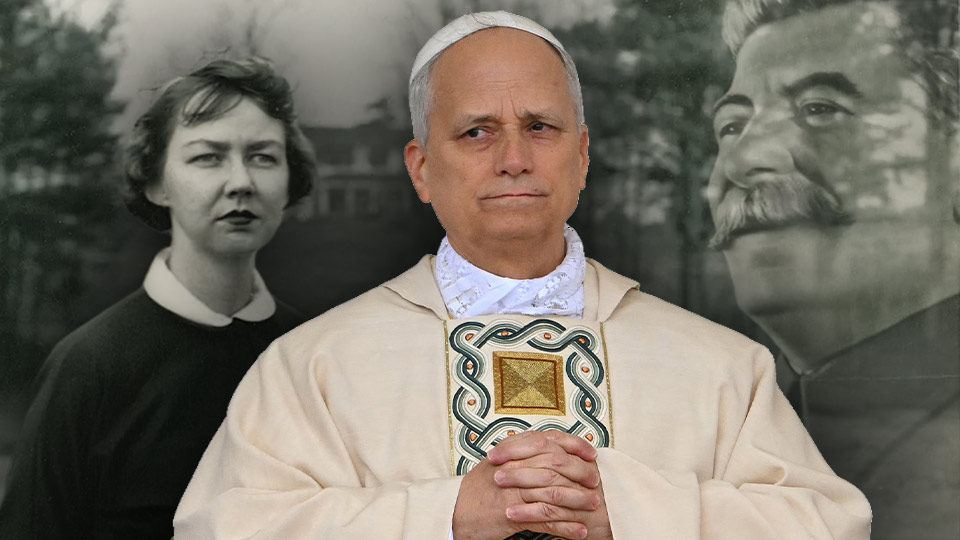

In her lengthy introduction to A Memoir of Mary Ann (by the Dominican Nuns of Our Lady of Perpetual Help Home), Flannery O’Connor wrote of the dangers of divorcing tenderness from the truths given to us by Christ:
“One of the tendencies of our age is to use the suffering of children to discredit the goodness of God, and once you have discredited His goodness, you are done with Him. . . Ivan Karamazov cannot believe, as long as one child is in torment; Camus’ hero cannot accept the divinity of Christ, because of the massacre of the innocents. In this popular pity, we mark our gain in sensibility and our loss in vision. If other ages felt less, they saw more, even though they saw with the blind, prophetical, unsentimental eye of acceptance, which is to say, of faith. In the absence of this faith now, we govern by tenderness. It is a tenderness which, long since cut off from the person of Christ, is wrapped in theory. When tenderness is detached from the source of tenderness, its logical outcome is terror. It ends in forced labor camps and in the fumes of the gas chamber.”
When tenderness is cut off from Christ, the logical outcome is terror. We see it all around today, as our leaders tell us it is a crime to abandon a cat, and a work of mercy to abort a baby; we are encouraged to blaspheme, but threatened if we dare tell the truth about God. As Flannery O’Connor saw it, this tenderness divorced from truth leads to the gas chambers. If we are looking to better understand the crisis in the Catholic Church, and its impact on the crisis we see all around us in the world, O’Connor’s wisdom seems invaluable.
When tenderness is severed from Christ—the very source of truth—it does not soften the world; it distorts it. What begins as compassion untethered from doctrine ends not in mercy, but in coercion, confusion, and ultimately a spiritual terror far more dangerous than cruelty itself.
When Flannery O’Connor wrote these words in 1961, Catholics were far more likely to understand their Faith in the same way she described: “they saw with the blind, prophetical, unsentimental eye of acceptance, which is to say, of faith.” Blind, unsentimental acceptance of what the Catholic Church teaches generally depends upon a foundational belief that the Church has been established by God as the truth-teller on matters of faith and morals. If a Catholic has that foundational belief — as all Catholics should — then it matters very little whether we happen to “like” what the Church says about divorce, marital relations, the prospects of salvation outside the Church, the death penalty, etc. All that really matters is that we know the Church is the truth-teller and we must accept its teachings if we want to please God and save our souls. For Catholics who see the world that way, tenderness and sentimentality are attached to the Faith, and thus do not “end in terror.”
What about today? Surveying those who identify as Catholics, we are more likely to see dissent from at least some teachings on faith and morals than complete acceptance of everything we must believe. Tellingly, the lack of blind, unsentimental acceptance of what the Church teaches is often more pronounced among the clergy than the laity, and the bishops offer us some of the most egregious examples of having discarded the teachings of the Church. It does not seem like an exaggeration at all to suggest that, for the majority of those identifying as Catholics, acceptance of Church teaching is optional. In such a situation, tenderness and sentimentality are naturally detached from the Faith, and we are in the situation described by Flannery O’Connor as ending in “forced labor camps and in the fumes of the gas chamber.”
For the past several decades, the majority of those forming the hearts and minds of young Catholics have suffered from this divorce of tenderness from the unadulterated Catholic Faith. The fruits of this flawed formation are well known: Francis, Tucho, Cupich, Biden, Pelosi, AOC, Trudeau, and even Leo XIV, among countless others formed from the same mold. None of them have the same view of the Faith that O’Connor might have taken for granted when she learned her Faith.
The paradox is staggering: mercy for heresy, patience for moral confusion, and yet an apparent severity reserved for those who cling most firmly to what the Church has always taught.
In this context, it is possible to better appreciate the paradoxes presented to us by Leo XIV. Unless we imagine that he is merely pretending, it seems that he truly wants to be a faithful Catholic. And yet from him we see such an odd mixture of tenderness toward non-Catholics and, at least so far, lack of compassion for Traditional Catholics. He appears to have genuine care for souls, but he sees a flexibility in the Church’s faith and morals that Pius XII and his predecessors would have condemned (and frequently did). It seems that his distaste for Traditional Catholics results from their rejection of this flexibility when it comes to faith and morals.
Perhaps the best expression of this newfound flexibility in faith and morals is the well-known statement from Francis’s Amoris Laetitia, which Leo XIV has not condemned:
“For an adequate understanding of the possibility and need of special discernment in certain ‘irregular’ situations, one thing must always be taken into account, lest anyone think that the demands of the Gospel are in any way being compromised. The Church possesses a solid body of reflection concerning mitigating factors and situations. Hence it can no longer simply be said that all those in any ‘irregular’ situation are living in a state of mortal sin and are deprived of sanctifying grace.”
The truth about mortal sin and sanctifying grace is obviously one of the most absolutely crucial topics of the Catholic Faith — a true matter of eternal life or death — but Francis taught that the truth “can no longer be simply said.” The world demands more flexibility, so Catholic truth must bend. As a result, we have tenderness and sentimentality untethered from the religion God gave us, and it leads to spiritual terror.
An even more disturbing example of this terror of tenderness comes from the bizarre dichotomy present in Rome today: Leo XIV adamantly opposes the death penalty (contrary to Catholic teaching) but appears to be considering imposing a spiritual death penalty on the Society of St. Pius X (SSPX) in response to its planned consecration of the bishops it believes it needs to continue its Providential mission of upholding the unadulterated Catholic Faith. We really ought to ponder this:
- Contrary to Catholic teaching, Leo XIV teaches that the death penalty is impermissible.
- Contrary to Catholic teaching and basic morality, he has failed to correct the soul-destroying initiatives he inherited from Francis, including those of Amoris Laetitia and Fiducia Supplicans.
- Contrary to Catholic teaching, he honors heretics and encourages them to continue teaching their heresies.
- At the same time, though, he is apparently considering excommunicating the bishops, and perhaps even priests, of the SSPX.
Does he not recall that Our Lord taught that spiritual death is worse than physical death (Matthew 10:28)? How can he have such pity for mass murders, such praise for heretics who lead souls to hell, and such coldness for the SSPX?
Only the wretched Traditional Catholics are to be condemned. “Excommunicate them! Into the spiritual gas chamber, and on with the jets!” howl those tenderhearted ecumenists who see all Christians as “one already.” This is where tenderness divorced from the Faith leads.
It is evidently an example of the diabolical disorientation against which Sister Lucia, the Fatima seer, warned. Decades after Flannery O’Connor wrote that tenderness leads to the forced labor camps and fumes of the gas chamber, Walker Percy had Father Smith echo those same thoughts in his 1987 novel, The Thanatos Syndrome — and Father Smith made it clear that it was all a sign of diabolical disorientation:
“The Great Prince Satan, the Depriver, is here. It is not your fault that he, the Great Prince, is here. But you must resist him. . . . I observe a benevolent feeling here. There is also tenderness. . . . Do you know where tenderness leads? Tenderness leads to the gas chamber. This is the feast day of my patron saint, Simeon the Stylite. Simeon lived atop a pillar forty feet high and six feet in diameter for twenty years. He mortified himself and prayed for the forgiveness of his sins and the sins of the world below him, which was particularly wicked, being mainly occupied by the Great Prince Satan. I don’t see any sinners here. Everyone looks justified. . . . Look at you. Not a sinner in sight. No guilt here! The Great Prince has pulled off his masterpiece. These are strange times. There are now two kinds of people. This has never happened before. One are decent, tenderhearted, unbelieving, philanthropic people. The other are some preachers who tell the truth about the Lord but are themselves often rascals if not thieves. . . . What a generation! Believing thieves and decent unbelievers! . . . More people have been killed in this century by tenderhearted souls than by cruel barbarians in all other centuries put together. My brothers, let me tell you where tenderness leads. To the gas chambers! On with the jets!”
Not a sinner at all in the Vatican today, no guilt at all; only the wretched Traditional Catholics are to be condemned. “Excommunicate them! Into the spiritual gas chamber, and on with the jets!” howl those tenderhearted ecumenists who see all Christians as “one already.” This is where tenderness divorced from the Faith leads.
May God grant Leo XIV the grace to avoid lending his hand to this finishing touch on Satan’s great masterpiece of diabolical disorientation. He would surely face the wrath of the Great Prince if he acted as a true Catholic toward the SSPX; perhaps he would even face martyrdom. But if Leo XIV could cooperate with God’s grace to reject Satan, even on this point which may seem small to him, then it could be the most important step in decades in the direction of restoring the foundations of Catholicism for those who today only know tenderness. Our Lady of Perpetual Help, pray for us!