
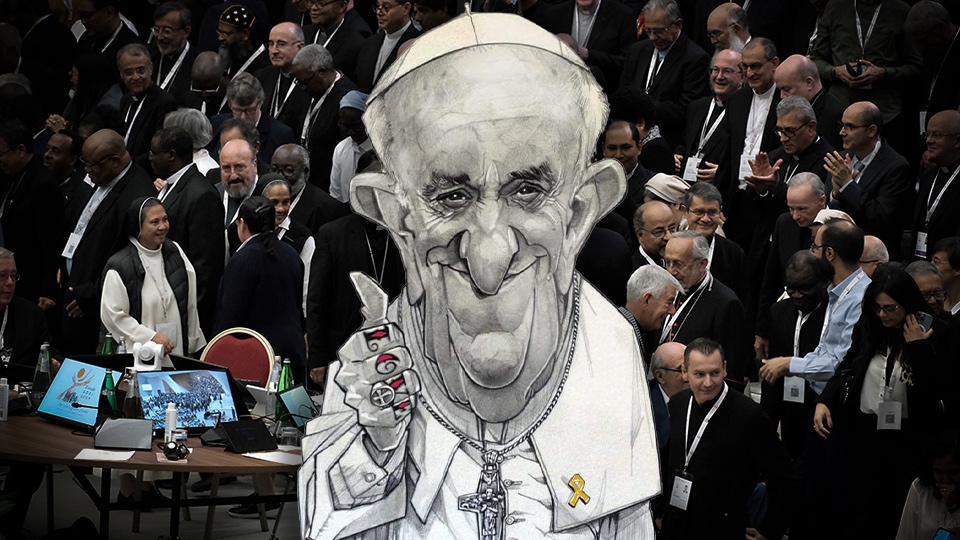

THE SYNOD HAD drawn to a close, in much the same way that an amateur theatrical performance concludes when the cast, having endured several acts of vapid dialogue, finally reaches the scripted applause. The Synod delegates, having duly submitted the fruits of their dialogue – some with the air of ill-prepared students emerging from an exam – had dispersed. The task then fell to the Congregation to blend and refine this inevitably mixed harvest into something resembling an inspired document, much as an accomplished cook transforms yesterday’s uninspiring leftovers into today’s official banquet.
This task was speedily accomplished and the results were promptly presented to a select and, conveniently, pre-selected assembly. As had been divined by both the breathlessly eager and the discreetly despairing, the Synod had, after some palaver and at least one minor invocation to the spirits of the rainforest, produced a state-of-the-art, culturally sensitive, ecumenically expansive, and environmentally biodegradable Novissimus Ordo Missae, the latest Order of Mass.
It came equipped with all the necessary accommodations for diversity, equity and inclusivity, namely, presiders of definite and indefinite genders, ushers for the ministry of hospitality, the explainers of ceremony and ministers extraordinaire, rock bands and steel bands, drummers and players of horn, pipe, lyre, trigon, harp, bagpipe, and of every kind music. There were cheerleaders for moral encouragement, provocateurs for impromptu hand waving ceremonies, liturgical dancers to perform acts of devotion in interpretive movement, and bouncers to ensure that the devout did not stray into their doctrinal patrimony. The new rite’s guiding principle, by not establishing any limits for the liturgical committee’s imagination, opened up a boundless sea of creativity, untroubled by considerations of precedent, theology, or ecclesiastical coherence.
“All other rites of Mass”, the pontiff frigidly gave notice “no matter the loftiness of their origins, the profundity of their spirituality, the solidity of their theology or the inconvenient persistence of their popularity, are, henceforth, forthwith and forever, cancelled.”
A collective gasp flitted through the room. The more astute ecclesiasts knew better than to engage in any disputation and, acquiescing to the inevitable, resigned themselves to its tenacious embrace.
A murmur, both respectful and faintly alarmed, fluttered through the assembly, much like the rustle of parishioners discovering that the sermon would exceed the normative eight minutes. The pontiff’s brows, which had long since mastered the art of looming with ecclesiastical gravitas, gathered themselves together into an expression of celestial displeasure. Immediately, the murmuring ceased. His gaze, sweeping across the room with the practiced ease of one who has never needed to raise his voice to command obedience, sought out any lingering traces of dissent.
This satire appears in the February 28th Remnant Newspaper
Subscribe for exclusive content!
“Hence,” he continued, in the measured tones of one who sees no need to explain himself, “if anyone—Heaven forbid—should be so presumptuous as to dare question, doubt, or even wrinkle a forehead in vague consternation at that which I have declared, defined, and most magisterially taught, let them be assured that they have ejected themselves, headlong and unceremoniously, from the tender, benevolent and merciful embrace of a truly liberated and brave new Church.”
The assembly, by now very proficient in the choreography of assent, held their collective breaths as he continued: “Furthermore, it is forbidden to any man, woman, or individual whether of definite or indeterminate classification to alter, counter, or even raise an eyebrow at this, my solemn declaration, pontifical pronouncement, and magisterial teaching. Let any who dare be warned: they shall incur the blazing indignation of Pachamama while being mauled in the far less merciful maws of ecclesiastical editorials”.
A collective gasp flitted through the room. The more astute ecclesiasts knew better than to engage in any disputation and, acquiescing to the inevitable, resigned themselves to its tenacious embrace. The discerning faithful, however, seeing a truculent inevitability approaching with girded loins, lit their lamps, straightened their posture and braced themselves for the inevitable draconian engagement.
