

I remember my first meeting with the Yamamoto* (surname changed for privacy reasons) family when I first arrived in Tokyo, Japan, for my studies.
Bespectacled and reticent, Mr Yamamoto greeted me with the usual niceties, as I tried to introduce myself nervously in Japanese. His wife, a well-dressed lady with carefully coiffed hair, was more effusive in her welcome.
“Welcome to Japan, Marie, we’re so pleased to have you here with us!” Mrs Yamamoto chirped, as I instantly took a liking to her convivial demeanor.
Likewise, the couple’s only daughter, Mako-chan* (name changed for privacy reasons), a high-schooler, greeted me bashfully as her mother took center-stage in the conversation.
In context, the Yamamotos had been assigned to take care of various foreign students living in the Western Tokyo suburb where my school was, and I was one of those foreign students under their care.
The hospitality they showed me, not to mention Mrs Yamamoto’s delicious Japanese cooking, certainly made me feel like I belonged in their family almost instantly.
Weekends with this gregarious family saw me putting my limited Japanese language to practice, as Mrs Yamamoto and Mako-chan tried to practice their conversational English.
Over time, I learned a bit more about the Yamamotos to establish the fact that Mr Yamamoto, a hardworking salaried employee of a Japanese company in the food and beverage industry, only spent the weekends at home.
To Americans, the Japanese practice of separating families for the corporate good might seem harsh, if not downright cruel. Indeed, it imposes considerable hardship in this nation, which, ironically, prizes the stability of its unique social structure so much that it makes it difficult, if not impossible, for wives and children to accompany husbands on distant assignments. At the same time, Japan is a nation that has almost made a religion of work.
During the week, Mr Yamamoto had to work in Osaka city in Japan’s Kansai region, leaving Mrs Yamamoto mostly at home alone doing household chores and preparing meals as Mako-chan was occupied with school activities.
However, given Mr Yamamoto’s laconic nature, I had the impression that he did not converse much with his family members even when he was back home over the weekends.
Perhaps due to the strenuous nature of his work, I noticed that Mr Yamamoto preferred to unwind on the couch in his living room with a newspaper and a can of Kirin beer in tow, engaging in conversations when necessary.
Being the naive student I was back then, I remember feeling surprised when such information hit me.
“So your husband only returns home two days in a week?” I asked Mrs Yamamoto, wide-eyed.
The matron of the house answered in the affirmative, before adding that such a practice, known as “tanshinfunin” in Japan, was common in many households across the country.
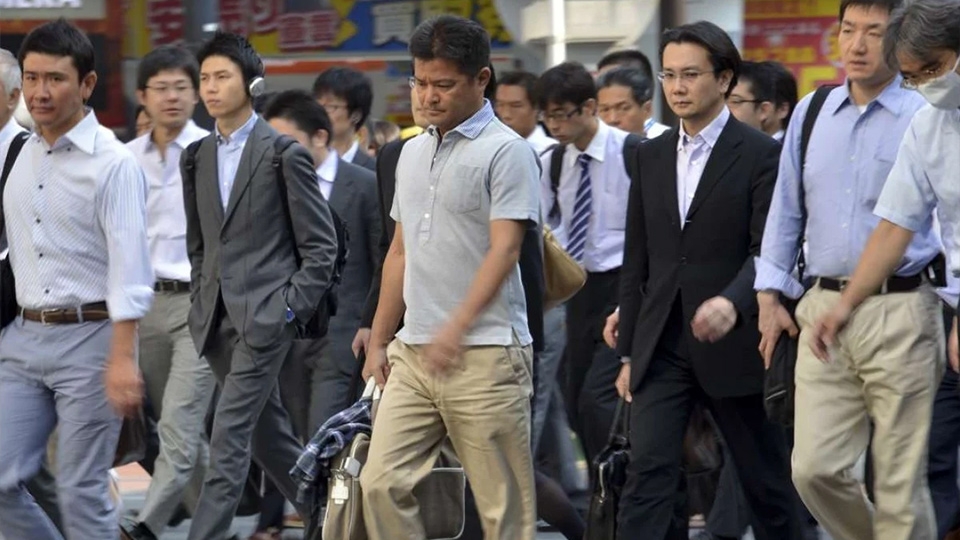
In essence, “tanshinfunin” (noun) refers to a job transfer prompting an employee to work at a location away from their family for a considerable period of time (weeks, months, or even years). In Japan, the term can be translated into English as “business bachelor”, implying that Japanese husbands (and/or dads) who get posted away from their families usually lead the lives of “bachelors” for significant amounts of time. Notably, many Japanese “salarymen” experience such job transfers around Japan or even get posted overseas, at the behest of their employers.
The practice of separating the man of the house from his family in Japan can be traced back to Japan’s Edo period. Through the system of “sankin kotai”, daimyo (regional lords) spent every alternative year in the hitherto capital city of Edo (Tokyo), while their families remained at their regional residences.
In modern-day Japan, many Japanese families choose to remain in their hometowns as the men of the households get posted elsewhere. As Gordon Campbell states, many Japanese families place a huge emphasis on children’s education, striving (as much as they can) to get children into prestigious middle and high schools located mainly in larger Japanese cities.
Given that many Japanese believe that such elite middle and high schools are the gateways to prestigious universities, a move away from these “prime” locations due to the work posting of Japanese dads could impede children’s chances of entering their “dream” universities in the future.
A 1993 article by the Los Angeles Times stated:
“To Americans, the Japanese practice of separating families for the corporate good might seem harsh, if not downright cruel. Indeed, it imposes considerable hardship in this nation, which, ironically, prizes the stability of its unique social structure so much that it makes it difficult, if not impossible, for wives and children to accompany husbands on distant assignments. At the same time, Japan is a nation that has almost made a religion of work. Its people have long not only tolerated but thrived in difficult job and family situations–including long separations.”
Indeed, in a mostly pagan Japanese society, many men view their jobs as their ikigai, or the thing that makes their lives worth living. Consequently, many Japanese men (unfortunately) have a self-effacing dedication to their jobs, at the expense of their health and family relationships. In fact, “wan-ope ikuji,” a shortened version of the English “one-person child care operation”, is a Japanese term to characterize the situation in which only one parent (usually the mother) takes charge of all aspects of child-rearing.
Already, many Japanese children grow up without fathers, with some getting into bad company or suffering other ramifications likely due to the lack of male role models at home or simply due to parental neglect.
Nonetheless, the time spent away from their families have left many Japanese dads feeling estranged from their loved ones. While “tanshinfunin” is not the only contributing factor to “fatherless households” in Japan, it certainly deprives many Japanese children of the precious company of their fathers.
Already, many Japanese children grow up without fathers, with some getting into bad company or suffering other ramifications likely due to the lack of male role models at home or simply due to parental neglect. As a 2015 article by The Japan Times reported:
“Nihon no otōsan (日本のお父さん, Japanese fathers) are a pretty sad lot. The vast majority of them have been and continue to be kaya no soto (蚊帳の外, literally “outside the mosquito net,” meaning “left out”) inside their own homes — they often have no idea what their own families are up to. Among the alarming increase in cases of shōnen hanzai (少年犯罪, juvenile crime), one fact stands out as emblematic of the state of the Nihon no katei (日本の家庭, Japanese home): The father is often nowhere to be seen. There’s even a phrase for this — chichioya fuzai (父親不在, roughly meaning that the father is missing in action).”
In wake of Japan’s declining population and falling birth rates,the Japanese government has been for years trying to adopt natalist policies to encourage Japanese families to have more children, as well as encourage Japanese men to become more active in child-rearing.
For instance, Japanese Prime Minister Fumio Kishida unveiled his policies for children and child-rearing in 2023, declaring:
“We must build a society in which, within the family, we change the situation in which the burden of childcare is concentrated on women, and have husbands and wives cooperate in raising children.”
When the word “ikumen,” a blend of the Japanese word “ikuji” (child care), men and “ikemen” (meaning “hunk”) became popular in the Japanese lexicon in 2010, the notion of “the perfect father who could raise children, work, dote on his wife and earn a good living” also became widespread in Japan, The Japan Times stated.
Fortunately, changing societal mindsets, brought about by numerous work-from-home arrangements during the COVID-19 period, have spurred some Japanese men to be the husbands and dads their families need.
Furthermore, Japan’s health ministry began the“ Ikumen Project”, a campaign to encourage Japanese men to assume active parenting roles, offering parenting courses even for “single men complete with pregnancy suits”, The Japan Times reported in June 2024. The same article elaborated, stating:
“Thanks to rising awareness, the percentage of eligible men taking paternity leave has been increasing, albeit slowly. The ratio, which was 0.12% in fiscal 1996, surpassed 5% in 2017 and reached 17.13% in 2022.”
Fortunately, changing societal mindsets, brought about by numerous work-from-home arrangements during the COVID-19 period, have spurred some Japanese men to be the husbands and dads their families need. While increasing Japan’s birth rates remains an uphill task, pro-family attitudes among some segments of the country’s population is very encouraging.
Just before I left Japan upon the completion of my studies, I visited the Yamamoto household once again. The usual exuberant Mrs Yamamoto broke a piece of news to me, stating:
“My husband has finally moved back to Tokyo for work. We can now see him during the week.”
I heaved a sigh of relief, feeling elated that the diffident Mr Yamamoto, while a man of few words, could make a difference to the lives of his wife and daughter simply by being more accessible and present than he was before.