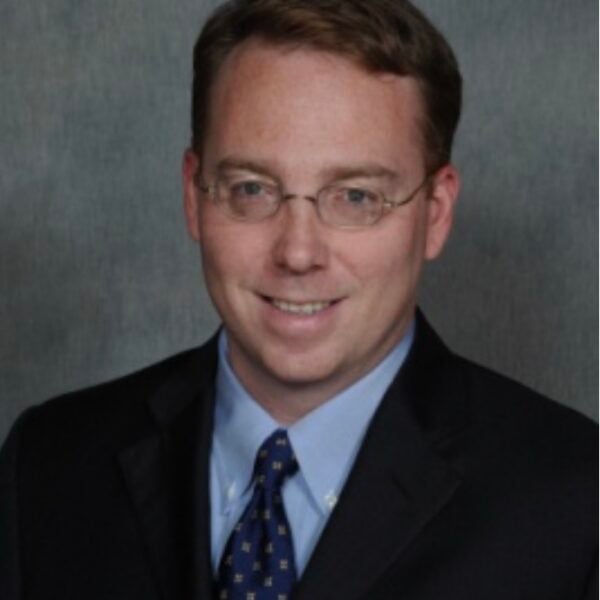
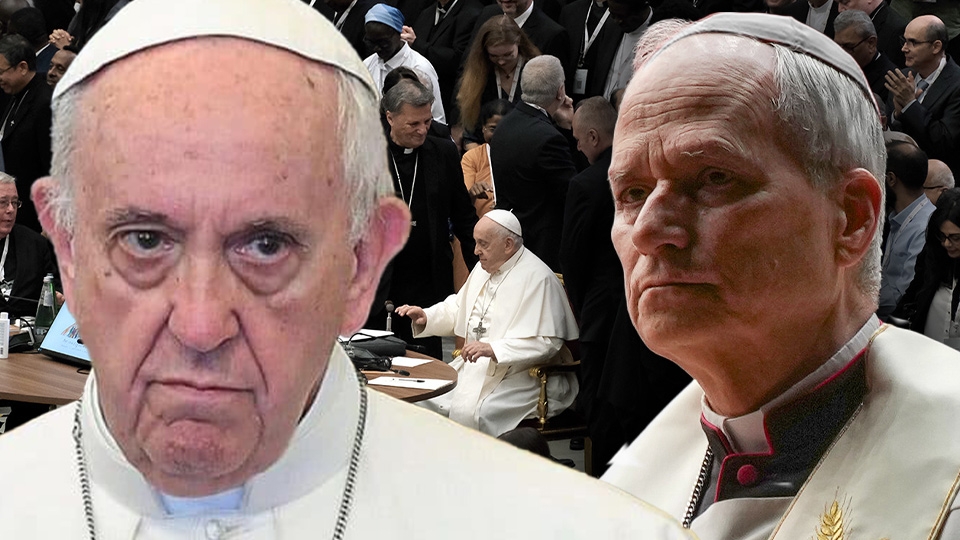

With Leo XIV, we face a situation in which we know little about how he will attempt to address the fracture described by Fr. Heimerl. Pope Leo has voiced support for Vatican II and the Synod, but he also has a great devotion to St. Augustine, whose writings undermine all of the worst aspects of the Vatican II revolution. We have long known that God will have to intervene to end the crisis and we have no basis at this point for concluding that the Augustinian from America is incapable of being God’s instrument to at least begin to turn the tide.
In his recent article about Pope Leo XIV, Fr. Joachim Heimerl put the current pontificate within the context of the fracture that became evident with Paul VI:
“Didn’t Paul VI also wear the red mozetta, and wasn’t he also a ‘papal’ pope? And yet, during his pontificate, a rift opened up that later frightened him, but which he himself caused. We can twist and turn it however we like: we can glorify Paul VI, we can sugar-coat him and the Second Vatican Council with holiness and justify his ‘spirit’ with theological acrobatics, but none of this can hide the fact that the Church was different after Paul VI than it was before. The fracture that emerged during his pontificate burst in the most recent one, and that brings us back to the dark shadow that has lingered over us ever since. Nothing will change under Leo XIV. On the contrary Leo can, at best, succeed in lightening this shadow and smoothing out the internal distortions; he certainly cannot heal them.”
While we may disagree about whether it was Paul VI or John XXIII who bears primary responsibility for the fracture, it is undoubtedly the case that the fracture became far more evident with Paul VI.
John XXIII and his Council sought to unify all Christians, largely through a process of sacrificing what the Church had always taught to make Catholicism less objectionable to non-Catholics.
As a general matter, we know that Catholics tended to respond in one of three different ways to the fracture in the late 1960s and early 1970s:
- Many Catholics simply left the Church or stopped practicing the Faith
- A larger number went along with the changes, typically through false obedience
- A smaller group took the approach similar to that taken by Archbishop Marcel Lefebvre, and refused to leave the Church or go along with the changes
We can find a concise synopsis of the latter two responses from Archbishop Lefebvre’s “Letter to Friends and Benefactors (No. 9),” which The Remnant initially published in January 1976, and then again in celebration of the newspaper’s fiftieth anniversary:
- “For the problem of Econe is the problem of thousands and millions of Christian consciences which are distressed, divided and torn for the past ten years by the agonizing dilemma: whether to obey and risk losing one’s faith, or disobey and keep one’s faith intact; whether to obey and join in the destroying of the Church, or to disobey and work for the preservation and continuation of the Church; whether to accept the reformed liberal Church, or to go on belonging to the Catholic Church. . . It is because we believe that our whole faith is endangered by the post-Council reforms and trends that it is our duty to disobey, and to maintain the Traditions. The greatest service we can render to the Catholic Church, to Peter’s successor, to the salvation of souls and of our own, is to say ‘No’ to the reformed liberal Church because we believe in our Lord Jesus Christ, Son of God made man, who is neither liberal nor reformable.”
By disobeying, Archbishop Lefebvre would not budge from what the Church had always taught. Returning to Fr. Heimerl’s image of the fracture, Archbishop Lefebvre remained in place, adhering to the true doctrine of the Catholic Church, which can never change; the break occurred because the putative authority figures of the Church pulled away illegitimately, drawing many souls along with them through calls for obedience.
Christian unity is of course desirable, but never at the expense of calling into question even a single article of the Faith.
The stated rationale for the break from what the Church has always taught was “Christian unity”: John XXIII and his Council sought to unify all Christians, largely through a process of sacrificing what the Church had always taught to make Catholicism less objectionable to non-Catholics. To get a sense of how revolutionary this was, we can consider the words of Cardinal James Gibbons, Archbishop of Baltimore, from his 1876 book, The Faith of Our Fathers:
“The number of Catholics in the world is computed at three hundred million. They have all ‘One Lord, one faith, one baptism,’ one creed. They receive the same Sacraments, they worship at the same altar, and pay spiritual allegiance to one common Head. Should a Catholic be so unfortunate as contumaciously to deny a single article of faith, or withdraw from the communion of his legitimate pastors, he ceases to be a member of the Church, and is cut off like a withered branch. The Church had rather sever her right hand than allow any member to corrode her vitals. It was thus she excommunicated Henry VIII because he persisted in violating the sacred law of marriage, although she foresaw that the lustful monarch would involve a nation in his spiritual ruin. ” (p. 9)
This remains the true position of the Catholic Church, which can never change. Christian unity is of course desirable, but never at the expense of calling into question even a single article of the Faith. It would be better to have a small Church with unadulterated Faith than a large Church that compromised on even the most seemingly minor doctrine.
However, we can see from the opening paragraphs of John Paul II’s 1995 encyclical “On commitment to Ecumenism,” Ut Unum Sint, that the dominant position of the Council pulled in the opposite direction:
“Ut unum sint! The call for Christian unity made by the Second Vatican Ecumenical Council with such impassioned commitment is finding an ever greater echo in the hearts of believers, especially as the Year 2000 approaches, a year which Christians will celebrate as a sacred Jubilee, the commemoration of the Incarnation of the Son of God, who became man in order to save humanity. The courageous witness of so many martyrs of our century, including members of Churches and Ecclesial Communities not in full communion with the Catholic Church, gives new vigour to the Council’s call and reminds us of our duty to listen to and put into practice its exhortation. These brothers and sisters of ours, united in the selfless offering of their lives for the Kingdom of God, are the most powerful proof that every factor of division can be transcended and overcome in the total gift of self for the sake of the Gospel.”
Whereas Catholics celebrate the English Martyrs for their willingness to die horrible deaths rather than compromise the Faith, Vatican II and the Synodal Church want us to celebrate Protestant Martyrs who died hating the Faith. The difference is not minor, and the heretical false ecumenism movement remains the spurious justification for most departures from what the Church has always taught.
In almost all of his heterodox initiatives, especially the Synod on Synodality, he cited Vatican II as the “theological authority” for his departures from Church teaching.
Christian unity has been the force that caused the fracture during Vatican II and continues to pull the Synodal Church away from the Catholic Church. But the fracture would never have occurred if the shepherds had obeyed these crucial words from St. Pius X’s Oath Against Modernism:
“I sincerely hold that the doctrine of faith was handed down to us from the apostles through the orthodox Fathers in exactly the same meaning and always in the same purport. Therefore, I entirely reject the heretical misrepresentation that dogmas evolve and change from one meaning to another different from the one which the Church held previously.”
Once the shepherds set aside this barrier to heterodoxy, the fracture was almost inevitable. Merely the willingness to allow Catholic teaching to evolve from one meaning to another is already a surrender to the Church’s enemies.
Perhaps the most significant aspect of Francis’s hostile occupation of the papacy was the fact that he made it clear the there was a fracture between Rome and what the Catholic Church teaches. In almost all of his heterodox initiatives, especially the Synod on Synodality, he cited Vatican II as the “theological authority” for his departures from Church teaching. For those who truly understood what was taking place, his twelve year reign of terror was a vindication of what Archbishop Lefebvre had been saying since the Council.
Now, with Leo XIV, we face a situation in which we know little about how he will attempt to address the fracture described by Fr. Heimerl.
Now, with Leo XIV, we face a situation in which we know little about how he will attempt to address the fracture described by Fr. Heimerl. Pope Leo has voiced support for Vatican II and the Synod, but he also has a great devotion to St. Augustine, whose writings undermine all of the worst aspects of the Vatican II revolution. Maybe he will exacerbate the rupture, maybe he will cooperate with God’s grace to end the crisis by repudiating the errors of Vatican II — we simply do not know at this point and those who insist otherwise are mistaken. At this point, we would all do well to heed the wise words of Fr. John Fullerton, the U.S. District Superior of the SSPX:
“In a spirit of charity, I would urge all of us to keep the Holy Father in your prayers and hold him in your hearts. For our part, we pray that, with the help of God’s grace, we will continue the mission of our heavenly patron, St. Pius X, to ‘restore all things in Christ,’ especially the Sacred Traditions of Holy Mother Church while continuing to form holy priests who will travel this great land of ours—the land of Pope Leo XIV—to provide the Holy Sacrifice of the Mass and all sacraments to the faithful in accordance with the traditional Roman Rite. May Pope Leo XIV faithfully fill the shoes of St. Peter and strengthen the faithful, spread the Gospel, and never waver in telling the world that what it needs above all else is Our Lord Jesus Christ, whose death and resurrection gives all men and women hope of eternal life.”
There is little risk that we will lose the Faith by praying for Leo XIV and encouraging him to oppose the errors of Vatican II. We have long known that God will have to intervene to end the crisis and we have no basis at this point for concluding that the Augustinian from America is incapable of being God’s instrument to at least begin to turn the tide.
Immaculate Heart of Mary, pray for us! St. Augustine, pray for us!