

Following the 2024 European Parliament (EP) elections from June 6 to 9, the European Union (EU) elites and Brussels bureaucrats were left with hair standing on end.
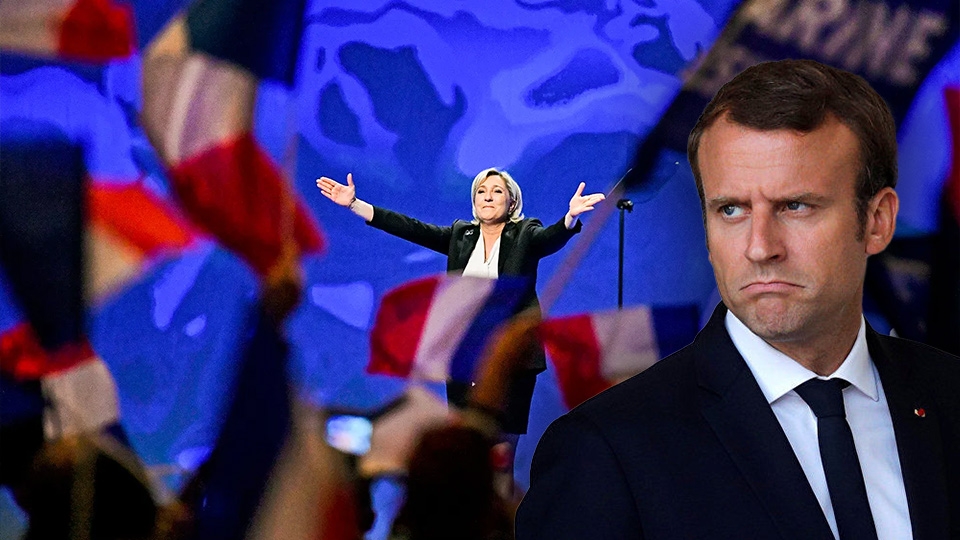
In France, the conservative Rassemblement National (RN) party defeated the Renaissance party of incumbent French leader and globalist Emmanuel Macron with 31.5% of the vote nationwide. The beleaguered and humiliated Macron then called for a snap election for June 30 and July 7, reportedly ignoring advice from leftist incumbent prime minister Gabriel Attal that such a move could backfire.
In France, the conservative Rassemblement National (RN) party defeated the Renaissance party of incumbent French leader and globalist Emmanuel Macron with 31.5% of the vote nationwide.
“I cannot act as if nothing has happened”, admitted a despondent Macron, during an impromptu address to the country after the polls.
In light of RN’s victory, French conservative politician Marine Le Pen proclaimed that her party was “ready for power”, declaring that 28-year-old deputy leader, Jordan Bardella, would campaign for the office of prime minister. Moreover, Le Pen asserted that her party’s victory was a “great victory for patriotic movements”, adding that Europe was seeing “the return of nations”.
Indeed, the RN’s triumph in its native France was not an isolated case in point. In neighboring Germany, voter turnout in Germany was a historic high since European elections were first conducted in 1979 at 64.8%.
Notably, the antiglobalist Alternative für Deutschland (AfD) emerged in second place, increasing its vote share from 11% to 15.9%, despite numerous leftist attempts (Soros-backed) to smear its reputation.
In contrast, the party of incumbent German Chancellor Olaf Scholz, the Social Democratic Party (SPD), ranked third with 13.9%, leading to 14 seats in the EP(out of the 96 seats Germany has).
In an evident display of opposition to climate and energy policies as well as the war against farmers by climate alarmists, German voters made sure that the Greens suffered a resounding defeat.
In an evident display of opposition to climate and energy policies as well as the war against farmers by climate alarmists, German voters made sure that the Greens suffered a resounding defeat, causing their vote share to fall to 11.9% (12 seats) from 20.5% (21 seats) five years back.
Strikingly, public unhappiness over Germany’s (and the EU’s) support for the authoritarian Kyiv regime in the ongoing Russo-Ukrainian conflict arguably contributed to the rise of anti-establishment parties like the AfD, as well as its left-wing counterpart, the Bündnis Sahra Wagenknecht (BSW).
Set up only recently by Sahra Wagenknecht, the BSW, which campaigned on an anti-war and anti-immigration platform, calling for peace talks between Russia and Ukraine instead, garnered 6.2% of the votes during the recent elections.
In the aftermath of the elections, AfD co-chairman Alice Weidel, who urged Scholz to call for early elections, posited:
“We’ve done well because people have become more anti-European. People are annoyed by so much bureaucracy from Brussels.”
German news platform Junge Freiheit jestingly described the electoral outcome:
“The voters, who thanks to ‘promises of progress’ are now allowed to choose their gender every year, but in a few years will no longer be able to choose which car they can drive, send their regards.”
Little wonder that in Germany, “Wahltag ist Zahltag”, or “election day is payday”, seems to be the order of the day.
It looks like Meloni has been emboldened by the results [of the EU elections] to push an even more conservative agenda,” one G7 diplomat, who preferred to remain anonymous, remarked, as cited by pro-EU news outlet Euractiv.
In Italy, the Fratelli d’Italia party of Prime Minister Giorgia Meloni, attained 28.9% of the total vote in the recent elections, with 39% of blue-collar workers supporting the party. ruling conservative party. Fratelli enjoys a robust 21% support among Italian 18 to 34-year-olds, just like in Germany and Poland, which documented an increase in youth support for conservatives at the recent elections.
In a hint that she enjoys the upper hand in talks with globalist leaders, including those belonging to the Group of Seven (G7) nations, due to her positive performance in the recent elections, Meloni opposed a reference about the G7’s global support for “safe and legal abortion.”
“It looks like Meloni has been emboldened by the results [of the EU elections] to push an even more conservative agenda,” one G7 diplomat, who preferred to remain anonymous, remarked, as cited by pro-EU news outlet Euractiv.
Also, the Netherlands’ conservative Party for Freedom (PVV), led by Geert Wilders, emerged second with 17% of the vote, and was slated to increase from one to seven seats in the EP. Wilders has vocally opposed sending military aid to Ukraine, maintaining that backing Kyiv’s war effort will undermine the Dutch military’s ability to defend the nation.
In Central Europe, Hungarian ruling party Fidesz led by Prime Minister Viktor Orbán, achieved a significant victory in the elections, getting 44.7% of the votes, and 11 of the 21 seats given to Hungary in the EP. Alluding to his electoral victory, Orbán stated that voters had given a mandate to his government’s anti-war stance, calling on the EU to organize peace talks with Russia rather than deploy arms to Ukraine.
In Central Europe, Hungarian ruling party Fidesz led by Prime Minister Viktor Orbán, achieved a significant victory in the elections, getting 44.7% of the votes, and 11 of the 21 seats given to Hungary in the EP. Alluding to his electoral victory, Orbán stated that voters had given a mandate to his government’s anti-war stance, calling on the EU to organize peace talks with Russia rather than deploy arms to Ukraine.
On June 18, Hungarian EU Affairs Minister János Bóka said during a press conference introducing Hungary’s EU presidency which will start on July 1 till the end of 2024 that his country wishes to “Make Europe Great Again”, alluding to former US President Donald Trump’s slogan, “Make America Great Again”.
“The motto points to a proactive presidency and symbolizes the notion that we are stronger together than apart,” Bóka declared.
For years, Hungary has been one of the most outspoken EU countries resisting illegal migration. However, in a blatant display of prejudice and judicial lawfare, the globalist European Court of Justice (ECJ) fined the Central European country for allegedly “restricting access to international protection”, notwithstanding Budapest’s huge expenditure on border protection.
Similarly, Czech voters penalized the centrist government that has been regarded as being lenient on matters such as migration and climate policies.
Similarly, Czech voters penalized the centrist government that has been regarded as being lenient on matters such as migration and climate policies. Ex Prime Minister Andrej Babiš’ conservative-leaning ANO movement came in victorious in the recent EP elections with 26.1% of the votes and seven seats (one more than five years back). In the lead-up to the elections, the ANO movement campaigned under the banner “No to immigration and the green madness.” Also, Babiš has challenged the EU’s playbook regarding Ukraine, urging for peace negotiations to end Kyiv’s conflict with Moscow.
The right-leaning Czech alliance Přísaha a Motoristé, which slammed the EU’s policies on migration and climate alarmism, obtained 10.3% of the votes and two seats in the EP. Party leader, former racing driver Filip Turek, declared that he will travel to the first plenary session of the Parliament in a car with a “large carbon footprint.”
Responding to the poll results, NSA whistleblower Edward Snowden observed that pro-war EU politicians have been “punished”, according to a report by Russia Today (RT).
In a post on X (formerly Twitter), Snowden contended that the electoral loss of pro-war politicians in the EU is “not a good sign for [US President Joe] Biden”, hinting that it is the White House that determines whether conflicts, such as the present one between Russia and Ukraine, are prolonged or not, RT added.
Despite their less-than-stellar performance in the recent EU polls, the proud Brussels elites ensconced in their ivory towers have been in a general mood of denial regarding the poll results.
Despite their less-than-stellar performance in the recent EU polls, the proud Brussels elites ensconced in their ivory towers have been in a general mood of denial regarding the poll results.
For example, European Commission (EC) President Ursula von der Leyen, the leading candidate for the European People’s Party (EPP), boasted that “no majority can be formed without the EPP.”
“We are the strongest party. We are the anchors of stability and voters acknowledge our leadership in the last five years,” she said, claiming that she had sensed ”a lot of confidence and trust” in the EPP and the EU during her re-election campaign.
Ironically, no one actually voted for von der Leyen during the recent elections.
Echoing their globalist masters’ narratives, mainstream media news outlets have attempted to downplay conservative victories or act as “prophets of doom” in warning about the so-called “dangers” of the “far-right”.
Right wing populism is sweeping Europe because of decades of the miserable failure of “Blairism”, centrist nothingburgers masquerading as both faux conservatism and faux labourism. Guardian-style war-fervor dressed up in the frilly knickers of liberalism. Cultural disdain for family, faith and country.
For instance, the leftist news outlet The Guardian warned that the rise of “far-Right” parties could imperil the passing of climate laws. The UK-based Socialist Worker newspaper fumed about “fascist” victories across Europe, urging a “strong and militant left” to tackle this situation. What is more, France’s Libération articulated its worries about the “concerning landscape” across Europe—especially regarding the so-called “extreme Right” in Germany, which the outlet alleged was “nostalgic for Nazism.” As The Daily Mail reported:
“Many voters have been hit by the cost of living, have concerns about migration and the cost of the green transition and are disturbed by geopolitical tensions, including war in Ukraine, and hard and far-Right parties have seized on this and offered the electorate an alternative.”
Alluding to the globalist elites’ tendencies to villainize their dissenters, conservative American writer Rod Dreher put it succinctly in an article in The European Conservative:
“It is always easier to blame the supposed evils of those one hates than face up to your own side’s failures.”
Having said that, leftist English politician George Galloway rightfully admitted in a tweet that Europeans are opting for conservatism and populism due to the failures of the Brussels elite. His tweet is as follows:
“Right wing populism is sweeping Europe because of decades of the miserable failure of “Blairism”, centrist nothingburgers masquerading as both faux conservatism and faux labourism. Guardian-style war-fervor dressed up in the frilly knickers of liberalism. Cultural disdain for family, faith and country. A uniparty from a uni place. Economic decline deindustrialisation dressed in green mantras. It will not be repelled by MORE liberalism, by tossing around ‘isms’, ‘ists’ and ‘obias’.”
The recent EP elections featuring significant conservative and nationalist gains, thus rattling the globalists in Brussels, show that there is value in resisting globalists’ top-down agendas. For conservatives and Christian counter-revolutionaries opposing top-down leftist ideologies, the EP elections are very encouraging. If such conservative and Christian resistance persists, perhaps even the most sheltered of the Brussels brahmins cannot afford to bury their heads in the sand any longer.