

Editor’s Note: I dedicate this post to the suffering people of Gaza, especially our brothers and sisters of the ever-shrinking Christian community, who this Christmas are refusing the leave the war-torn land Our Savior called home. As we celebrate the Birth of Christ in relative peace, let us resolve to pray for them as for a third consecutive year, Gaza’s Christian community will be forced to celebrate Christmas in private and without public celebrations. “Churches have suspended all celebrations outside their walls because of the conditions Gaza is going through,” reports Youssef Tarazi, a Palestinian Christian in Gaza, 31. “We are marking the birth of Jesus Christ through prayer inside the church only, but our joy remains incomplete”.
Before the war, churches across Gaza transformed their courtyards into places of celebration at this holy time of year. The streets were decorated with festive lights and churches hosted carols that brought families together. Muslims often joined Christian neighbors to mark the occasion, including the annual lighting of a large Christmas tree in Gaza City that is no more.
“This year, we cannot celebrate while we are still grieving for those killed, including during attacks on churches. Many members of our community will not be with us this Christmas,” says George Anton, the director of operations at the Latin patriarchate in Gaza and head of its emergency committee.
“We cannot celebrate while Christians and Muslims alike are mourning devastating losses caused by the war. In the past, we decorated our homes. Now, many homes are gone. We decorated the streets. Even the streets are gone. There is nothing to celebrate.”
So, that’s today. What follows is an eyewitness account of how it was 82 years ago, when my father was stationed in the Holy Land during World War II. It was written just five years before the establishment of the State of Israel, a move which displaced tens of thousands of Palestinians and ushered in a period of unprecedented suffering in the region. But back in 1943, during his visit to Bethlehem, my father encountered peace in the Holy Land and a vibrant Christian community. Five years later, that peace and that community would be shattered by the political machinations of globalist outsiders who thought they knew best how to hack up and divide the Holy Land. They were wrong. Blood has been flowing in that land ever since.
So, let’s look back on how it was. My father’s wartime diary gives us a glimpse of a beautiful Christan world that is almost completely gone now, as the Globalist peace plan has left the Holy Land bombed to hell with very few Christians left alive in the city where Jesus Christ was born.
May God bless and protect the Christians who are hanging on for dear life this Christmas. Let us never forget what is happening to them right now and let us never stop praying for them. When my father wrote the following, he was 28 years old, and I am confident that, were he with us today, he would beg us not to remain silent in the face this diabolical war on the cradle of Christianity. – Michael J. Matt
Diary Entry: Christmas, 1943
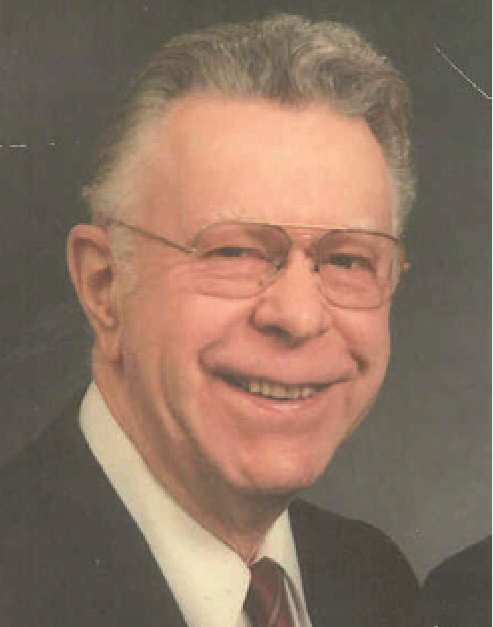
By Walter L. Matt, RIP
(Published in The Remnant, December 15, 1968)
Once in my college glee club I remember what a feeling of inner rhapsody overcame me while listening to some hundred voices burst forth with the triumphant notes of Handel’s Messiah. A similar seventh-heaven feeling came over me again when my buddies and I arrived in Bethlehem the other day! It is a fairy-land town, a tranquil little place nestled in the crook of a flower-strewn hillside.
All the Christmas bells you’ve ever heard seem concentrated in the shadow of these verdant hills and your heart leaps as you approach the site where “shepherds watched” and the glad tidings were thundered from heaven to earth: “Unto you is born this day a Savior who is Christ the Lord!”
You wish then that you could turn back the clock of the centuries and enter here at night in awe-struck company with simple shepherd men. Instead, you walk up the hill in company with a raucous chorus of Arab lads tagging your heels and leading you against your will into tiny old-world curio shops from which you emerge with mother-of-pearl rosaries, Dead Sea stones, olive wood ash trays, Gallilean sea shells or whatever else attracts your fancy.
An unsullied bit of Christendom is evident in Bethlehem. It is marked by the absence of muezzins, and, on the other hand, by the prevalence of churches and caroling bells. But how different is the dark little cave under the Church of the Nativity from the manger and stable of one’s childhood dreams!
As we approached it I thought of the days when I peeped starry-eyed under a huge shining Christmas tree at a picturesque little crib my brother had made. I remembered its thatched little roof, its stable-like walls, its feed troughs and great pile of straw on which the Wise Men knelt to adore “the new-born Child”. I looked about me at the hurrying crowds who, like myself, had made the pilgrimage to this magnificent shrine which Constantine built, and I seemed to hear children’s voices singing into a hushed winter night: O come all ye faithful, Joyful and triumphant, O come ye, O come ye to Bethlehem!
The women of Bethlehem are tall, straight, and graciously dignified. They wear blue skirts and a distinctive headdress which adds to their grace. The men too are tall, powerfully built, and in the candlelight of the church they move about almost majestically in their Oriental garb, like bearded knights of old.
In this great church a service was in progress and people knelt from near and far and a few of us GIs entered. I thought the choir was filled with Sisters, but they turned out to be Bethlehem women wearing the tall, veiled headdress which is customary in these parts.
Beneath the high altar is the cave where Christ was born. We had to enter it by a short flight of steps and found it difficult to get past when several Greek priests came up in a cloud of swirling incense. Fifty-three silver lamps barely dispel the gloom of this low-vaulted, smoke-blackened cave. I saw the inlaid bronze star in a niche in the floor, and round it a Latin inscription: “Here Jesus Christ was born of the Virgin Mary.”
To me that message seemed hardly old. I had the overpowering feeling He had been born only moments before and we beheld Him now, and once again the world would have peace!
One feels disinclined to speak of such things, since they are after all so sacred. But I recall the almost subconscious prayer that escaped me while standing in this holy place: “Lord I am not worthy,” and how strongly I believed! It was the sheerest happiness I had ever known. It will remain a most blessed memory in the years to come.
Your mind keeps turning again and again to the poor grotto crib below you. How poorly furnished and miserable it must have been! Surely we would have found “room in the inn” someway, somehow! Surely we would have arranged a more suitable dwelling than this for the new-born King! or would we?
We went up again, from the “stall of Bethlehem” into the church of the Nativity above. There a Mass was being offered and people were entering the nave of the church in ones and twos, silently, reverentially, as all these people do who come to worship at the site where Christ was born.
The women of Bethlehem are tall, straight, and graciously dignified. They wear blue skirts and a distinctive headdress which adds to their grace. The men too are tall, powerfully built, and in the candlelight of the church they move about almost majestically in their Oriental garb, like bearded knights of old. All of them proceed toward the altar now, removing their shoes before kneeling down.
Your thoughts ought to be focused on the Mass, but your impressions have been so profuse and have stormed in upon you with such overwhelming force that, instead, your mind keeps turning again and again to the poor grotto crib below you. How poorly furnished and miserable it must have been! Surely we would have found “room in the inn” someway, somehow! Surely we would have arranged a more suitable dwelling than this for the new-born King! or would we?
“Peace to men of good will”! That, in fact, is the message that comes home to you most crystal clear at Bethlehem’s crib. And you at last leave the church of Christ’s nativity resolved that the Christmas message is the keystone to your own peace and happiness and to that of the world at large.
The Mass celebrant reads the gospel story now, as told by St. John: “He was in the world, and the world was made by Him, and the world knew Him not. “ And you think to yourself that things are in reality no different today and that, even now, we find “no room” for Him in the inns and khans of our hearts, though the world has now, twice, been set aflame and still there is no peace.
But the priest at the altar continues, and there is hope and consolation in what he reads. “…but to as many as receive Him he gave the power of becoming sons of God; to those who believe…who are born not of blood nor of the will of the flesh, not of the will of man, but of God”.
So you try now not to think of the world’s ugly face here in this hallowed place. Instead your thoughts are filled with rapture and peace and comfort. And to the priest’s solemnly chanted Gloria in excelsis Deo, you respond with innermost warmth: “and on earth peace,” please God, “peace to men of good will”! That, in fact, is the message that comes home to you most crystal clear at Bethlehem’s crib.
And you at last leave the church of Christ’s nativity resolved that the Christmas message is the keystone to your own peace and happiness and to that of the world at large, and come what may, you will henceforth be of “good will” and you will no more doubt than the shepherds did but you will, like these simple men, “understand” the truth of things, namely, that the Word was made flesh and dwells amongst us and it is up to us to help spread the glad tidings of Bethlehem’s First Christmas till it touches the hearts of the farthermost shores!
You descend the hill now, along a stone-littered path, and cross the grass-covered fields where Ruth walked and on which the boy David tended his sheep. Below you lie the lush orchards and vineyards and beyond them the desolate mountains of Moab to the east.
Everywhere through the valley the convent bells are joyfully caroling once again, and as you gaze beyond the orchards to the far-flung hilltops, you wonder if your ears deceive you or whether a chorus of softly echoing voices isn’t whispering to you from your childhood and making you young again. “This day is born unto you a Savior who is Christ the King”. Come let us adore Him.
Latest from RTV: Is God a Zionist?
